
What is in Morning Skinny, in full
Morning Skinny Ingredients: fourteen actives. Zero mysteries.
Exactly what is in Morning Skinny: every ingredient, its exact dose, what it does, and the research behind it. Tap any card to go deeper.
- Made in USA
- FDA-Registered Facility
- Third-Party Tested
Botanical Extracts
Four concentrated extracts, individually dosed on the label
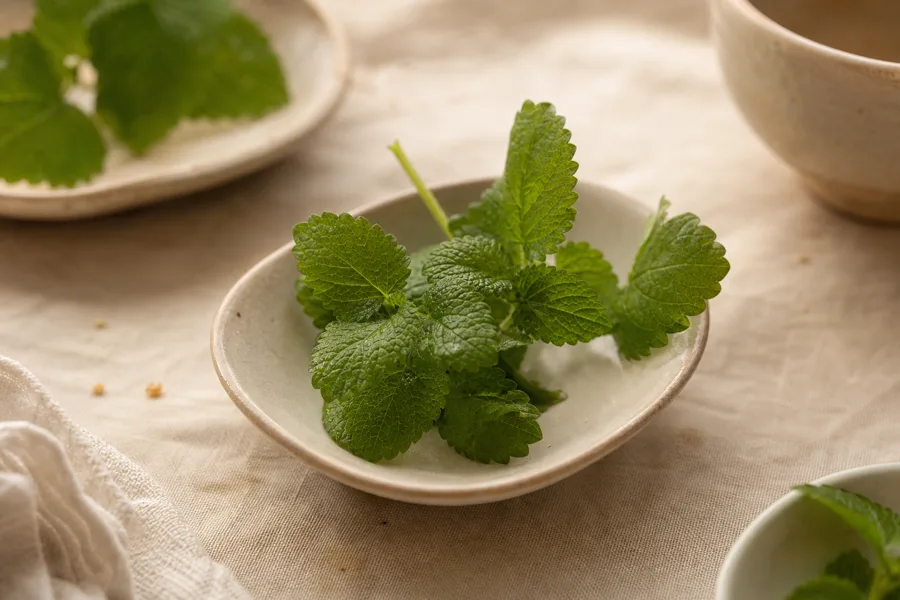
Lemon Balm (leaf extract, 10:1)
A gentle calming botanical from the mint family, included to help settle your stomach and take the edge off busy evenings after your biggest meal.
Per serving: 300 mg
Lemon Balm
Lemon balm has a long history in European herbal practice, where it has traditionally been used to support relaxation and comfortable digestion.
We use a concentrated 10:1 extract, meaning ten parts of leaf go into every one part of extract, so a meaningful 300 mg dose fits inside your two capsules.
It pairs naturally with the enzymes in the formula: they work on the meal itself, and lemon balm helps you unwind after it.
That pairing is why Morning Skinny is built around the largest meal of your day.
Lemon balm's traditional use for digestive comfort and relaxation is documented in the European Medicines Agency's herbal monographs.
Read the deep dive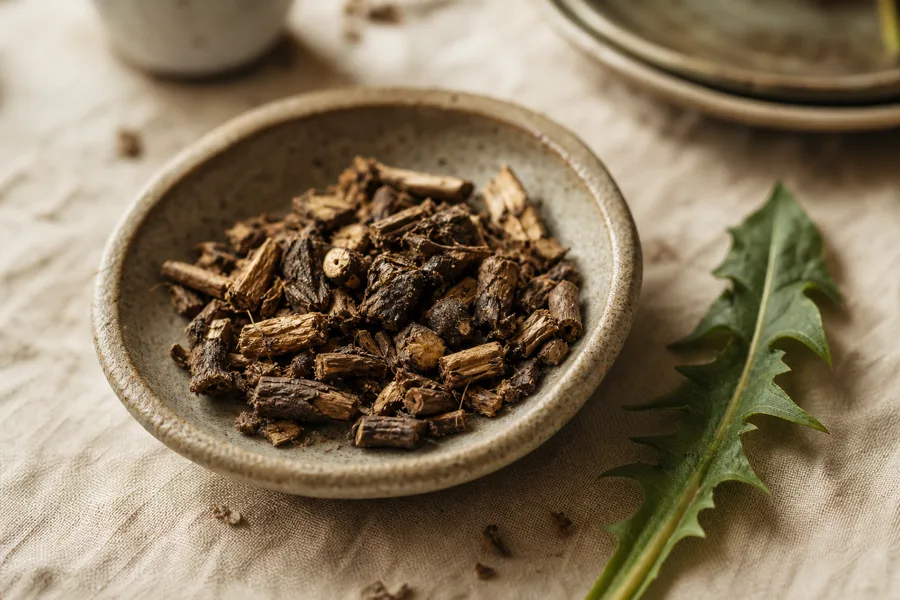
Dandelion (root extract, 10:1)
A classic bitter root included to support your body's healthy water balance, so you feel less puffy after salty meals and long days.
Per serving: 300 mg
Dandelion
Dandelion root is one of the most established bitter botanicals in Western herbal tradition, valued for its role in supporting the body's natural fluid balance.
Our 10:1 root extract concentrates ten parts of root into one part of extract, delivering a full 300 mg per serving.
That matters because puffiness is not always about digestion alone; water retention plays its own part.
Dandelion covers that second front while the enzymes handle the meal itself.
Dandelion root's traditional use is catalogued in the European Medicines Agency's herbal monographs, built on centuries of Western herbal practice.
Read the deep dive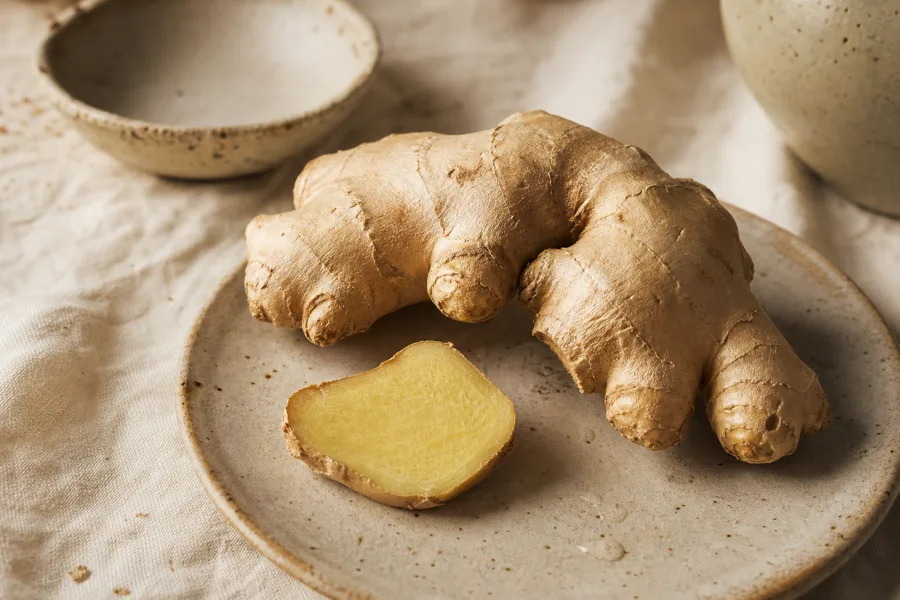
Ginger (Zingiber officinale root, 4:1 extract)
The best-known digestive botanical in the world, included to support post-meal comfort and the healthy motility that keeps everything moving as it should.
Per serving: 220 mg
Ginger
Ginger has been used for digestive comfort across nearly every food culture on earth, and modern research has followed: it is among the most studied botanicals for post-meal comfort and healthy motility.
We use a 4:1 extract of Zingiber officinale root at 220 mg per serving, chosen to be meaningful without the burn of raw ginger.
Supporting motility means supporting the natural movement that keeps a big meal from sitting heavy.
It is the workhorse botanical of the formula.
Ginger's digestive effects have been examined in dozens of randomized human trials, with systematic reviews indexed in the National Library of Medicine.
Read the deep dive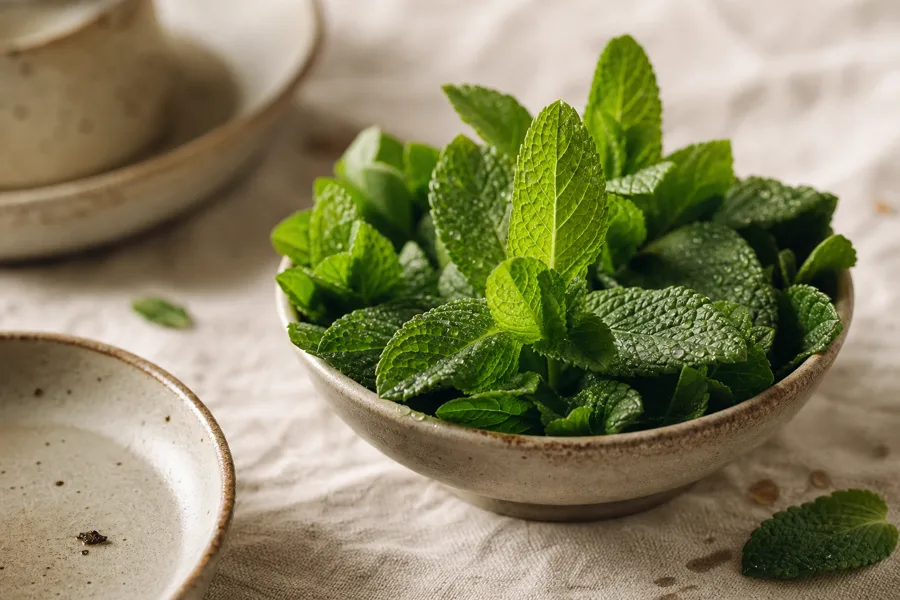
Peppermint (leaf extract)
A cooling classic for the digestive tract, included to help calm gas and ease the tension that tends to build after a heavy dinner.
Per serving: 100 mg
Peppermint
Peppermint has one of the strongest research pedigrees of any digestive botanical.
Its natural compounds, chiefly menthol, are studied for their calming effect on the muscles of the digestive tract, which is exactly where after-dinner tightness lives.
We include 100 mg of leaf extract per serving as the finishing touch of the botanical quartet.
Ginger keeps things moving, lemon balm settles the evening, and peppermint smooths out everything in between.
Peppermint's digestive effects are among the best-studied of any botanical intervention, reviewed by the American College of Gastroenterology.
Read the deep diveDigestive Enzymes
Full-spectrum enzyme blend, 136 mg per serving
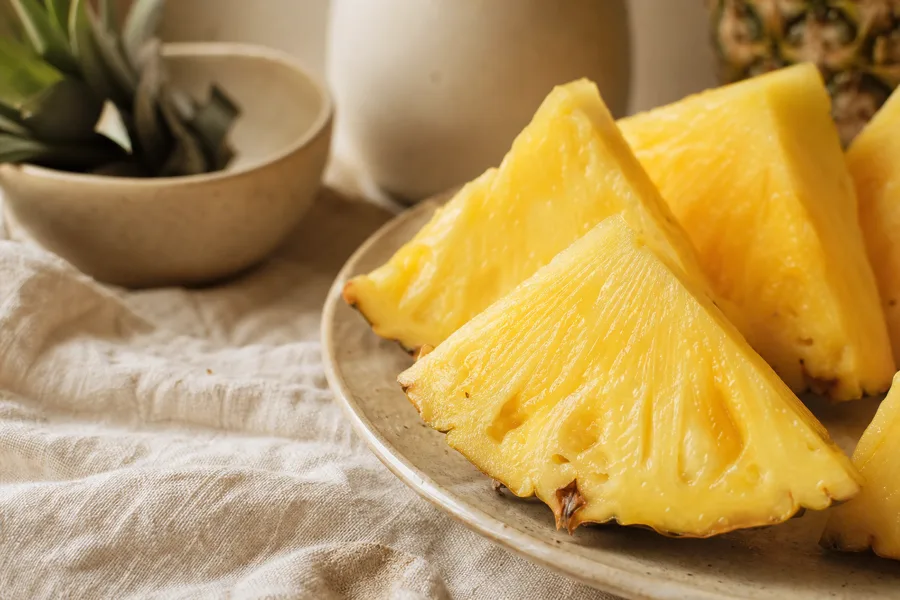
Bromelain (from pineapple)
A protein-digesting enzyme sourced from pineapple, included so steak dinners and protein-heavy meals get broken down instead of sitting like a brick.
Per serving: in the 136 mg enzyme blend
Bromelain
Bromelain is a natural mixture of protein-digesting enzymes extracted from the pineapple plant, studied continuously since the 1950s.
It stays active across a wide range of digestive conditions, which makes it a reliable first line for breaking down dietary protein.
In Morning Skinny it opens the digestive relay: bromelain and papain begin the work on protein, and neutral protease finishes it.
Less intact protein lingering in your gut means a lighter feeling after your biggest meal.
Bromelain has been studied since the 1950s and is catalogued by the National Center for Complementary and Integrative Health.
Read the deep dive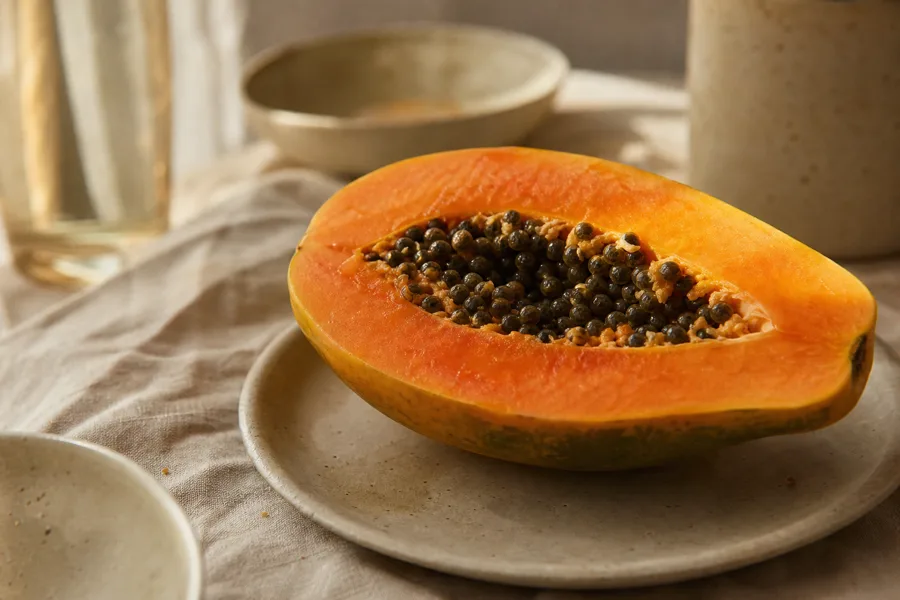
Papain (from papaya)
Bromelain's partner enzyme from the papaya fruit, included to widen the range of proteins your body can comfortably break down after dinner.
Per serving: in the 136 mg enzyme blend
Papain
Papain is a protein-digesting enzyme harvested from papaya, and one of the oldest enzymes humans have put to work: cooks have used it to tenderize food for centuries, doing outside the body exactly what it does inside.
Papain cleaves protein at different points than bromelain, so together the pair covers more of the protein in a real meal than either could alone.
That redundancy is deliberate.
Meals are messy, and a formula built for them should be too thorough to leave gaps.
Papain's protein-digesting activity is well characterized in the enzymology literature, with a centuries-long history of culinary use.
Read the deep dive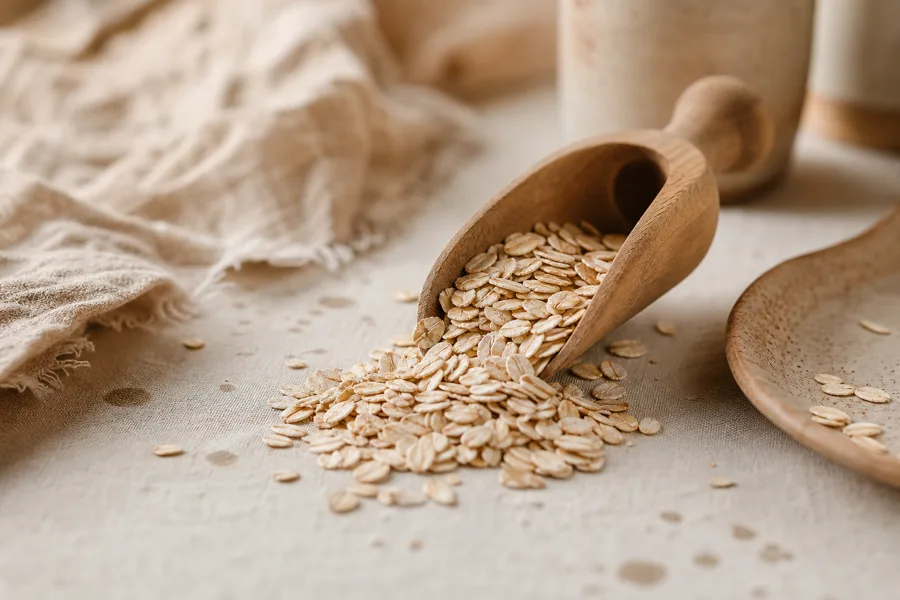
Alpha-Amylase (carbohydrate enzyme)
The enzyme that starts carbohydrate digestion, included to help turn pasta, bread, and rice into usable energy instead of after-dinner heaviness.
Per serving: in the 136 mg enzyme blend
Alpha-Amylase
Amylase is the enzyme your own body sends against carbohydrates first: it is in your saliva before the first bite is even swallowed.
Supplemental alpha-amylase adds capacity right when a carb-heavy meal demands it, helping break starches into simpler sugars your body can actually use.
Carbohydrates that digest efficiently become energy; carbohydrates that sit are what heaviness after a bowl of pasta feels like.
This is the enzyme aimed squarely at that difference.
Amylase was among the first enzymes ever isolated, in the 1830s, and remains one of the most thoroughly characterized enzymes in biochemistry.
Read the deep dive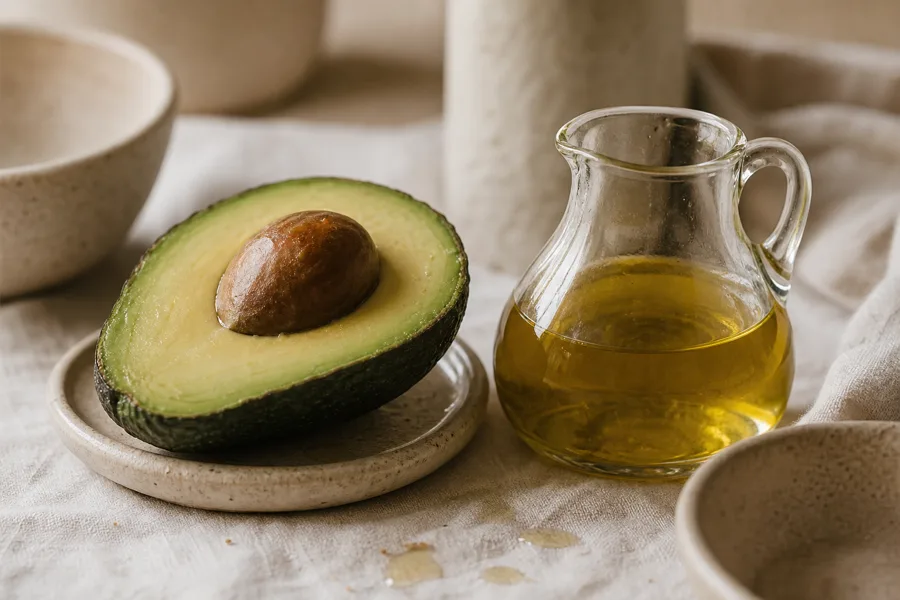
Lipase (fat enzyme)
The fat-digesting enzyme, included so rich, oily, and buttery meals feel satisfying going down instead of heavy for the rest of the night.
Per serving: in the 136 mg enzyme blend
Lipase
Lipase breaks dietary fat into smaller components your body can absorb, the same job your pancreas performs at every meal.
Fat is the slowest macronutrient to digest, which is why rich meals are the ones that linger.
Adding lipase supports that heaviest part of the digestive workload.
It is the difference between a rich dinner you enjoyed and a rich dinner you keep being reminded of all evening.
Lipase's central role in fat digestion is foundational human physiology, described in every major medical biochemistry text.
Read the deep dive
Lactase (dairy enzyme)
The enzyme that breaks down lactose, included so cheese boards, cream sauces, and dessert can stay on the menu without the usual consequences.
Per serving: in the 136 mg enzyme blend
Lactase
Lactase is the enzyme that splits lactose, the natural sugar in dairy, into simple sugars your body absorbs easily.
Many adults produce less of it over time, which is why dairy tends to get louder as we get older.
Supplemental lactase is one of the best-established uses of a digestive enzyme, and including it means the formula never assumes you skipped the cream sauce.
Dairy without drama is the whole idea.
Lactase supplementation is a well-established approach discussed by the National Institute of Diabetes and Digestive and Kidney Diseases.
Read the deep dive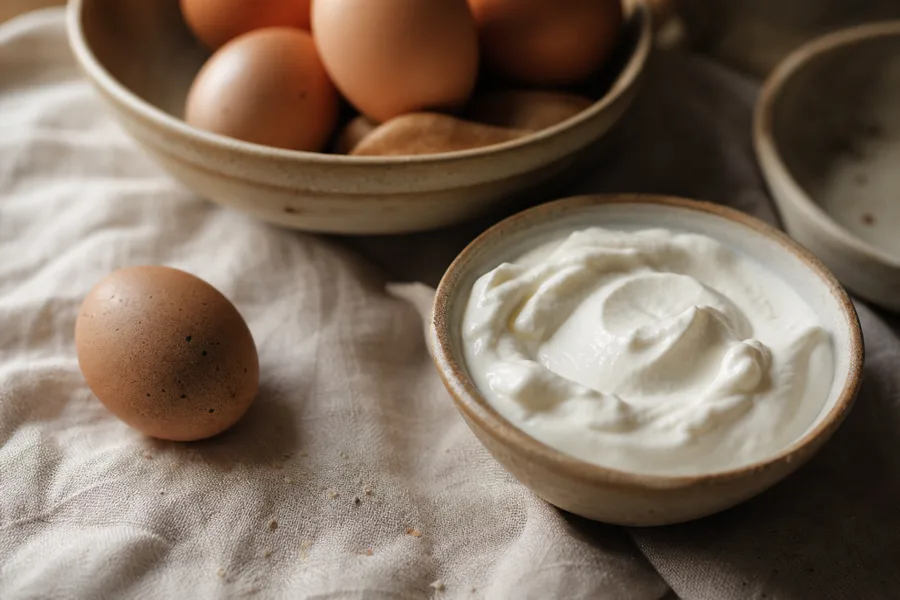
Neutral Protease (protein enzyme)
A steady, all-conditions protein enzyme, included to finish the job bromelain and papain start so protein digestion never stalls midway through.
Per serving: in the 136 mg enzyme blend
Neutral Protease
Neutral protease is a protein-digesting enzyme that performs best in the mild, near-neutral conditions found through much of digestion, right where the fruit enzymes hand off their work.
Digestion is not one environment but a sequence of them, and each enzyme has a range where it shines.
Including a protease for the middle of that sequence keeps protein breakdown moving from start to finish.
It is the least famous enzyme in the blend, and one of the most important.
Proteases of this class are produced by controlled fermentation and are among the most widely used and studied enzymes in food science.
Read the deep dive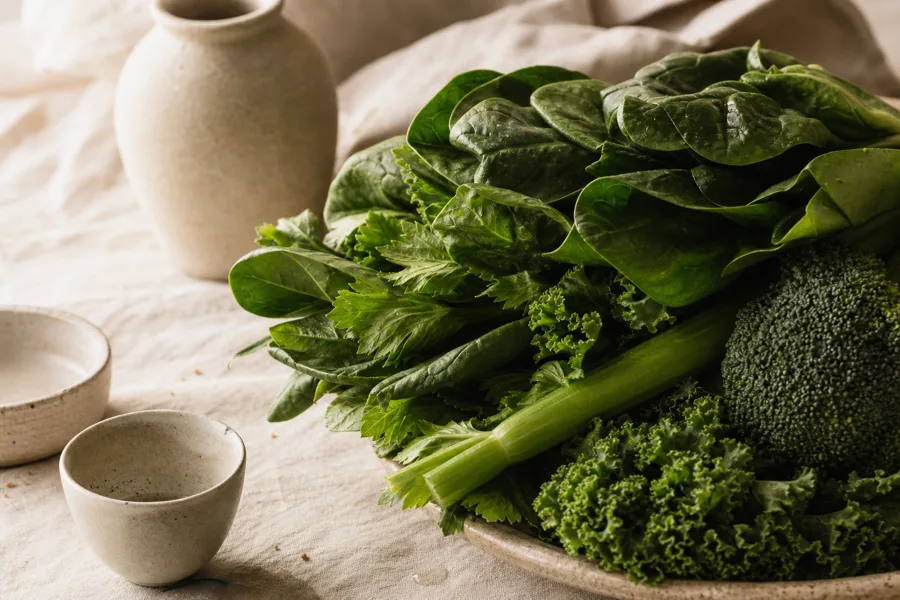
Cellulase + Hemicellulase (plant-fiber enzymes)
Two fiber-digesting enzymes your body cannot make on its own, included so salads and vegetables deliver their nutrients with less bloat along the way.
Per serving: in the 136 mg enzyme blend
Cellulase + Hemicellulase
Here is a quiet fact of human biology: we do not produce cellulase at all.
The tough plant fiber in vegetables passes through us largely intact, and for some people it makes its presence felt.
Cellulase and hemicellulase, sourced from fermentation, help break down those plant cell walls, unlocking more of what is inside your vegetables while easing the gas that fermenting fiber can produce.
Eating more plants should not come with a penalty.
That humans lack native cellulase is established digestive physiology; supplemental forms are produced by controlled fermentation.
Read the deep dive
Xylanase (grain-fiber enzyme)
A specialist enzyme for grain fiber, included because bread, oats, and cereal grains carry a fiber that most enzyme formulas ignore entirely.
Per serving: in the 136 mg enzyme blend
Xylanase
Xylanase targets arabinoxylan, the dominant fiber in wheat, oats, and other cereal grains, a fiber that general-purpose enzyme blends usually leave untouched.
It is heavily studied in cereal science precisely because of how much of this fiber the modern diet contains.
If grains are part of your life, an enzyme aimed specifically at grain fiber is not a luxury; it is the missing piece.
That is why it earns its own slot in the blend.
Xylanase is extensively studied in cereal science for its action on arabinoxylans, the principal fiber in wheat and other grains.
Read the deep divePrebiotic + Probiotic
Prebiotic and probiotic blend, 189 mg per serving
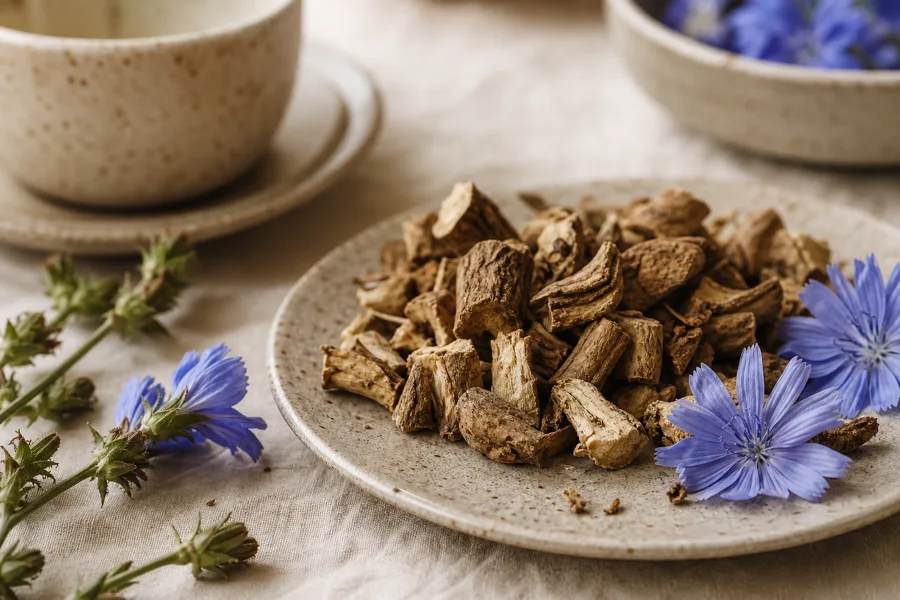
Inulin + Acacia Fiber (prebiotic duo)
Two complementary prebiotic fibers, included to feed your good gut bacteria, including the Akkermansia in this formula, and support easy regularity.
Per serving: in the 189 mg blend
Inulin + Acacia Fiber
Probiotics are only half of a gut strategy; the bacteria you want more of also need to be fed.
Inulin is one of the most studied prebiotic fibers, readily fermented by beneficial gut bacteria, while acacia fiber ferments slowly and gently, which keeps the pairing kind to sensitive stomachs.
Together they support a well-fed microbiome and the comfortable regularity that comes with one.
They also give the Akkermansia in this formula a reason to stay.
Inulin is among the most studied prebiotic fibers, with human trials indexed in the National Library of Medicine; acacia is a long-recognized dietary fiber.
Read the deep dive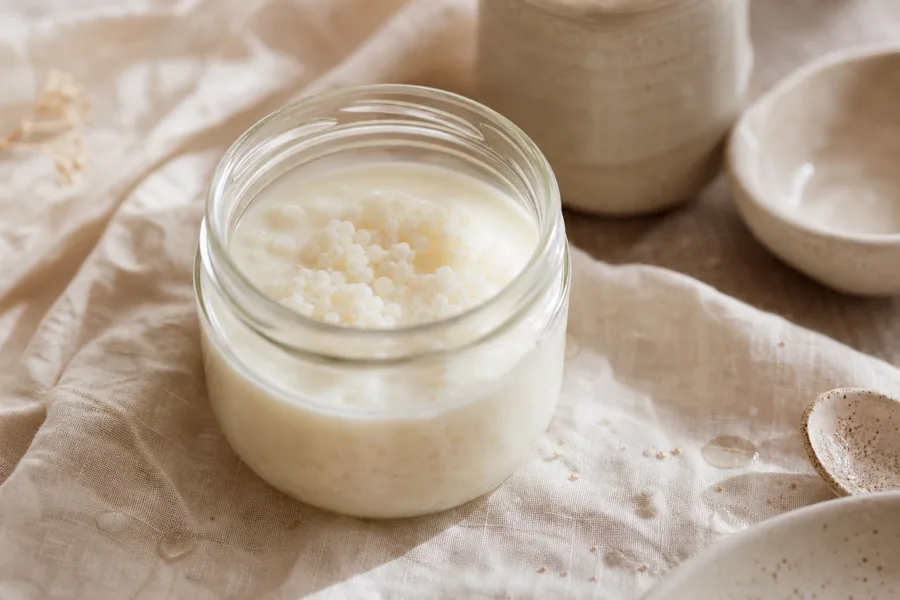 Keystone strain
Akkermansia muciniphila (keystone probiotic strain)
The keystone of the formula: a next-generation probiotic that lives in the gut's mucin lining and supports the barrier your whole gut depends on.
Per serving: >3 Billion TFU
Akkermansia muciniphila
Akkermansia muciniphila is one of the most closely watched bacteria in gut science.
Identified in 2004, it lives in the mucin layer that lines a healthy gut and helps support that barrier, which is foundational to how the gut handles everything else you ask of it.
It is notoriously delicate to produce, which is why most probiotic formulas skip it; we built ours around it, at more than 3 billion TFU per serving.
If one ingredient explains Morning Skinny, it is this one.
Akkermansia muciniphila has been the subject of hundreds of peer-reviewed studies since 2004, including randomized human trials.
Read the deep diveHow we make it
Held to a higher standard.
FDA-registered facility
Made in the USA in an FDA-registered facility, the same standard prescription-adjacent products are held to.
GMP certified
Good Manufacturing Practices govern every batch: identity, purity, strength, and composition, verified.
Third-party tested
Independent labs test every batch. What the label says is what the capsule holds.
100% vegetable capsules
Vegan-friendly capsules with no gelatin, no gluten, no dairy, and no soy.
No artificial additives
No artificial colors, flavors, or sweeteners. Fourteen actives and nothing hiding behind them.
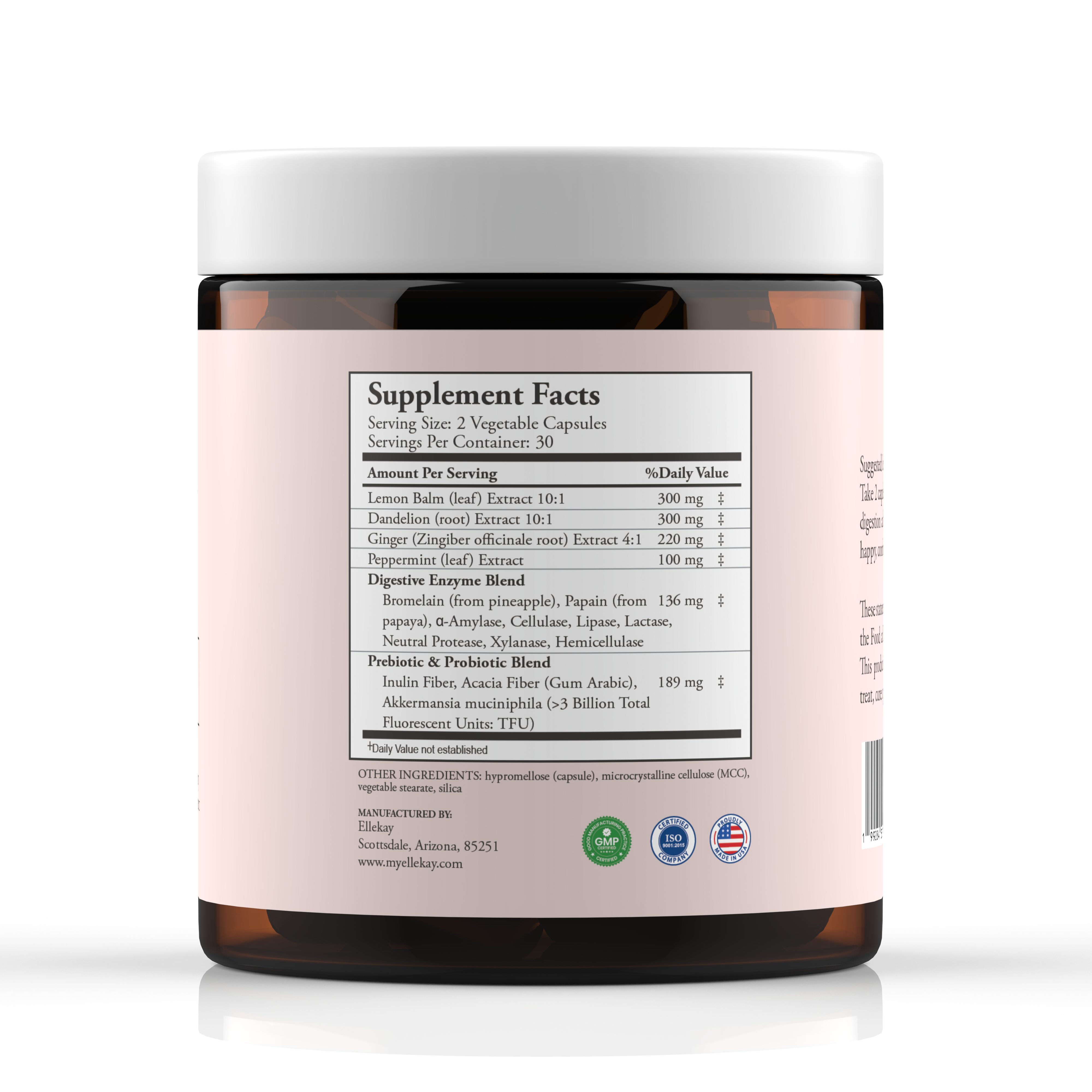
All fourteen, in two capsules.
$24.99 per jar, about $0.83/day
Backed by the 30-Day Feel-Better Promise. If your gut doesn't feel better by day 30, we'll refund you.
Quick answers
Ingredient questions
Are the doses on the label real amounts?
Yes. Every botanical dose is printed per serving right on the label: 300 mg lemon balm extract, 300 mg dandelion root extract, 220 mg ginger extract, and 100 mg peppermint. The digestive enzyme blend totals 136 mg per serving, the prebiotic and probiotic blend totals 189 mg, and Akkermansia muciniphila is dosed at more than 3 billion TFU. The Supplement Facts panel shown on this page is the actual label from the jar.
Why these fourteen together?
Each group has one job. The digestive enzymes work on the meal itself: protein, carbs, fat, dairy, and plant fiber. The botanicals support comfort after the meal, from post-dinner tension to healthy water balance. And the prebiotic fibers plus Akkermansia support the gut itself. The formula is built to help with tonight's dinner and the long game at the same time.
When do I take them?
Two capsules with a full glass of water right after your largest meal of the day. For most people that is dinner. Take it daily: by day 30, your gut finds its rhythm, and the 30-Day Feel-Better Promise stands behind that.