Lipase is the most important of the enzymes for fat digestion, breaking dietary fat into fatty acids and glycerol for absorption. Without adequate lipase activity, fat passes incompletely digested into the colon, causing bloating, loose stools, and poor absorption of fat-soluble vitamins. Understanding lipase enzyme benefits and how this enzyme works helps you identify when fat digestion might be the source of your digestive symptoms.
How Lipase Works in Your Digestive System
Fat digestion requires a sequence of steps before lipase can even begin working. Unlike proteins and carbohydrates, dietary fat (triglycerides) is not water-soluble. Before the enzyme for fat digestion can access fat molecules, they must be emulsified into tiny droplets.
Here is the complete sequence:
-
Gastric phase. Gastric lipase in the stomach provides initial, minor fat breakdown and contributes to emulsification.
-
Bile emulsification. When fat enters the small intestine, the gallbladder releases bile salts. Bile salts coat fat globules and break them into tiny droplets (emulsification), dramatically increasing the surface area available for enzyme contact.
-
Pancreatic lipase action. Pancreatic lipase attaches to the emulsified fat droplet surface and cleaves triglycerides into fatty acids and glycerol. This is the critical step. Pancreatic lipase is responsible for breaking down approximately 95 percent of dietary triglycerides.
-
Absorption. Fatty acids and glycerol diffuse into intestinal cells, where they are reassembled into lipoproteins and transported through the lymphatic system into the bloodstream.
If any step in this sequence is disrupted (insufficient bile production, low pancreatic lipase output, or gut inflammation affecting absorption), fat digestion suffers. This is where digestive enzymes for fatty foods become relevant as supplemental support.
Why Lipase Activity Matters Beyond Fat Digestion
Lipase enzyme benefits extend beyond breaking down fat for energy. Fat digestion is also the gateway to fat-soluble vitamin absorption.
Vitamins A, D, E, and K are fat-soluble. They are embedded in dietary fat and are released and made absorbable only through the process of fat digestion. Without adequate lipase and bile activity, you can eat plenty of foods rich in these vitamins and still develop deficiency.
Research published in nutrition journals has shown that vitamin D bioavailability increases significantly when taken alongside a fat-containing meal with active lipase compared to taking vitamin D supplements on an empty stomach. A study evaluating pancreatic enzyme supplements found improvements in fat-soluble vitamin levels in patients with compromised fat digestion after enzyme supplementation. This is one of the most clinically important lipase enzyme benefits for general health.
Omega-3 fatty acids (EPA and DHA) also require lipase. Fish oil and omega-3 supplements are triglyceride-based in most forms. Their absorption depends on the same lipase-mediated fat digestion pathway. This is why some omega-3 supplements recommend taking them with meals containing fat.
Practical implication: If you are taking fat-soluble vitamins (A, D, E, K) or omega-3 supplements, taking them with a meal that contains some dietary fat and a digestive enzyme supplement that includes lipase may meaningfully improve their absorption, particularly if your natural lipase output is below optimal.
Signs Your Lipase Activity May Be Insufficient
Not everyone with fat digestion issues has a clinically diagnosed condition. Subclinical lipase insufficiency, where pancreatic output is below optimal but not absent, can present as:
- Consistent bloating or abdominal discomfort after fat-rich meals
- Floating or oily stools (steatorrhea), a sign that fat is passing undigested
- Loose stools after meals containing significant fat
- Nausea after high-fat meals like a restaurant meal or avocado-heavy dishes
- Feeling overly full or sluggish for hours after a fatty meal
- Unexplained deficiency in fat-soluble vitamins despite adequate dietary intake
Clinical exocrine pancreatic insufficiency (EPI) is the most severe form, occurring when the pancreas loses significant enzyme-producing capacity. EPI causes weight loss, severe steatorrhea, and malnutrition and requires prescription-strength pancreatic enzyme replacement therapy. For people without EPI, over-the-counter fat digestion enzymes can meaningfully reduce mild to moderate fat digestion discomfort.
Lipase Supplements: Who Benefits and How Much
For healthy adults experiencing mild fat digestion discomfort, over-the-counter digestive enzymes for fatty foods with meaningful lipase content may provide relief. A 2015 PMC study confirmed that lipase supplementation before a high-fat meal reduced both perceived fullness and post-meal gastrointestinal symptoms compared to placebo in healthy subjects.
People who may benefit from a lipase supplement:
- Those who experience consistent post-meal bloating after fatty foods
- People following ketogenic or high-fat diets, where fat intake is substantially elevated above normal
- Adults over 60, as pancreatic enzyme output naturally declines with age
- People who have had gallbladder removal, as bile release timing changes after cholecystectomy
- Those taking fat-soluble supplements who want to maximize absorption
Reading lipase dosing on labels: Lipase potency is measured in FIP units (international standard) or LU (Lipase Units, a US standard). These are not interchangeable, so compare products using the same unit. Lipase potency varies widely between products, so compare units per serving using the same unit on each label.
 morning skinny fat digestion gut supporting">
How Dietary Fat Choices Affect Lipase Load
Not all fats are digested identically. Medium-chain triglycerides (MCTs), found in coconut oil and MCT oil supplements, are partially absorbed without lipase through a direct portal route and are less demanding on pancreatic lipase. Long-chain triglycerides (the dominant form in most foods) require full bile emulsification and lipase processing.
For people with fat digestion difficulties, incorporating some MCT-based fats and pairing long-chain fat meals with the right enzymes for fat digestion and digestive enzymes for fatty foods may reduce symptoms while still providing adequate dietary fat intake. Fat digestion enzymes work best when taken immediately before a fatty meal, giving the supplemental lipase time to mix with stomach contents before the fat arrives in the small intestine.
Understanding fat digestion enzymes and their lipase enzyme benefits is especially relevant for anyone who frequently eats high-fat meals or who has noticed a pattern of digestive discomfort that correlates with fat intake rather than carbohydrates or protein.
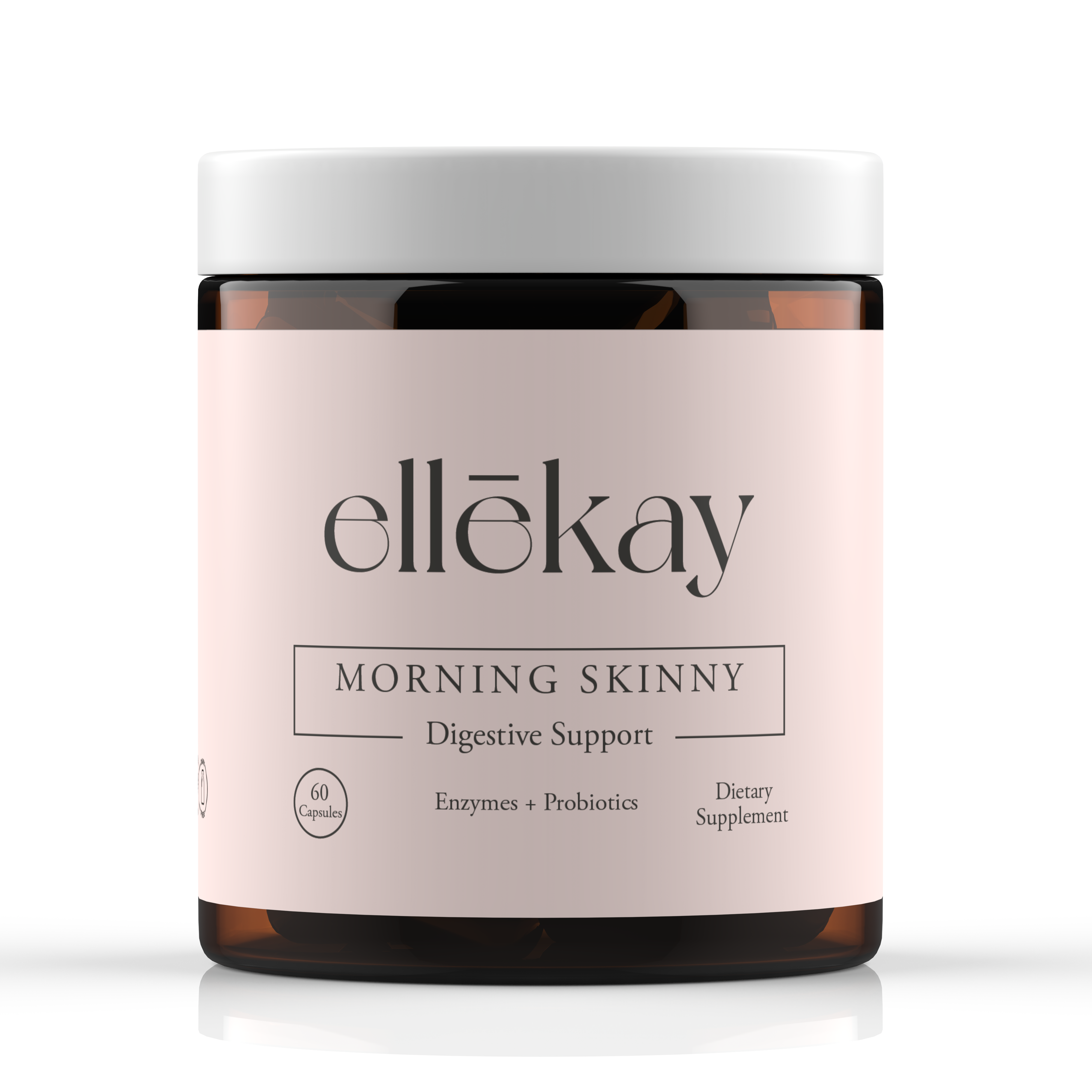
At Ellekay, we design gut health products around how your body actually works. Our Morning Skinny supports your gut environment through natural overnight rhythms, creating the digestive foundation where fat digestion and nutrient absorption function optimally each day. Visit our Contact page to learn more about our approach.
Frequently Asked Questions
What enzyme breaks down fat in the body?
Lipase is the primary enzyme for fat digestion. Pancreatic lipase, released by the pancreas into the small intestine, is responsible for breaking down approximately 95 percent of dietary triglycerides into fatty acids and glycerol for absorption. Gastric lipase in the stomach handles an initial minor contribution to fat digestion before the primary pancreatic phase begins.
Does lipase help with bloating after fatty meals?
Yes, clinical evidence supports this. A 2015 study published in PMC found that lipase supplementation reduced both perceived fullness and post-meal gastrointestinal symptoms in healthy subjects after a high-fat meal compared to placebo. Taking digestive enzymes for fatty foods before a fat-rich meal is one of the most direct applications of lipase enzyme benefits.
Who needs a lipase supplement?
People who experience consistent bloating, nausea, or loose stools after eating fat-rich meals may benefit from fat digestion enzymes. This includes people on ketogenic or high-fat diets, adults over 60 whose pancreatic output has declined, and people who have had their gallbladder removed. Those with clinically diagnosed exocrine pancreatic insufficiency require prescription-strength pancreatic enzyme replacement rather than OTC lipase.
Can lipase improve vitamin absorption?
Yes. Lipase is required for absorbing fat-soluble vitamins A, D, E, and K. These vitamins are embedded in dietary fat and can only be released and absorbed through the lipase-mediated fat digestion process. One of the most underappreciated lipase enzyme benefits is that it enables the absorption of nutrients that people commonly supplement but may not be absorbing optimally.
What are FIP units for lipase?
FIP units (Federation Internationale Pharmaceutique units) are the standard measurement for lipase enzyme activity. They measure how much lipase activity is present per unit of supplement, not how much the enzyme weighs. Lipase potency varies widely between products, so compare units per serving using the same unit on each label. FIP units are not directly comparable to LU (Lipase Units) used by some US manufacturers.
Written by the Ellekay Wellness Team | Reviewed by our gut health research advisors | Published April 2026 | Sources: PMC Lipase Supplementation Before High-Fat Meal (2015), Houston Enzymes Lipase Fat Digestion, Enzymedica Types of Lipase, Dr. Axe Lipase Benefits
Related guides