Grains are a daily staple for most women, but they carry a hidden challenge: a tough structural fiber called xylan that your body cannot break down on its own. That is where the enzyme xylanase comes in. Understanding how xylanase works may change the way you think about grain digestion, bloating, and daily gut comfort.
The Plant Fiber Your Gut Was Not Designed to Digest Alone
Most people know that grains contain fiber. What gets far less attention is a specific type of fiber called xylan, a polysaccharide that makes up a significant portion of the plant cell walls in wheat, oats, barley, rye, and corn. Xylan belongs to the hemicellulose family, and unlike simple sugars, your body does not naturally produce enough xylanase to break it down efficiently.
When xylan passes through the digestive tract unprocessed, it can contribute to that familiar heavy, bloated feeling many women experience after grain-heavy meals. The discomfort is not imagined. It is a mechanical response to undigested material sitting in your gut longer than it should.
Xylanase is the enzyme that specifically targets xylan. It cleaves the long xylan chains into smaller fragments, including a sugar called xylose, which your body can absorb or pass through with far less friction. Without sufficient xylanase activity, those intact xylan structures can ferment in the colon, producing gas and triggering the bloat-and-pressure cycle so many women find disruptive to their day.
How Xylanase Breaks Down Xylan at the Cellular Level
To understand why xylanase matters for digestion, picture the structure of a grain kernel. Plant cell walls are built from layers of cellulose, hemicellulose, and pectin. Xylan is one of the most abundant components of hemicellulose in cereal grains, sometimes making up 20 to 35 percent of the dry weight of the outer bran layer.
Xylanase is a hydrolytic enzyme, meaning it uses water to break chemical bonds. In a process called hydrolysis, xylanase targets the beta-1,4-glycosidic bonds linking xylose units together in the xylan chain. Each successful cleavage releases shorter xylan fragments, eventually yielding free xylose molecules that the gut can handle cleanly.
This enzymatic process is well-documented in food science. Collins, Gerday, and Feller published a comprehensive review in FEMS Microbiology Reviews (2005; doi: 10.1016/j.femsre.2004.06.005) describing the structural families of xylanase and their ability to degrade xylan across a wide range of conditions. The review notes that xylanase produced by fungi and bacteria represent the primary sources used in food and health applications, prized for their stability and substrate specificity.
A Well-Studied Enzyme with Deep Industrial Roots
One reason xylanase has been so thoroughly researched is its broad industrial value. In the pulp and paper industry, xylanase is used to improve the bleaching process for wood pulp. Enzymatic treatment of pulp reduces reliance on harsh chemicals, making paper production more sustainable and consistent. The pulp paper sector was one of the first to fund large-scale xylanase production research, which is part of why the science on this enzyme is so mature today.
In agricultural applications, xylanase is a well-established feed additive for poultry and livestock. Adding xylanase to grain-based animal feed improves nutrient digestibility and reduces the viscosity caused by soluble xylan in the intestine. Beg et al. published research in Applied Microbiology and Biotechnology (2001; doi: 10.1007/s002530100704) showing that xylanase supplementation in feed consistently improved the ability of animals to extract energy from cereal grains through more efficient industrial processes.
The food industry has also put xylanase to work in baking. When added to wheat flour dough, xylanase breaks down the water-absorbing xylan in the bran fraction, improving dough handling, gas retention, and the overall quality of the final product. Bakers use xylanase as a dough additive precisely because of its reliable, targeted action on plant-based fiber. These food and agricultural applications confirm that xylanase is not a niche ingredient: it is a well-characterized enzyme with decades of documented, safe use across multiple industrial sectors.

What This Means for Women and Grain Sensitivity
Many women report that bread, pasta, whole grains, and baked goods leave them feeling bloated or uncomfortable, even when those foods are considered nutritious. Part of that pattern may come down to the xylan content in the grain fractions, particularly in whole-grain and high-bran products where xylan concentration is highest.
When digestive enzyme support includes xylanase, the goal is to assist the natural breakdown process so grain-derived xylan does not accumulate undigested in the gut. The potential result is less fermentation, less gas production, and a smoother digestive experience after grain-based meals.
This connects to the broader principle that the ability to digest diverse plant foods is not uniform across all women. Digestive enzyme activity varies based on genetics, gut microbiome composition, age, and overall gut health. For women who notice a consistent pattern of post-grain discomfort, supporting xylan digestion may be a practical place to start.
Gut health researchers have pointed to enzyme-based support as a complementary approach alongside a balanced diet and probiotic care. Subramaniyan and Prema, writing in Critical Reviews in Biotechnology (2002; doi: 10.1080/07388550290789450), outlined the range of biological sources for xylanase and confirmed its safety profile across food-grade applications, including use as a direct food additive recognized by several international regulatory bodies.
Building a Daily Gut Health Routine That Works for You
Enzyme support works best as part of a consistent daily routine rather than an occasional fix. The digestive tract processes food continuously, and enzyme availability at the time of eating is what determines how efficiently xylan and other fiber components get broken down.
A morning supplement that includes xylanase alongside other digestive enzymes and gut-supporting ingredients gives your system a head start before the first grain-heavy meal of the day. Whether breakfast is a bowl of oatmeal, a slice of whole-grain toast, or a grain-based wrap at lunch, having xylanase present when that food arrives means less undigested xylan reaching the lower gut.
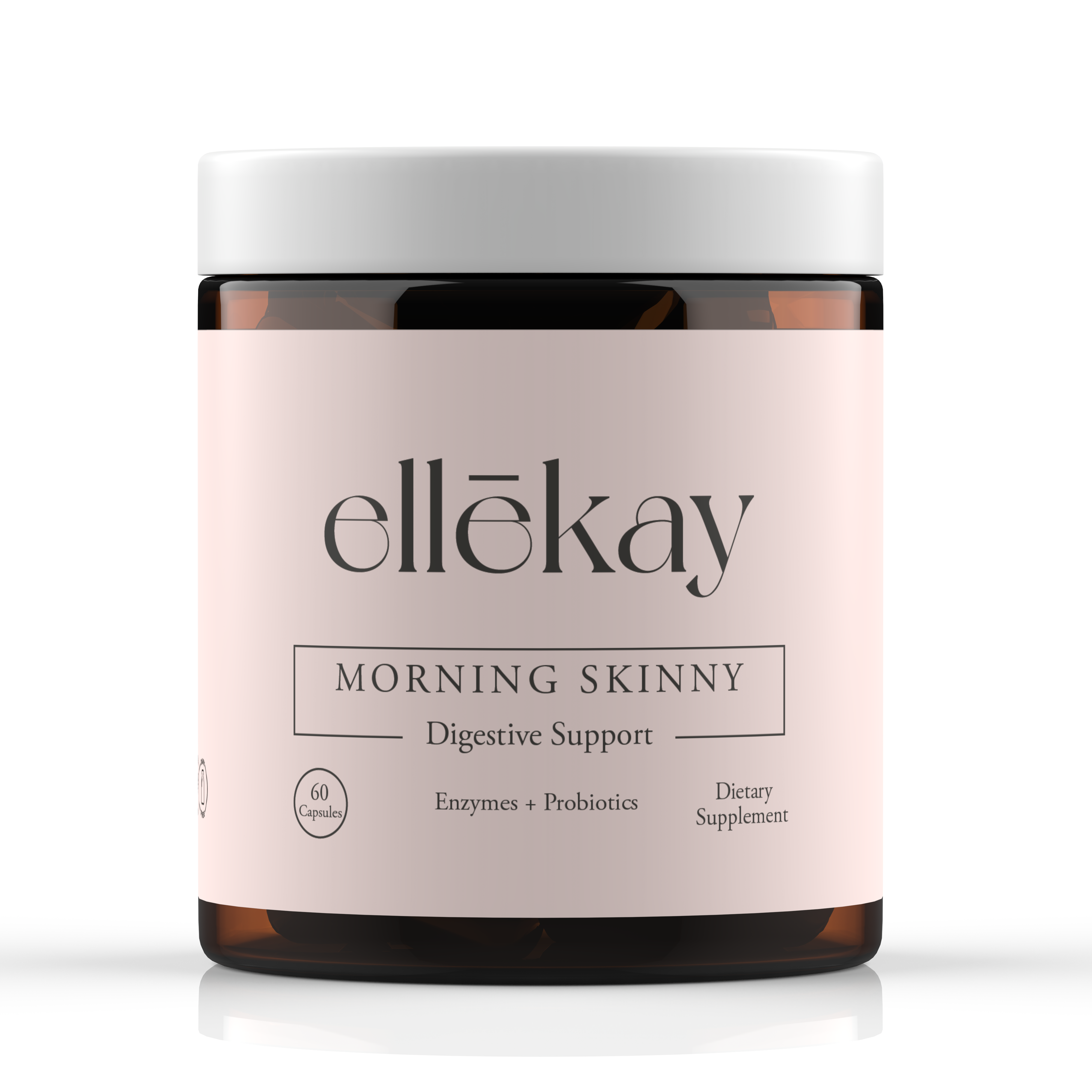
If you are curious about a daily digestive blend formulated to support women from the first sip of the morning, Morning Skinny is worth exploring. Have questions about how enzyme support fits your specific goals? The Ellekay team is here to help.
Frequently Asked Questions
What foods are highest in xylan?
Wheat bran, rye, oats, barley, and corn husks are the richest sources of xylan. Whole-grain versions of these foods contain more xylan than refined counterparts because the bran layer, where xylan concentration peaks, is retained. Women who eat a lot of whole grains and high-fiber plant foods may benefit most from xylanase enzyme support in their daily routine.
Is xylanase safe to take as a supplement?
Xylanase has been approved as a food additive by regulatory authorities in the United States, the European Union, and other markets. It is derived from food-grade fungi and bacteria and has been used in baking and food production for decades. As with any supplement, consult your healthcare provider if you have specific health conditions or concerns.
Does xylanase help with bloating after eating grains?
Xylanase may support reduced bloating by helping break down xylan fiber in grains before it reaches the lower intestine, where fermentation by gut bacteria produces gas. The effect is most relevant after grain-heavy meals. It works as part of a broader digestive enzyme profile rather than as a standalone remedy.
How is xylanase different from other digestive enzymes?
Most familiar digestive enzymes target proteins (proteases), fats (lipases), or starches (amylases). Xylanase specifically targets xylan, the hemicellulose fiber found in plant cell walls of cereal grains. It fills a gap in standard enzyme coverage and is particularly useful for women who eat whole grains regularly and want more complete digestive support.
Where does xylanase in supplements come from?
Supplement-grade xylanase is typically derived from fungi such as Trichoderma or Aspergillus species, or from bacterial sources. These organisms naturally produce xylanase as part of their ability to break down plant material in their environment. The enzyme is then isolated, purified, and stabilized for use in food and supplement production.