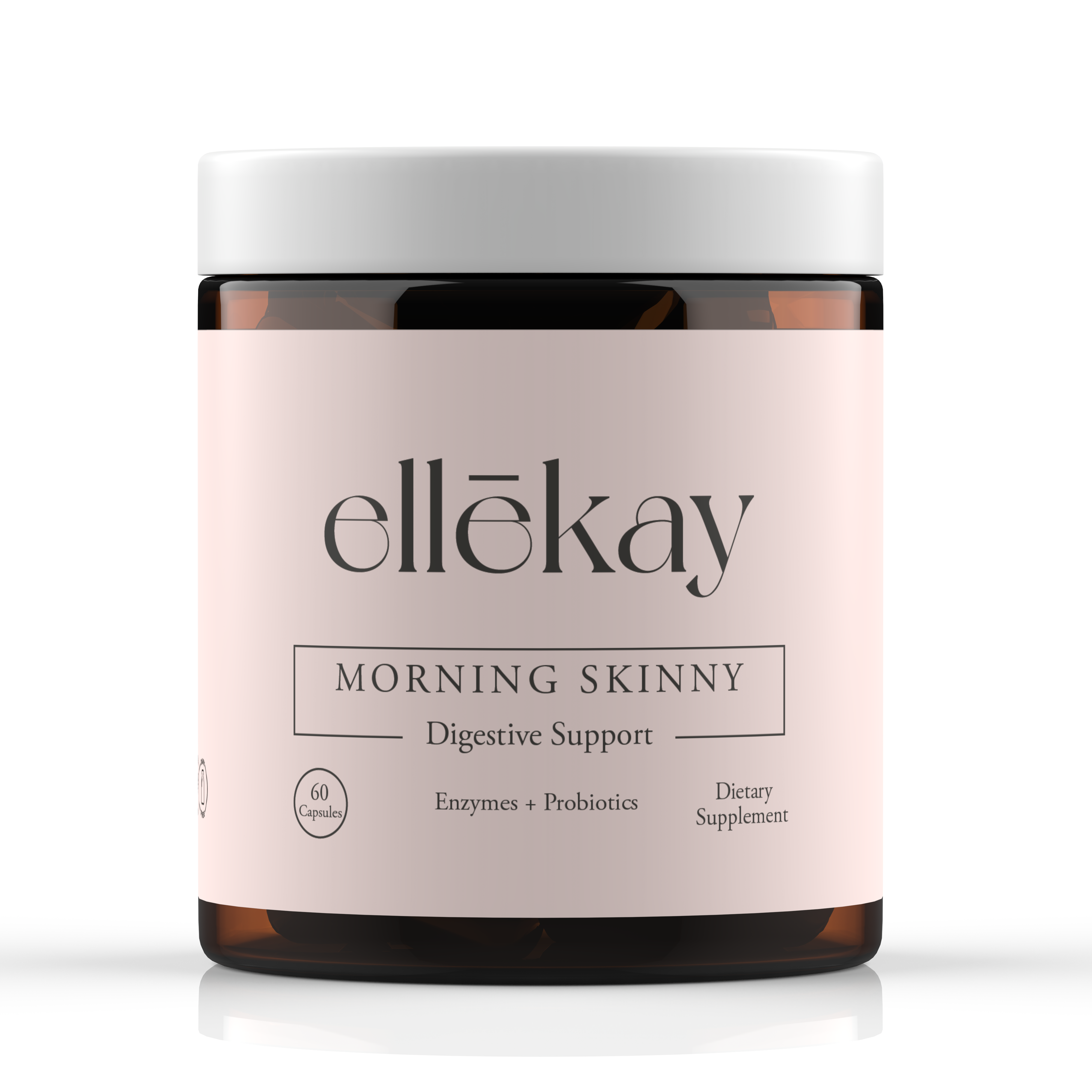
Alcohol and digestion are more connected than most people realize: even one glass of wine can slow stomach emptying, irritate the digestive tract, and disrupt gut bacteria that keep your body balanced. Reaching for Morning Skinny gut-debloat blend the morning after can help your gut reset.
By Ellekay Team, Women's Wellness Experts
The relationship between alcohol and digestion begins the moment a drink touches your lips. Alcohol does not need to be broken down the way food does, so part of it is absorbed straight through the stomach lining and into your bloodstream before it ever reaches your small intestine. The remainder moves through your digestive system, where it can slow the muscle contractions that push food along your digestive tract, disrupt the balance of bacteria living in your gut, and trigger inflammation as it travels.
For women, alcohol consumption carries some unique digestive consequences. Many women produce less of the enzyme that metabolizes alcohol in the stomach, which means more alcohol reaches the small intestine and liver in its active form. This is one reason drinking alcohol tends to affect women more strongly than men, even at the same body weight. If you have noticed breakouts or dullness after a few glasses of wine, you are not imagining it. Alcohol-related gut disruption often shows up on your skin first, which is why the gut-skin connection is worth understanding if you are prone to breakouts around drinking.
Staying aware of these effects does not mean giving up alcohol altogether. It means understanding that your digestive system needs a little more support after a night of drinking, especially if you notice recurring bloating, discomfort, or changes in your bathroom habits the next day.
Stomach Lining, Acid Reflux, and the Effects of Drinking Alcohol
Alcohol is acidic and irritating to soft tissue, and your stomach lining takes the first hit. Regular drinking alcohol can wear down the protective mucus layer that shields your stomach from its own digestive acids, leaving the lining inflamed and more sensitive. In general, the more people drink, the more irritated the stomach lining becomes, and this is part of why so many people wake up with a burning, uneasy stomach after a night of drinks.
Alcohol also relaxes the lower esophageal sphincter, the muscle that normally keeps stomach acid where it belongs. Once that muscle loosens, acid reflux becomes far more common, especially when drinks are paired with rich or fatty food late at night. Women managing hormonal fluctuations may notice their acid reflux is more likely to flare around certain points in their cycle, and alcohol use on top of that can make symptoms noticeably worse. Nausea, bloating, and a burning sensation in the chest are all common symptoms of this combination.

The Small Intestine, Digestive Tract, and Nutrient Absorption
Once alcohol reaches the small intestine, it can interfere with how your body absorbs key nutrients. Vitamin B1, B12, folate, and zinc are all absorbed less efficiently when alcohol is present in the digestive tract, which over time can leave women feeling fatigued, foggy, or rundown even when the rest of their diet looks healthy.
Alcohol also increases intestinal permeability, sometimes called a leaky gut, allowing bacteria and toxins to pass through the intestinal lining more easily than they should. This can increase inflammation throughout the body and may explain why frequent drinkers often report digestive symptoms that have nothing to do with the food they eat. Supporting this system daily, rather than only reaching for relief after a night out, is what actually helps it recover, and a steady supplement routine can be part of that ongoing support.
Alcohol Consumption, Gut Bacteria, and Long-Term Liver Disease Risk
The gut and liver are closely linked, and heavy or frequent alcohol consumption puts real strain on both. Your liver processes nearly all the alcohol you drink, and over time, sustained alcohol use can damage liver cells and contribute to liver disease. Women are more likely than men to develop alcohol-related liver disease at lower levels of consumption, largely because of differences in body composition and how alcohol is metabolized.
Chronic alcohol consumption also shifts the balance of gut bacteria, favoring less beneficial strains over the diverse, healthy bacteria your digestive system relies on. Research from the National Institute on Alcohol Abuse and Alcoholism has linked this kind of bacterial imbalance to increased gut permeability and higher inflammation markers, which can lead to digestive symptoms in people who drink heavily. Moderate drinking is generally defined as up to one drink a day for women, and staying within that range, or choosing alcohol-free days, gives your gut bacteria more room to recover. Pairing that habit with Ellekay's Morning Skinny formula the next morning is a simple way to support digestion after a night out.
Simple Ways to Support Your Digestive System Around Alcohol
Small adjustments before, during, and after drinking can meaningfully soften the impact on your gut. Eating a real meal before you start, rather than drinking on an empty stomach, slows how quickly alcohol reaches your small intestine and gives your stomach lining more of a buffer. Choosing lower-sugar, lower-sulfite alcoholic drinks over sweet cocktails or certain wines can also reduce next-day bloating for women who are sensitive to those ingredients.
Staying hydrated matters just as much as what you eat. Alcohol is a diuretic, and dehydration on top of alcohol consumption can make nausea, headaches, and sluggish digestion worse the next day. Alternating alcoholic drinks with water, and adding an extra glass before bed, gives your digestive system a better chance to recover overnight.
Fiber-rich food, fermented foods, and a consistent sleep schedule all support the healthy gut bacteria that alcohol tends to disrupt. Women who build these habits around their drinking, rather than only reacting after a rough morning, tend to see fewer digestive symptoms over time. None of this means alcohol becomes risk-free, but it does mean the gut has more support to work with when you do choose to drink.
Frequently Asked Questions
Does alcohol always cause digestive problems?
Not always, but even moderate drinking can irritate the stomach lining, slow digestion, and disrupt gut bacteria. Alcohol and digestion problems become more noticeable depending on how much you drink, how often, your hormones, and your overall gut health going in.
Why does wine seem to bother my stomach more than other drinks?
Wine is more acidic than many other alcoholic beverages, which can make it more irritating to an already sensitive stomach lining. Combined with sulfites and natural sugars, wine can be a common trigger for bloating, acid reflux, and nausea in women prone to digestive sensitivity.
Can I still drink alcohol if I care about gut health?
Yes, moderation matters more than total avoidance for most people. Sticking to recommended limits, drinking water alongside alcohol, avoiding drinking on an empty stomach, and giving your gut alcohol-free days each week all help protect your digestive system over time.
How long does it take for gut bacteria to recover after drinking?
This varies by person, but research suggests gut bacteria can begin rebalancing within days of reduced alcohol consumption, especially when paired with fiber-rich food and adequate hydration. Chronic heavy drinking takes longer to recover from than an occasional night out.
Is bloating after drinking a sign of a bigger problem?
Occasional bloating after drinking alcohol is common and usually resolves within a day or two. Frequent or severe bloating, especially alongside nausea or stomach pain, is worth discussing with a doctor, since it may point to an issue beyond typical alcohol-related digestive upset.
Get Support For Your Gut Health Journey
Alcohol and digestion do not have to be a mystery, and a few small changes can make a real difference in how your gut feels the morning after. If you have questions about which products fit your routine, reach Ellekay support and our team will help you find the right fit.