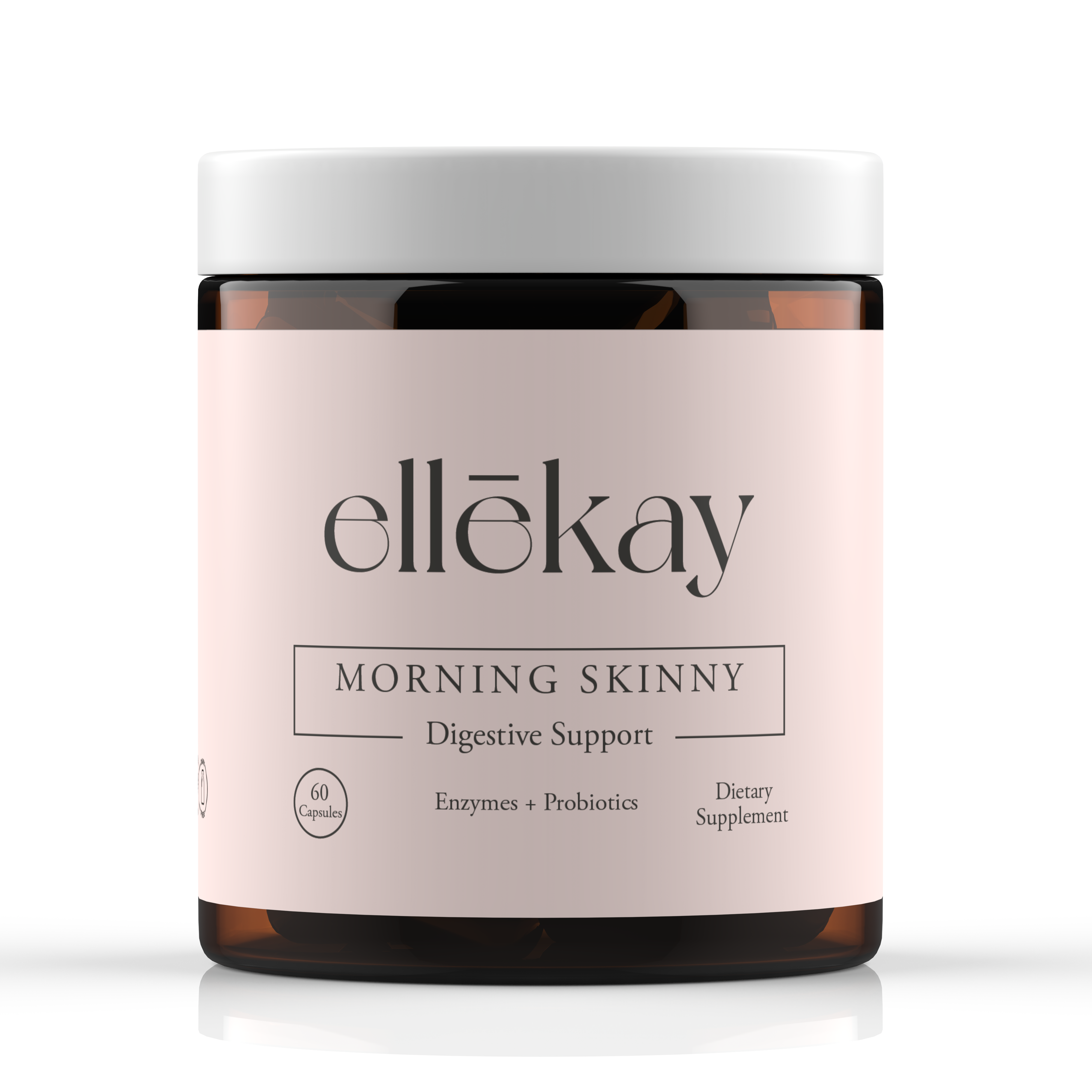
A complete gut health supplement stack includes probiotics, prebiotics, and digestive enzymes taken at strategic points through the day: probiotics before meals, enzymes with food, and gut-lining support at night. The Morning Skinny gut-debloat blend fits naturally into this morning routine. Getting the timing right amplifies every ingredient's benefit.
By Ellekay Team, Women's Wellness Experts
Why Your Digestive System Needs More Than One Supplement
The digestive system is not a single organ. It spans your esophagus, stomach, small intestine, large intestine, liver, and pancreas, with each section relying on different compounds to function well. When one part underperforms, you feel it everywhere: low energy, brain fog, skin flare-ups, and persistent bloating.
Single-supplement routines rarely close all the gaps. A probiotic replenishes beneficial bacteria but does nothing to help your body break down the proteins and fats you eat. A digestive enzyme speeds breakdown but does not feed the gut microbiome. A prebiotic fiber nourishes good bacteria but cannot compensate for low microbial diversity or enzyme deficiency. The real payoff comes from layering all three in a deliberate stack built around your digestive health goals.
This is why the idea of a gut health stack has taken root in women's wellness communities. It is not about taking more products. It is about taking the right combination in the right sequence, so every ingredient has a job and the conditions to do it well.
Building Your Complete Gut Health Supplement Stack: The Core Three
Probiotics: Seeding Your Gut Microbiome
Probiotics are live microorganisms that confer a health benefit when consumed in adequate amounts. This definition, established by the World Health Organization, has guided gut research for decades. For your gut microbiome, different strains serve very different purposes.
Lactobacillus acidophilus supports lactic acid production in the small intestine, which discourages pathogenic bacteria from taking hold. Bifidobacterium longum has been studied for its role in reducing intestinal inflammation. Research by Girardin and colleagues published in the journal Gut (2005) found that disruptions in the gut microbiome alter how the intestinal lining responds to bacteria, reinforcing why maintaining diverse probiotic populations matters beyond digestion alone.
For probiotics digestive benefits to take hold, look for a product with at least 10 billion CFUs and multiple strains rather than a single-strain formula.
Prebiotics: Feeding Beneficial Bacteria
Probiotics need food, and that food is prebiotic fiber. Prebiotics are non-digestible carbohydrates that selectively feed beneficial bacteria in the colon. The most researched forms include inulin, fructooligosaccharides (FOS), and galactooligosaccharides (GOS).
A 2019 review by Dahl and colleagues in Nutrients found that prebiotic supplementation consistently increased Bifidobacterium counts in healthy adults, with corresponding improvements in stool frequency and consistency. When you combine probiotics prebiotics in the same daily routine, you create what researchers call a synbiotic effect: the bacteria are delivered alongside their preferred food source, improving survival and colonization in the gut lining.
Digestive Enzymes: Breaking Down What You Eat
Digestive enzymes are proteins your pancreas and small intestine produce naturally to break food into absorbable components. Enzyme production can decline with age, and stress, processed food diets, and gut inflammation compound the effect.
A broad-spectrum digestive enzyme supplement typically includes:
-
Amylase for carbohydrate breakdown
-
Protease for protein digestion
-
Lipase for fat absorption
-
Lactase for dairy digestion
-
Cellulase for plant fiber
Without adequate digestive enzymes, even a nutrient-dense meal can leave you bloated and under-nourished. Nutrients that never get properly broken down cannot reach your bloodstream, which explains the energy dips and poor nutrient absorption that many women experience despite eating well.
How to Time Your Gut Health Stack Through the Day
Timing matters as much as the ingredients themselves.
Morning: Set the Stage for Digestion
Take your probiotic 20 to 30 minutes before breakfast. Research by Tompkins and colleagues published in Beneficial Microbes (2011) found that probiotics taken with or just before a meal containing some fat had significantly better survival rates through gastric acid. An empty stomach is a harsher environment for live cultures.
After your probiotic, take your prebiotic fiber with your first meal. This gives beneficial bacteria an immediate food source once they settle in.
With Every Meal: Enzymes Go In With Food
Unlike probiotics, digestive enzymes must be taken at the start of a meal or within the first few bites. Their job is to mix with food as it moves through the stomach and into the small intestine. Taking enzymes before or after eating significantly reduces their effectiveness.
If you experience bloating specifically with certain types of meals, a higher-potency enzyme product can help on heavy protein or fat days.
Evening: Support Overnight Repair
The gut does significant repair work overnight. Many functional medicine practitioners recommend taking an additional probiotic dose before bed, particularly strains of Bifidobacterium, which are more active in the large intestine and thrive during the slower digestive pace of sleep.
If your complete gut health supplement stack includes gut-lining support such as L-glutamine or zinc carnosine, the evening window is effective because overnight fasting gives the gut lining uninterrupted time to use these building blocks.

Targeting Specific Concerns: Bloating, Food Sensitivities, and the Gut Lining
Bloating
Bloating after meals is one of the most common reasons women turn to a gut health stack. While a probiotic and enzyme combination addresses many root causes, persistent bloating often points to a more specific imbalance:
- Add prebiotic fiber gradually rather than all at once. Too much fiber too fast can temporarily worsen gas before it improves.
- Look for enzyme products that include alpha-galactosidase, which breaks down complex sugars found in beans and cruciferous vegetables.
- Consider a low-FODMAP probiotic formula if you have diagnosed IBS, since certain strains can feed fermentation in sensitive guts.
Diet plays a role here too. Pairing your stack with an anti-inflammatory eating pattern can ease bloating further than supplements alone, since certain foods trigger the same inflammatory response the stack is working to calm.
Food Sensitivities
Food sensitivities are not the same as allergies, but they often share a root in gut permeability and immune reactivity. Research by Fasano published in Clinical Reviews in Allergy and Immunology (2012) identified zonulin, a protein that regulates intestinal permeability, as a key factor in how food sensitivities develop. When the gut lining is compromised, partially digested proteins can enter the bloodstream and trigger immune responses.
A stack that addresses food sensitivities should include:
- A multi-strain probiotic to diversify the gut microbiome
- A prebiotic to sustain microbial diversity over time
- Digestive enzymes, particularly protease and dipeptidyl peptidase IV (DPP-IV), which help break down gluten and casein
- Gut-lining support ingredients such as L-glutamine
The Gut Lining
The gut lining is one cell thick and regenerates roughly every five days. Chronic stress, NSAIDs, alcohol, and poor diet can damage this barrier faster than it rebuilds. Supporting the gut lining is foundational not only to digestion but to immune function, mood regulation, and overall nutrient absorption.
Women managing hormonal shifts may find their gut lining particularly vulnerable, since declining estrogen is linked to increased gut permeability. If you are navigating menopause and gut health together, the core stack still applies, with added emphasis on gut-lining support like L-glutamine or zinc carnosine.
What the Research Confirms About Combining Gut Supplements
The science on synbiotic supplementation, pairing probiotics and prebiotics together, is robust. A 2020 meta-analysis by Azad and colleagues in Nutrients reviewed 35 randomized controlled trials and found that synbiotic supplementation produced significantly greater improvements in stool consistency, bloating, and gut microbiome diversity compared to probiotic supplementation alone.
On digestive enzymes, a 2019 randomized trial by Suarez and colleagues published in Digestive Diseases and Sciences showed that enzyme supplementation significantly reduced bloating, flatulence, and abdominal discomfort in adults with functional dyspepsia.
The pattern across this research is consistent: layering supplements strategically produces compound benefits that no single product delivers. A complete gut health supplement stack mirrors how the digestive system actually works, with each layer supporting a distinct mechanism.
For active women, exercise speeds up gut motility and raises nutrient demand, which can shift how supplement timing feels day to day. Spacing your probiotic and enzyme doses away from the window right before or after a workout, rather than stacking them alongside training itself, tends to sit better with most digestive systems.
For women watching their spending, strong gut support does not have to strain the budget. Prioritizing the core three, a multi-strain probiotic, a prebiotic fiber, and a broad-spectrum enzyme, covers the highest-impact bases first, with targeted extras like gut-lining support added in once those fundamentals are consistent.
Frequently Asked Questions
Can I take probiotics and digestive enzymes at the same time?
Yes, but sequence matters more than exact simultaneous timing. Probiotics are most effective taken before a meal, while digestive enzymes work best at the first bite of food. Taking your probiotic 15 to 20 minutes before breakfast, then starting your enzyme with the first bite, keeps both active in your gut during overlapping windows without competing for effectiveness.
How long does a complete gut health supplement stack take to work?
Most women notice initial improvements in digestive comfort, including reduced bloating and more regular bowel movements, within two to four weeks. Meaningful shifts in the gut microbiome, confirmed in research by Zmora and colleagues published in Cell (2018), typically require six to eight weeks of consistent use. Consistency matters more than dosage quantity.
Are probiotics safe to take every day?
For most healthy adults, daily probiotic supplementation is safe and well-tolerated. Those with compromised immune systems or underlying health conditions should consult a healthcare provider before starting. If you have questions about which combination fits your specific situation, contact the Ellekay team for personalized guidance on building a stack that suits your needs.
What is the difference between probiotics and prebiotics?
Probiotics are live microorganisms that add beneficial bacteria to your gut microbiome. Prebiotics are non-digestible fibers that feed the bacteria already living there. Think of probiotics as planting seeds and prebiotics as water and fertilizer. Both are essential in a complete gut health supplement stack, and together they form a synbiotic pairing that improves colonization and long-term gut microbiome diversity.
Do digestive enzymes replace stomach acid?
No. Digestive enzymes work alongside stomach acid, not in place of it. Supplemental digestive enzymes are designed for the slightly alkaline environment of the small intestine, where most nutrient absorption happens. They should not be confused with antacids or acid suppressors, which reduce stomach acid earlier in the digestive process.
Start Building a Gut Routine That Actually Works
Your digestive health is the foundation every other wellness goal is built on, and a complete gut health supplement stack is the most direct way to protect and strengthen it. Explore the Morning Skinny product page to see how Ellekay's formula fits into your daily gut support plan.