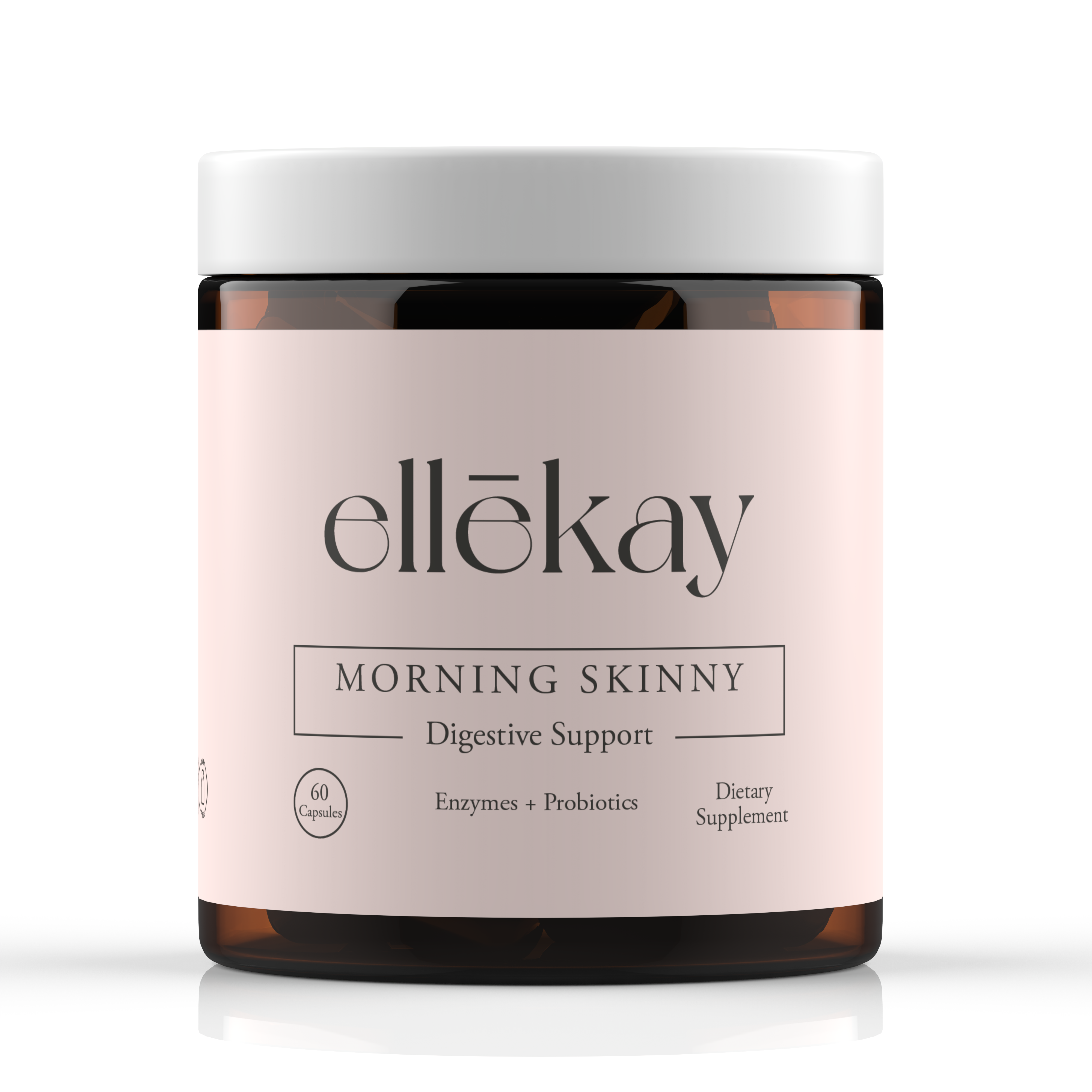
This akkermansia brands compared breakdown looks at strain sourcing, TFU dose per serving, pasteurized versus live formulas, and how the line items on your invoice break down, so you can pick a bottle based on what the research measured rather than marketing language. For everyday gut comfort, Morning Skinny gut-debloat blend pairs a nine-enzyme digestive blend with Akkermansia muciniphila (more than 3 billion TFU per two-capsule serving) and prebiotic fibers, so it is a combination formula rather than a dedicated Akkermansia product.
By Ellekay Team, Women's Wellness Experts
What Are the Best Akkermansia Muciniphila Supplement Brands Available Right Now?
The field of dedicated akkermansia brands compared side by side is still small next to the broader probiotic aisle. Akkermansia muciniphila is a single, well-studied species rather than a multi-strain blend, and culturing it commercially is harder than culturing common Lactobacillus or Bifidobacterium strains, so only a handful of companies produce it at scale. It lives in the mucus layer lining the intestinal wall, part of why researchers care about gut barrier integrity.
Pendulum is the most recognized name, selling Akkermansia as a standalone product and inside multi-strain formulas aimed at blood sugar management. The Akkermansia Company markets a pasteurized Akkermansia muciniphila supplement built on the strain used in the earliest human trials. Some gut health supplements also list Akkermansia as one ingredient among several, which matters for TFU dose, since a blended formula usually delivers far less per serving than a dedicated product.
Which Akkermansia Strain Does Each Brand Use, and Does the Strain Matter?
Strain matters more with Akkermansia muciniphila than with most probiotic bacteria, because the benefits reported in human research were tied to specific, identified strains, not the species in general. When a label just says "Akkermansia muciniphila" with no strain designation, the label alone doesn't tell you which strain is inside, so it is worth asking the brand.
What Is the Difference Between Generic Akkermansia Muciniphila and Pendulum's Own Strain?
Pendulum grows its own strain, Akkermansia muciniphila WB-STR-0001, in its own oxygen-free manufacturing process, which Pendulum says it developed patents for, rather than using the strain from the original human research. Both are Akkermansia muciniphila, but Pendulum's is sold live while The Akkermansia Company's MucT is pasteurized. Pendulum's strain was not the one used in the 2019 Depommier trial; Pendulum points to its own published study (Perraudeau et al., 2020) of a multi-strain formula that includes it. Neither path is superior on its own, but the difference matters before you compare price or dose.
How Do Akkermansia Brands Compare on TFU Dose Per Serving?
TFU dose is where label comparisons get confusing: brands don't disclose it consistently, and some skip a specific count entirely.
What Is TFU, and How Is It Different From CFU in Probiotic Labeling?
CFU, or colony-forming units, measures live bacteria that can still reproduce and form a colony. Akkermansia muciniphila is an obligate anaerobe, meaning it cannot survive contact with oxygen the way many CFU-tested bacteria can, so a standard CFU count does not capture how much survives processing. TFU, or total fluorescent units, is a flow cytometry count of the total bacterial cells present, whether or not each would grow into a new colony. Pasteurized Akkermansia products are measured in TFU for this reason, since pasteurization deactivates reproduction while leaving key cell-wall components intact.
The two dedicated brands named here use different counts, so the numbers are not directly comparable: Pendulum Akkermansia lists 100 million AFU (active fluorescent units) of live bacteria per capsule, and The Akkermansia Company's Akkermansia Essential lists 30 billion TFU of pasteurized cells per capsule, one capsule a day for each (checked on each brand's label, October 2026).
Is a Higher TFU Dose of Akkermansia Always Better?
Not necessarily. The human research behind Akkermansia used a specific dose range, and there's no published evidence that exceeding it produces a proportionally larger benefit. A brand advertising a much higher TFU count than the studied dose is extrapolating past the evidence, not building on it. Dose consistency with the trial, not the biggest number on the label, is what matters.

Is Pasteurized or Live Akkermansia Better?
Both forms exist, and the strongest human evidence currently sits behind the pasteurized version. Depommier et al., writing in Nature Medicine in 2019, gave pasteurized Akkermansia muciniphila to overweight and obese human volunteers in a proof-of-concept trial and reported improvements in several metabolic health markers, including measures tied to insulin sensitivity and gut barrier function, without significant safety concerns.
Live Akkermansia products exist too, and some brands argue a living organism can replenish the gut in a way a pasteurized preparation cannot. The one human trial that tested both forms side by side (Depommier et al., 2019) reported its significant metabolic improvements in the pasteurized group, so the advantage of live bacteria remains unproven. If you want Akkermansia as one part of a broader digestive formula, Ellekay's Morning Skinny pairs it with nine digestive enzymes and prebiotic fibers, taken as two capsules with water after your largest meal, and it is available directly from the product page.
How Do the Akkermansia Brands Compared Here Stack Up on Cost and Value?
Nobody publishes an industry-wide price list for Akkermansia supplements, so the honest way to compare cost is by what actually drives the number on each brand's own page. A few line items move price up or down:
-
TFU concentration per serving. A dose matching the studied trial amount typically costs more than a lower or undisclosed dose.
-
Delivery and storage. Because live Akkermansia is fragile, check how each brand says it protects the bacteria, such as storage directions and capsule type, on the label.
-
Third-party testing. Independent lab verification of TFU count and purity is a real added cost.
-
Subscription versus one-time purchase. Most brands discount a recurring subscription against the one-time price.
On each brand's own site, Pendulum Akkermansia is $75 one-time or $54 a month on subscription for 30 capsules, and The Akkermansia Company's Akkermansia Essential is $65 one-time or $55.25 a month on subscription for 30 capsules (checked October 22, 2026).
Before comparing two brands on price alone, ask each directly: what TFU count is guaranteed at end of shelf life; is that count independently verified; and is the strain the one used in the human research you're relying on. A brand that answers all three plainly is usually the better value, because you're paying for a dose you can trust.
Which Akkermansia Brand Has Third-Party Testing or Clinical Research Behind It?
The strongest published research sits behind the pasteurized strain used in the Depommier et al. trial, and any brand using that strain can point back to it. Third-party testing is a separate question from clinical research, since a brand can have neither, one, or both. Look for a certificate of analysis from an outside lab, rather than a marketing claim.
If you want to read the primary research yourself, most journal databases let you export the citation in APA, MLA, or Chicago style, and switching to a different citation format, AMA included, usually takes one click in the same tool. It's worth keeping a running collection of the articles cited on each brand's page, in whatever citation manager or notes app you already use, so you can compare claims side by side instead of relying on memory.
How Do I Know Which Akkermansia Brand Is Right for Me?
Once you've read the akkermansia brands compared above, the decision usually comes down to your primary goal. If blood sugar and general metabolic health are your main concerns, prioritize the pasteurized strain with published human trial data behind it. If skin and inflammation are more of your focus, emerging research on the gut-skin connection is worth weighing against a dedicated skincare routine rather than a probiotic replacing one. If longevity is your goal, ongoing research connecting Akkermansia levels to markers of biological aging is active but far from settled, so treat it as one data point among several, and pair any decision with a conversation with your physician.
Frequently Asked Questions
Is Akkermansia muciniphila safe to take daily?
Published human research, including the Depommier et al. 2019 trial, did not report significant safety concerns with daily pasteurized Akkermansia. Anyone with a chronic digestive condition, who is pregnant or breastfeeding, or who takes medication for blood sugar or metabolic health should talk with their doctor first.
How long does it take for Akkermansia supplements to work?
The human trial behind pasteurized Akkermansia measured outcomes over weeks, not days, and most people should expect a similar timeline rather than an overnight change. Gut bacteria populations shift gradually, and daily consistency matters more than the specific brand for how quickly any change becomes noticeable.
What's the difference between an Akkermansia supplement and a general probiotic?
Most general probiotics contain multiple common strains like Lactobacillus and Bifidobacterium for broad digestive support. Akkermansia muciniphila is a single, more specialized species studied for its relationship to the gut's mucus barrier and metabolic markers, so the two are not interchangeable.
Do I need a doctor's approval before starting an Akkermansia supplement?
It's not required, but it's reasonable for anyone managing diabetes, insulin resistance, or another metabolic condition, since Akkermansia research touches blood sugar and insulin sensitivity. A quick conversation with your doctor or pharmacist can confirm there's no interaction with medication you take.
Where can I buy Akkermansia muciniphila supplements?
Dedicated Akkermansia brands like Pendulum and the Akkermansia Company sell directly through their own websites, and some also list on major retail marketplaces. Because dosing and strain sourcing vary so much, buying directly from the manufacturer's page is usually the most reliable way to confirm you're getting the strain and TFU count you researched.
Talk to Ellekay About Building Your Daily Gut Health Routine
Comparing Akkermansia brands is only half the decision. If you want a second opinion on how a new supplement fits into what you're already taking, contact the Ellekay team and we'll help you think it through.