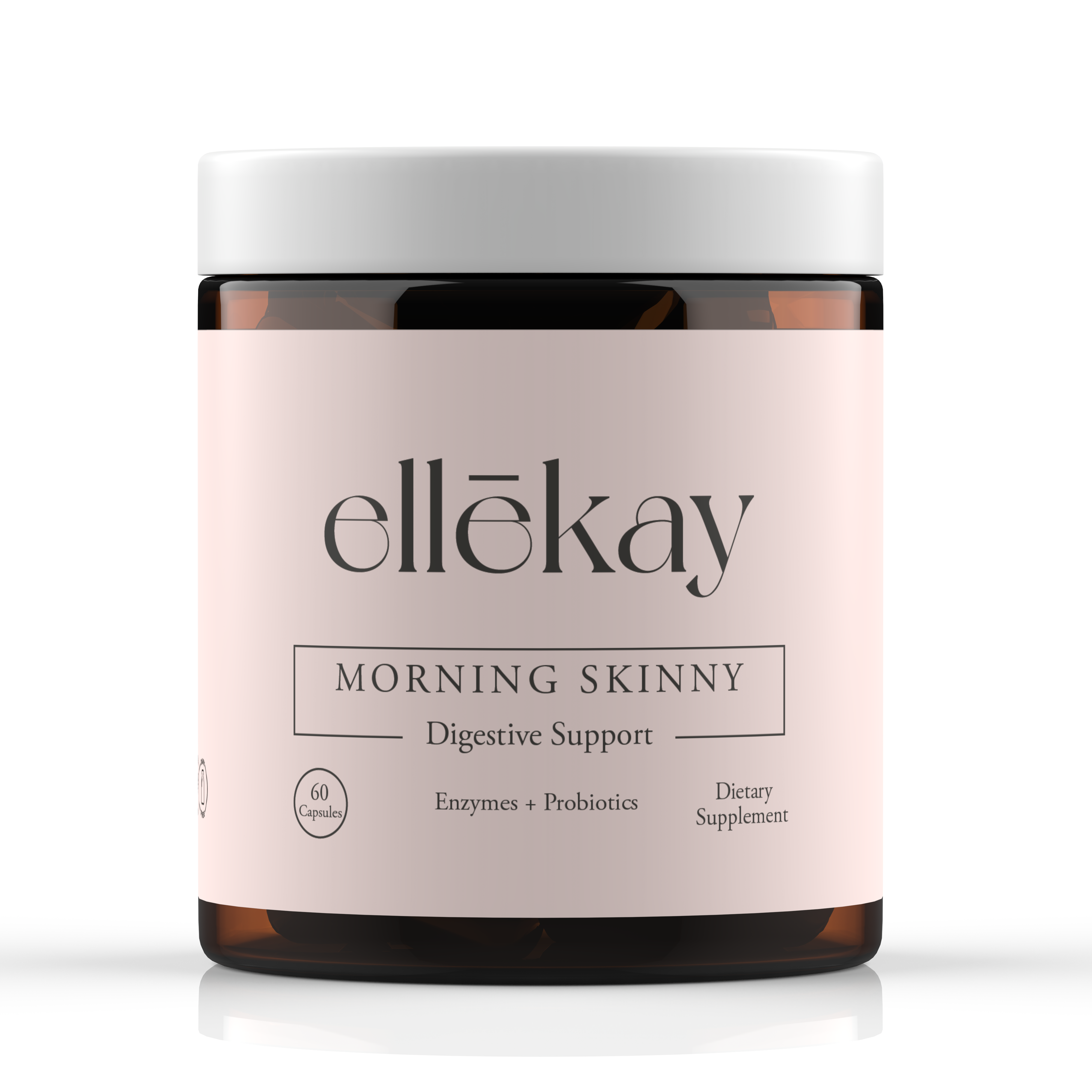
The vagus nerve and digestion are more closely linked than most women realize. This cranial nerve acts as a direct communication channel between your brain and your gut, shaping how you break down food, manage bloating, and absorb nutrients. Targeted gut support, like the Morning Skinny gut-debloat blend, works best when you understand the nerve behind it all.
By Ellekay Team, Women's Wellness Experts
The vagus nerve is the longest cranial nerve in the human body, stretching from the brainstem all the way down through the neck, chest, and abdomen. Its name comes from the Latin word for "wandering," and it truly wanders, touching your heart, lungs, liver, and gut along the way.
As the tenth cranial nerve, it serves as the main line of the parasympathetic nervous system, the branch of your nervous system responsible for rest, recovery, and digestion. When the vagus nerve is functioning well, your body can shift out of fight-or-flight mode and into a calm state where healing and proper digestion actually happen.
How the Vagus Nerve Controls Your Digestive System
Your digestive system relies on the vagus nerve more than any other single neural pathway. When you sit down to eat, nerve signals travel from your brainstem down through the nerve vagus to trigger stomach acid production, activate digestive enzymes, and get peristalsis moving. Peristalsis is the rhythmic muscular contraction that pushes food through your intestines.
Research by Bonaz, Bazin, and Pellissier published in Frontiers in Neuroscience (2018) confirmed that vagal signals regulate gastric motility, secretion, and even inflammation in the gut lining. Without strong vagal tone, that coordination breaks down. Food sits longer in the stomach, gas builds up, and the tight junctions in your intestinal wall can become compromised.
The relationship between the vagus nerve and digestion becomes especially clear under stress. When cortisol rises, vagal signaling suppresses, and digestive symptoms follow. The biology is mechanical, not imagined.
The Gut-Brain Axis: Two-Way Traffic
Most people assume the brain sends signals to the gut. In reality, about 80 percent of the fibers in the vagus nerve carry information in the opposite direction, from the gut to the brain. That makes the vagus nerve less of a one-way command line and more of a continuous reporting system.
Your gut microbiome, the trillions of bacteria living in your intestines, communicates with your brain through this channel. Bacterial metabolites, including short-chain fatty acids and neurotransmitter precursors, can activate vagal afferent neurons and influence mood, appetite, and stress response. That signaling only works cleanly when the intestinal mucus barrier stays intact, since it keeps bacteria and their byproducts contained instead of triggering the kind of low-grade inflammation that disrupts vagal communication.
Chronic stress, poor sleep, and processed food diets all dampen this two-way conversation, creating a cycle where gut dysfunction feeds brain fog and anxiety feeds more gut dysfunction.

Signs Your Vagal Tone May Be Low
Vagal tone refers to the baseline activity level of your vagus nerve. Higher tone generally correlates with better stress resilience, more stable heart rate, regulated blood pressure, and smoother digestion. Lower tone is associated with inflammation, digestive sluggishness, and difficulty returning to calm after stress.
Common signs of low vagal tone include:
- Frequent bloating or constipation that does not resolve with diet changes
- Difficulty falling asleep or winding down after a stressful day
- Heart rate that stays elevated even at rest
- Feeling chronically anxious or on edge
- Blood pressure that trends higher than expected for your age
- Slow gastric emptying or a lasting sense of fullness after meals
These are not isolated symptoms. They are overlapping signals from a nervous system that has lost some of its natural braking capacity.
If you are noticing changes in your microbiome health alongside these symptoms, it is worth looking at postbiotic compounds, the metabolic byproducts of gut bacteria that interact directly with vagal pathways. Gut microbiome testing can offer a general snapshot of your bacterial diversity, but the results alone will not diagnose vagal dysfunction. That conversation is best had with a healthcare provider who can weigh your specific symptoms.
How to Stimulate Vagus Nerve Activity Naturally
You can stimulate vagus nerve activity with practices that are simple, accessible, and backed by clinical research. None of these require expensive equipment.
Diaphragmatic breathing. Long, slow exhales activate the parasympathetic nervous system more than inhalation does. Breathing out for twice as long as you breathe in, such as a four-count inhale and eight-count exhale, directly increases vagal tone. A 2010 study by Lehrer and Gevirtz in Applied Psychophysiology and Biofeedback showed that slow-paced breathing at around 0.1 Hz reliably increases heart rate variability, a direct measure of vagal activity.
Cold exposure. Splashing cold water on your face or ending a shower with 30 seconds of cold activates the diving reflex, which routes blood to core organs and increases parasympathetic tone.
Humming, singing, or gargling. The muscles at the back of your throat are innervated by the vagus nerve. Vibrating them through humming or singing sends activation signals directly up through the nerve vagus to your brainstem.
Eating slowly and chewing thoroughly. Mechanical chewing generates oral sensory signals that feed into vagal pathways before food ever reaches your stomach. Rushing through meals bypasses this priming step entirely.
Supporting your gut microbiome. Because the gut sends the majority of vagal signals upward, a healthier microbiome means more robust vagal communication. Both whole food sources and targeted supplements can support that microbiome, and the right combination usually comes down to what you can stick with consistently. The Morning Skinny formula includes ingredients specifically chosen to reduce bloating and support the gut environment where vagal signaling begins.
Frequently Asked Questions
Can stress permanently damage the vagus nerve?
Chronic stress can reduce vagal tone over time, but the nerve itself is remarkably adaptive. Consistent practice of vagal-stimulating habits, such as slow breathing, regular movement, and improved sleep, can rebuild tone. The nervous system remains plastic throughout adulthood, meaning sustained effort produces measurable change.
How does the vagus nerve affect heart rate?
The vagus nerve is the primary brake on heart rate. When vagal tone is high, the parasympathetic nervous system releases acetylcholine, which slows the sinoatrial node in the heart. This is why heart rate drops during calm, slow breathing and why heart rate variability is used as a proxy for vagal health.
Is the vagus nerve the same as the gut-brain axis?
The vagus nerve is the main anatomical structure of the gut-brain axis, but the axis also includes hormonal signaling, immune pathways, and bacterial metabolites that travel through the bloodstream. Think of the nerve vagus as the fastest lane in a multi-lane highway.
Can gut supplements support vagal tone?
Indirectly, yes. Because the gut sends signals upward through the vagus nerve, improving gut microbiome diversity and reducing intestinal inflammation can strengthen the quality and frequency of those signals. This is one reason gut health supplements that target bloating and microbial balance support more than just digestion.
What does a high vagal tone feel like?
High vagal tone means the parasympathetic nervous system is efficiently regulating your body's baseline functions. It correlates with lower resting heart rate, more stable blood pressure, better emotional regulation, and more resilient digestion. Research by Thayer and Lane published in Neuroscience and Biobehavioral Reviews (2009) links high vagal tone to lower systemic inflammation.
Take the Next Step for Your Gut-Brain Health
Understanding the link between the vagus nerve and digestion is a genuine foundation for lasting wellness, from reduced bloating to calmer stress responses after a hard day. If you have questions about which Ellekay products best fit your routine, contact the Ellekay team and they will help you find the right starting point.