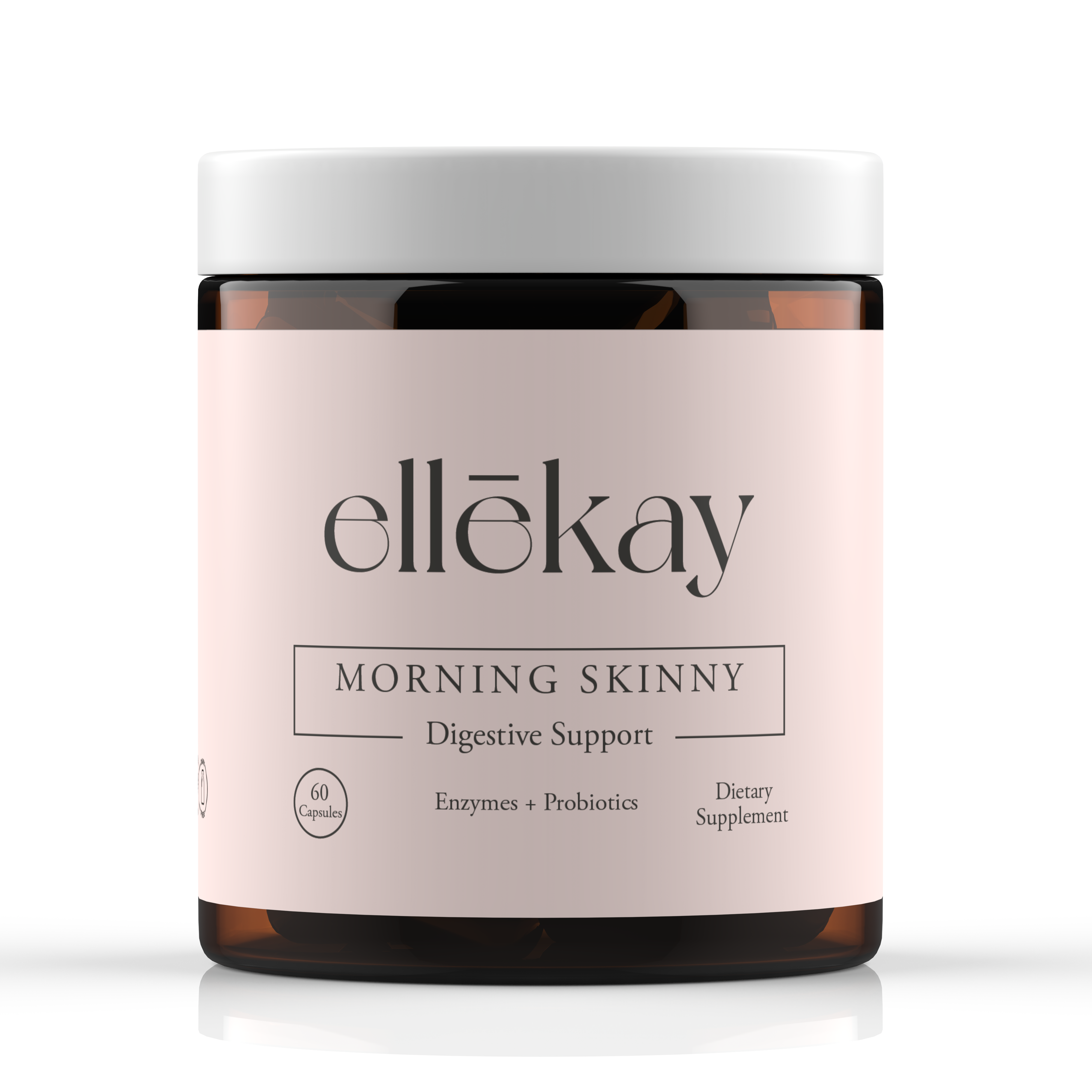
The future of gut health is arriving faster than most people realize. New research is reshaping how women understand gut bacteria, immune function, and mental wellness. Built on exactly this emerging science, the Morning Skinny formula was formulated to support digestive health from the inside out.
By Ellekay Team, Women's Wellness Experts
The Gut Microbiome Has Become a Medical Frontier
The gut microbiome, a dense ecosystem of trillions of gut bacteria living in the digestive tract, has moved from a niche research interest to a central focus of modern medicine. Scientists now recognize that gut microbiota composition shapes immune system function, regulates inflammation, influences metabolism, and communicates with the brain through biochemical pathways that researchers are still mapping.
A landmark 2021 study by Wastyk et al., published in Cell, found that dietary interventions meaningfully altered gut microbiota diversity and systemic immune markers in healthy adults. The findings confirmed that gut bacteria populations are not fixed; they respond to food choices, sleep quality, and stress levels. This established the gut microbiome as one of the most actionable targets in preventive health.
For researchers studying digestive health, inflammatory bowel disease, metabolic syndrome, and mental health conditions, gut microbiota is now a primary variable rather than an afterthought.
Short-Chain Fatty Acids and What the Science Shows
Short-chain fatty acids (SCFAs) are produced when gut bacteria ferment dietary fiber. These compounds fuel the colon lining, calibrate immune system responses, and help control inflammation throughout the body. Short-chain fatty acids like butyrate, propionate, and acetate are among the key metabolites connecting dietary choices to gut microbiota health outcomes.
Koh et al. established in a widely cited Cell review (2016) that short-chain fatty acids are key mediators between dietary fiber, the gut microbiome, and immune regulation. More recent clinical trials indexed on PubMed show that targeted prebiotic supplementation meaningfully raises SCFA production even in adults whose gut bacteria have been disrupted by antibiotics or poor nutrition. Postbiotics, the bioactive compounds produced during fermentation, are also gaining research attention as shelf-stable, highly bioavailable alternatives to live probiotic cultures.

Probiotics, Prebiotics, and the Case for Personalization
The probiotics prebiotics conversation has grown considerably more nuanced. Research from the Human Microbiome Project, published across journals including Science, showed that individuals respond very differently to identical probiotic strains, a finding that is fundamentally reshaping how gut health supplementation is recommended.
A 2018 study by Zmora et al. in Cell found that personalized probiotic protocols based on an individual's existing gut microbiome profile produced better colonization outcomes and improved digestive health scores compared to standardized approaches during clinical trials. For women, hormonal changes add another layer of complexity: estrogen shifts alter gut bacteria composition in ways that directly inform supplementation choices, a connection explored further in menopause and gut health.
The Gut-Brain Axis and Mental Health Science
The gut-brain axis, the bidirectional communication channel between the gut and the brain, is one of the most significant areas in emerging gut health science. The gut microbiome produces serotonin precursors, GABA, and other neuroactive compounds, and disruptions to healthy gut bacteria populations have been linked to anxiety, depression, and reduced cognitive clarity.
Valles-Colomer et al. published a major study in Nature Microbiology (2019) showing that specific gut bacteria species correlated significantly with quality of life and depression scores across a large European cohort, independent of other variables. The authors concluded that gut microbiota composition is an emerging factor in mental health medicine with real implications for dietary and probiotic interventions. Eating patterns also shape this connection. Time-restricted eating windows appear to shift gut microbiota composition, and researchers are exploring how those shifts connect back to the mental wellness pathways described above.
The Future of Gut Health: Key Trends Through 2027
Several research areas are positioned to reshape gut health science and supplementation over the next two years.
Akkermansia Muciniphila
This gut bacteria species has attracted substantial clinical trials attention for its role in fortifying the gut lining and supporting metabolic function. Strain selection and dosing vary meaningfully across products, a distinction covered in this probiotics comparison.
Dietary Fatty Acids and Gut Microbiota Diversity
Research by Costantini et al. in Int J Mol Sci (2017) found that diets rich in omega-3 fatty acids supported greater gut microbiota diversity and reduced inflammatory markers. As dietary fatty acids become better understood as modulators of gut bacteria composition, nutritional guidance for a healthy gut will grow more specific.
Gut Health Across the Female Lifespan
From pregnancy through postmenopause, researchers are refining their understanding of how gut microbiota shifts at every life stage. Pregnancy is one of the most closely studied of these transitions, with researchers examining how a mother's gut microbiome may influence infant health outcomes and how digestive support can be maintained safely throughout. Across every life stage, fiber-first, evidence-backed approaches remain the most consistently supported way to care for a healthy gut microbiome.
Frequently Asked Questions
What does the future of gut health research focus on most?
Current science is converging on three areas: the gut-brain axis and mental health connections, precision probiotic protocols matched to individual gut microbiota, and the downstream role of short-chain fatty acids in immune and metabolic function. Clinical trials indexed on PubMed consistently show that personalized approaches outperform standardized interventions for most digestive health and immune outcomes.
What are short-chain fatty acids and why do they matter?
Short-chain fatty acids are metabolites produced when gut bacteria ferment dietary fiber. They fuel the colon wall, modulate immune responses, and help manage systemic inflammation. A healthy gut that consistently produces adequate SCFAs is associated with lower inflammatory disease risk and better metabolic balance. Increasing dietary fiber diversity is the most reliable strategy for raising SCFA production naturally.
How does the gut microbiome affect the immune system?
Roughly 70 percent of immune activity is housed in the gut. Gut microbiota continuously train immune cells to recognize pathogens and tolerate harmless substances. When gut bacteria diversity declines, immune regulation can falter, contributing to chronic inflammation and susceptibility to illness. Consistent probiotics prebiotics intake and diverse dietary fiber are the most studied strategies for maintaining immune-ready gut microbiota.
Will precision gut health become mainstream by 2027?
Evidence strongly suggests yes. Zmora et al. (Cell, 2018) showed that matching probiotic and dietary interventions to individual gut microbiome profiles produces meaningfully better outcomes than standardized protocols. By 2027, direct-to-consumer gut microbiome testing paired with personalized supplement recommendations is expected to move from a niche service to a standard component of preventive health care.
What dietary changes most support a healthy gut?
Increasing dietary fiber diversity across different plant sources is the most consistently supported strategy in gut health science. Varied fiber feeds different gut bacteria populations and raises short-chain fatty acid production. Adding fermented foods, reducing ultra-processed food intake, and supplementing with evidence-backed probiotics prebiotics are all approaches supported by current clinical research.
Take the Next Step Toward a Healthier Gut
Understanding the future of gut health gives you a real advantage in choosing what supports your body every day. The Morning Skinny gut-debloat blend brings together gut-supportive ingredients grounded in this emerging science to help you build a more resilient digestive system. Have questions? Ellekay customer support is ready to help you find what works.