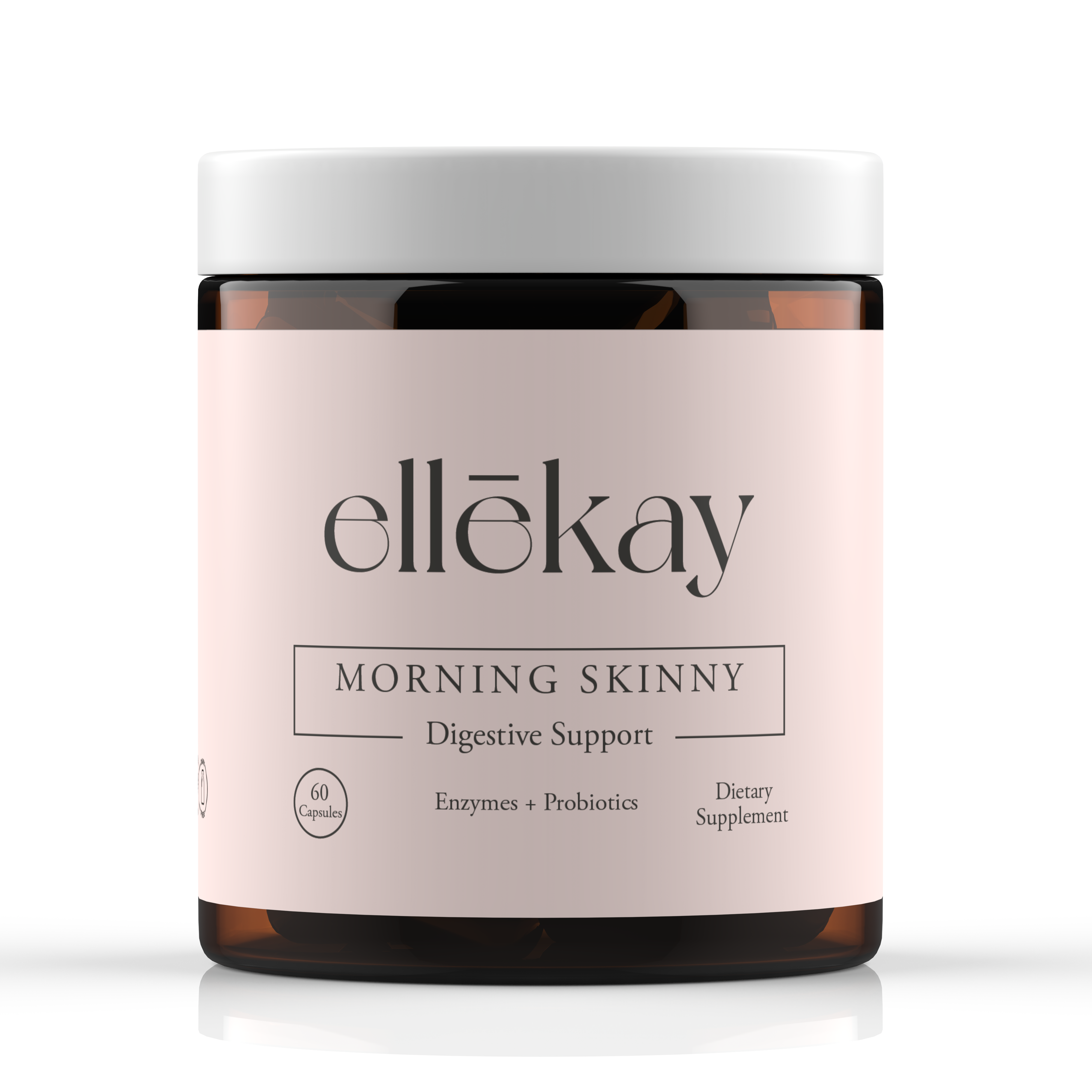
When comparing akkermansia muciniphila supplements vs other probiotics, the differences go well beyond strain names. Akkermansia muciniphila targets the gut's mucin layer rather than simply adding bacteria to the digestive tract. For women focused on gut barrier integrity and metabolic balance, Ellekay's Morning Skinny puts this distinction into practice.
By Ellekay Team, Women's Wellness Experts
What Makes Akkermansia Muciniphila Different From Standard Probiotics
Most people recognize Lactobacillus acidophilus and Bifidobacterium longum from yogurt containers and pharmacy shelves. These strains are well-researched, effective, and widely used. But Akkermansia muciniphila works through a fundamentally different mechanism: it lives in and reinforces the mucin layer of the intestinal wall, the protective gel coating that separates your gut lining from digestive contents.
This location changes what Akkermansia does at a structural level. While Lactobacillus and Bifidobacterium primarily produce short-chain fatty acids and modulate luminal pH, Akkermansia feeds on mucin as an energy source while simultaneously signaling goblet cells to produce more of it. This creates a reinforcement cycle for the gut barrier that other probiotic strains do not initiate.
When the mucin layer thins, harmful compounds can pass more readily into the bloodstream. Akkermansia helps prevent that thinning, making it a barrier-specialist strain rather than a general-colonization probiotic. That barrier-first mechanism is exactly why mucin layer health carries so much weight in women's overall gut wellness.
How Akkermansia Muciniphila Supplements Work in the Body
Akkermansia operates through two primary pathways once it reaches the gut. First, it stimulates mucin production from goblet cells, reinforcing the physical barrier of the intestinal lining. Second, it communicates with immune cells through the gut-associated lymphoid tissue, helping to calibrate inflammatory signals at the gut wall.
A key discovery in Akkermansia research involves a protein called Amuc_1100, found on the bacteria's outer membrane. Plovier et al., publishing in Nature Medicine in 2017, showed that this protein retains biological activity even when Akkermansia cells are heat-inactivated through pasteurization. This mattered enormously for supplement development because it means pasteurized Akkermansia can still produce gut barrier benefits without the viability challenges that live strains face during shelf storage.
For comparison, most Lactobacillus and Bifidobacterium strains rely on surviving intact through stomach acid to colonize the colon and produce benefits. Delivery technology like enteric coating exists specifically to improve survival rates. Akkermansia's Amuc_1100 pathway operates independently of this survival requirement, giving it a structural advantage as a supplement ingredient.

Comparing Akkermansia to Lactobacillus and Bifidobacterium Strains
When evaluating akkermansia muciniphila supplements vs other probiotics, it helps to look at what each strain is actually built to do.
Lactobacillus Strains
Lactobacillus species produce lactic acid, which lowers gut pH and creates a less hospitable environment for harmful bacteria. Strains like L. rhamnosus GG have strong clinical support for reducing antibiotic-associated diarrhea, confirmed by Szajewska and Kolodziej in Alimentary Pharmacology and Therapeutics (2015). Lactobacillus strains are also widely used for vaginal microbiome support, since Lactobacillus dominance in the vaginal environment is associated with better reproductive health outcomes.
Bifidobacterium Strains
Bifidobacterium tends to concentrate its activity in the large intestine, where it supports stool regularity, butyrate production, and immune modulation. B. longum and B. infantis are linked to reduced constipation and improved gut transit. Butyrate, produced as a fermentation byproduct, feeds colonocytes and contributes to intestinal barrier integrity in its own right.
Akkermansia Muciniphila
Where Lactobacillus and Bifidobacterium address the gut's microbial ecosystem broadly, Akkermansia focuses on the structural layer beneath. Research by Dao et al., published in Gut (2016), found that women with higher baseline Akkermansia abundance had better metabolic outcomes following a calorie-restricted diet, including greater improvements in fasting glucose and body fat markers. This connection to metabolic health through the gut barrier, especially its ties to blood sugar regulation, is what sets Akkermansia apart.
The Science Behind Akkermansia Supplementation
Akkermansia entered the human supplement market later than Lactobacillus and Bifidobacterium, but the research pipeline is advancing quickly.
The landmark human trial was conducted by Depommier et al. and published in Nature Medicine in 2019. In this placebo-controlled pilot study, overweight adults with metabolic syndrome received either live Akkermansia, pasteurized Akkermansia, or a placebo daily for three months. Both Akkermansia groups showed improvements in insulin sensitivity, plasma cholesterol, and gut permeability markers compared to placebo. Pasteurized Akkermansia performed comparably to the live strain, validating the Amuc_1100 mechanism that Plovier et al. had identified two years earlier.
This positions Akkermansia in interesting territory between traditional probiotics and postbiotics. Postbiotics are bioactive compounds derived from microorganisms that provide health benefits independent of live bacteria, which matters because it removes the dependency on a strain surviving stomach acid, colonization, and shelf storage in order to work. Because pasteurized Akkermansia retains function through Amuc_1100, it shares these same practical advantages, offering a more stable and predictable path to gut barrier support than strains that must stay alive to be effective.
Choosing Between Akkermansia Muciniphila Supplements vs Other Probiotics
Choosing between akkermansia muciniphila supplements vs other probiotics depends on what you are trying to accomplish.
Akkermansia is especially relevant for women focused on gut barrier integrity, metabolic health, blood sugar balance, or reducing systemic inflammation tied to intestinal permeability. It also fits well into clean-eating or lower-calorie approaches, since higher Akkermansia abundance is associated with better metabolic outcomes in dietary interventions.
Traditional probiotics like Lactobacillus and Bifidobacterium are the better starting point for recovering from antibiotic use, managing IBS or irregular digestion, supporting vaginal microbiome health, or addressing acute digestive discomfort. These strains have more condition-specific clinical evidence built up over decades of research.
If you are weighing food sources against supplementation, the tradeoff usually comes down to consistency and dose. Fermented foods like yogurt, kefir, and sauerkraut can support a healthy microbiome, but the strains and amounts they deliver vary widely and rarely include meaningful levels of Akkermansia specifically. A targeted supplement offers a more consistent, measured way to support strains that are difficult to get from diet alone. In practice, most women benefit from both: a broad-spectrum probiotic plus targeted Akkermansia support covers different layers of gut health simultaneously.
For a formula built with this layered approach in mind, the Morning Skinny formula is designed to support gut health from multiple angles, including ingredients that address both the gut barrier and digestive function together.
Frequently Asked Questions
Can I take Akkermansia muciniphila with other probiotics?
Yes. Akkermansia and traditional probiotics like Lactobacillus and Bifidobacterium occupy different ecological niches in the gut, so combining them addresses distinct functions rather than competing for the same territory. Many gut health protocols now include Akkermansia alongside broad-spectrum blends to support both the mucin layer and overall microbial diversity at the same time.
How long does it take for Akkermansia supplements to work?
Based on the Depommier et al. trial published in Nature Medicine (2019), measurable metabolic improvements appeared over a three-month supplementation period. Gut permeability markers may begin shifting within a few weeks of consistent use, but meaningful changes in metabolic and body composition outcomes typically require 8 to 12 weeks of daily supplementation. Consistency matters more than any specific timing window.
Is pasteurized Akkermansia as effective as live strains?
Current evidence suggests yes, at least for metabolic and gut barrier outcomes. Plovier et al. (Nature Medicine, 2017) identified the Amuc_1100 protein as the key driver of Akkermansia's gut barrier benefits, and this protein remains active after pasteurization. The Depommier et al. (2019) human trial found pasteurized Akkermansia performed comparably to live strains across the measured outcomes, making shelf-stable formulas a practical and well-supported option.
Does Akkermansia help with bloating?
Akkermansia targets the gut's mucin layer and supports intestinal barrier integrity, which can reduce the permeability that contributes to gas and bloating in some women. It is not a primary anti-bloating strain in the same direct way that certain Bifidobacterium species are, but by improving the gut's structural defense, it helps create conditions where digestive discomfort becomes less frequent over time.
How do I know if my gut microbiome is low in Akkermansia?
Microbiome testing can measure Akkermansia abundance relative to other species in your gut, though results vary by lab and testing method, and interpretation is not always straightforward on its own. Rather than relying on an abundance number alone, it is worth discussing gut barrier symptoms and metabolic health with a healthcare provider, and weighing testing against simply supporting the gut barrier directly through diet and targeted supplementation.
Build a Gut Health Routine That Actually Fits Your Goals
Knowing how akkermansia muciniphila supplements compare to other probiotics gives you a clearer foundation for making decisions about your gut health strategy. If you want personalized guidance on where to start, reach Ellekay support and the team can help you find the right fit for your goals.