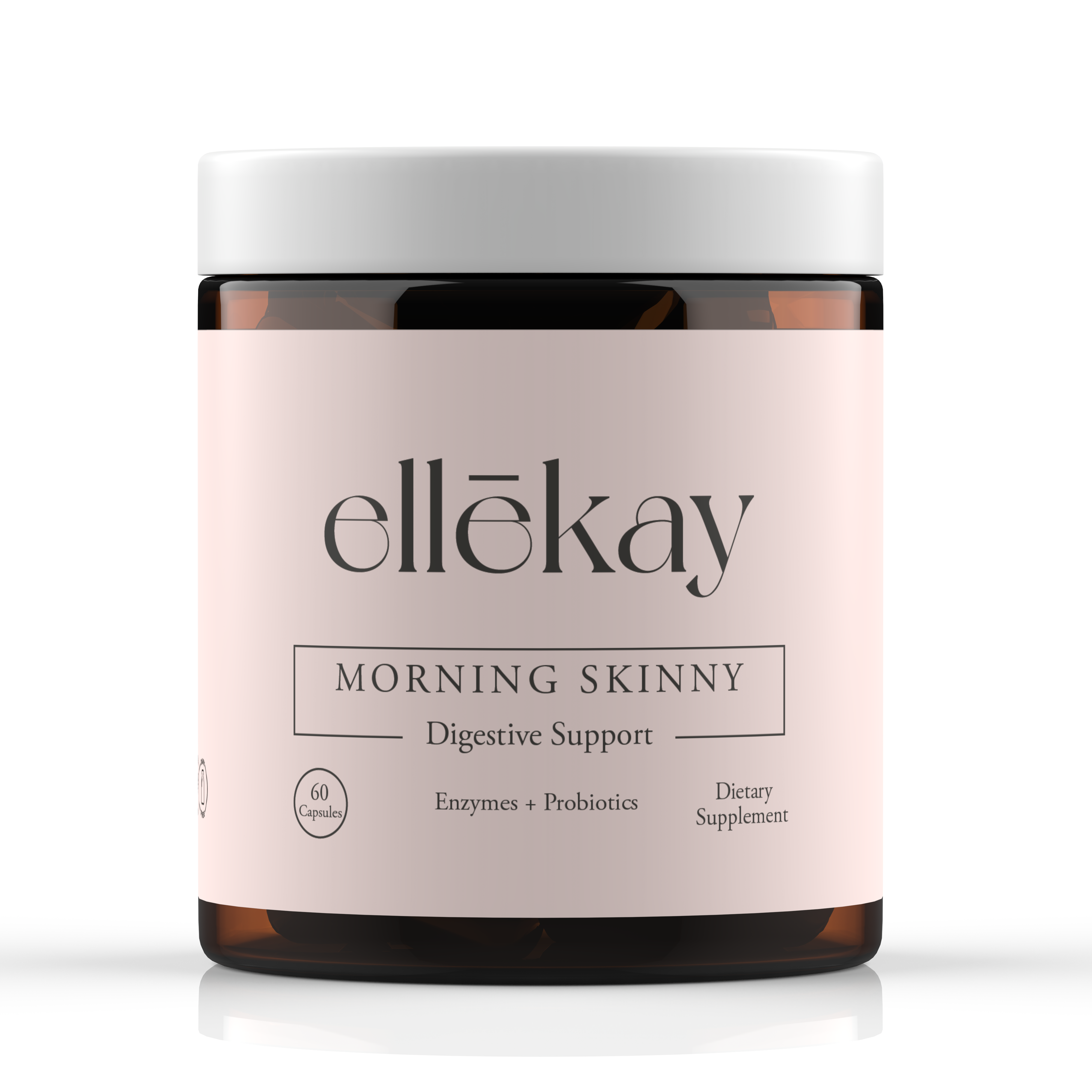
Most people assume serotonin is a brain chemical, but serotonin and the gut tell a very different story. Around 90% of the body's serotonin is produced inside the gastrointestinal tract, making digestive health a direct driver of mood, energy, and emotional resilience. Supporting that gut environment is exactly what Ellekay's Morning Skinny is formulated to help with.
By Ellekay Team, Women's Wellness Experts
Serotonin and the Gut: Your Body's Hidden Production Hub
Understanding serotonin and the gut starts with a fact most wellness conversations overlook: your brain is not the primary production site. Specialized cells called enterochromaffin cells line the walls of the gastrointestinal tract and synthesize the vast majority of the body's serotonin. These cells respond to mechanical pressure from food moving through the digestive system, as well as chemical signals from the food itself, then release serotonin to coordinate digestion, modulate pain sensation, and send signals upward through the nervous system toward the brain.
Researcher Mark Gershon at Columbia University described the gut's enteric nervous system as a "second brain" in his 1999 book of the same name, noting that the gut contains more neurons than the spinal cord. His work helped establish that serotonin produced in the gut coordinates smooth muscle contractions, regulates intestinal fluid secretion, and communicates directly with the brain.
When serotonin levels in the gut drop, the effects extend well beyond digestive symptoms. Changes in mood, sleep quality, appetite regulation, and pain sensitivity all follow, because serotonin plays a coordinating role across every one of these systems.
How Gut Bacteria Shape Serotonin Production
Your gut microbiome plays an active and measurable role in how much serotonin your body makes. A landmark study by Yano et al., published in Cell (2015, doi: 10.1016/j.cell.2015.02.047), showed that germ-free mice had significantly lower colonic serotonin compared to mice with a normal microbiome. Reintroducing specific spore-forming bacteria raised serotonin production measurably.
This finding confirms that the bacteria gut researchers associate with colonic health directly stimulate enterochromaffin cells to increase output. A diverse, balanced gut microbiota is not just a marker of digestive wellbeing. It is one of the primary biological inputs your body relies on to maintain adequate serotonin levels throughout the gastrointestinal tract.
Dysbiosis, or microbial imbalance, disrupts this stimulation. The result can be reduced serotonin production and, over time, measurable effects on mood, digestion, and immune system regulation locally in the gut lining.
Gut microbiome testing has become more accessible in recent years and can offer a general snapshot of bacterial diversity and composition. These tests are best understood as one data point rather than a diagnosis, and results are most useful when reviewed with a healthcare provider who can help translate them into practical next steps for digestive and overall wellness.

The Vagus Nerve: How Gut Serotonin Reaches Your Brain
The serotonin gut relationship does not stay confined to the abdomen. It extends into the brain through a direct neural pathway: the vagus nerve. This long nerve runs from the brainstem down through the chest and into the abdominal region, and roughly 90% of the signals it carries travel upward, from gut to brain. The vagus nerve plays a central role in the gut-brain axis, the bidirectional communication network linking your digestive health to your mental state.
Serotonin produced in the gastrointestinal tract activates vagus nerve fibers, which relay those signals into the central nervous system where they influence mood, stress responses, and emotional regulation. Mayer et al. documented this pathway in Neurogastroenterology and Motility (2014), framing the vagus nerve as the primary anatomical route through which gut microbiome changes affect brain function and behavior.
When gut inflammation or dysbiosis disrupts serotonin signaling, the vagus nerve transmits that disruption upward into the brain. This is why gut imbalance is so consistently associated with depression anxiety, fatigue, and diminished mental clarity.
The integrity of the gut lining also matters for this process, since the protective mucus layer supports the enterochromaffin cells responsible for serotonin production.
Gut Serotonin, Mental Health, and Mood Disorders
The science of body serotonin and mental health has shifted considerably over the past decade. Rather than framing depression anxiety purely as a brain chemistry imbalance, researchers now recognize gut-derived serotonin as a significant contributor. Cryan and Dinan reviewed the growing evidence in Nature Reviews Neuroscience (2012), showing that gut microbiome composition shapes central nervous system function, including how the brain processes stress and regulates mood.
People with irritable bowel syndrome illustrate this connection clearly. They experience depression and anxiety at rates substantially above the general population, and research consistently shows abnormal serotonin levels in their gastrointestinal tracts. The bowel syndrome and mood disorders often arrive together precisely because the same disrupted serotonin gut signaling affects both bowel function and emotional regulation.
This bidirectional relationship means that caring for your gut is a genuine mental health strategy, not just a digestive one.
Diet also shapes the bacteria gut researchers connect to serotonin production. Fiber-rich, minimally processed foods feed the microbial populations that stimulate enterochromaffin cells, and probiotic-rich foods or fermented options can add beneficial strains directly. Microbial metabolites produced during fermentation, sometimes called postbiotics, also support the gut lining and contribute to the signaling pathways connecting digestion to mood.
What Disrupts Serotonin in the Gut
Several common lifestyle factors suppress serotonin production in the gastrointestinal tract:
Antibiotic Use
Broad-spectrum antibiotics reduce bacterial diversity in the gut microbiota, depleting the spore-forming bacteria that stimulate enterochromaffin cells. Even a single course can alter the gut microbiome for months (Jernberg et al., Microbiology, 2010).
Low-Fiber, Ultra-Processed Diets
Beneficial bacteria gut populations need fermentable fiber to thrive. Without it, microbial diversity drops, enterochromaffin cell stimulation weakens, and serotonin production follows. Tryptophan, an amino acid from dietary protein, is the direct biochemical precursor to serotonin, so protein-poor diets limit output from both the microbial and nutritional side.
Chronic Stress
Elevated cortisol suppresses the immune system locally in the gut and disrupts the microbial environment that supports healthy serotonin signaling. Chronic stress degrades the gut conditions on which normal serotonin levels depend.
Poor Sleep
Serotonin is a biochemical precursor to melatonin, the hormone that regulates sleep cycles. Poor sleep disrupts gut motility and microbiome composition, creating a feedback cycle where diminished gut serotonin levels make restorative sleep harder to achieve.
Frequently Asked Questions
Does gut health really affect mood and mental health?
Yes. Around 90% of the body's serotonin is produced in the gastrointestinal tract, and this serotonin communicates with the brain through the vagus nerve and central nervous system. Research by Cryan and Dinan (Nature Reviews Neuroscience, 2012) confirmed that gut microbiome disruption has measurable effects on mood, anxiety, and depression. A healthier gut microbiome supports more stable serotonin signaling and, in turn, more stable mental health.
What is the connection between irritable bowel syndrome and serotonin?
Serotonin regulates smooth muscle contractions and fluid secretion throughout the gastrointestinal tract, so when serotonin signaling is dysregulated, bowel motility and sensation follow. People with irritable bowel syndrome show abnormal serotonin levels in the gut, contributing to the cramping and urgency associated with the bowel syndrome. Some IBS treatments specifically target serotonin receptors in the gut for this reason.
Can diet increase serotonin levels in the gut?
Yes, indirectly. High-fiber foods feed the bacteria gut researchers link to enterochromaffin cell stimulation and serotonin production. Tryptophan-rich proteins such as turkey, eggs, and legumes supply the precursor your body needs for serotonin synthesis. No single food dramatically boosts output, but a consistent dietary pattern supporting a healthy gut microbiome creates the right conditions for adequate serotonin levels.
How does the vagus nerve connect gut serotonin to mental health?
The vagus nerve runs from the brainstem to the abdomen and carries gut-to-brain signals. Serotonin produced in the gastrointestinal tract activates vagus nerve fibers, which relay those signals into the central nervous system. This is the pathway through which gut inflammation and microbiome imbalance translate into changes in mood, stress tolerance, and depression anxiety symptoms.
Is gut-derived serotonin the same as brain serotonin?
No. Gut serotonin primarily regulates gastrointestinal tract mechanics and communicates with the brain via the vagus nerve. It does not cross the blood-brain barrier directly. Brain serotonin is synthesized separately from tryptophan that enters the central nervous system. The two pools are functionally distinct but deeply connected through the gut-brain axis.
Support the Gut Where Your Mood Begins
Your gut is producing most of the body's serotonin right now, and the health of your microbiome determines how well that process works. Explore the Morning Skinny gut-debloat blend to see how targeted gut support fits your daily routine, or contact the Ellekay team with any questions about finding the right approach for you.