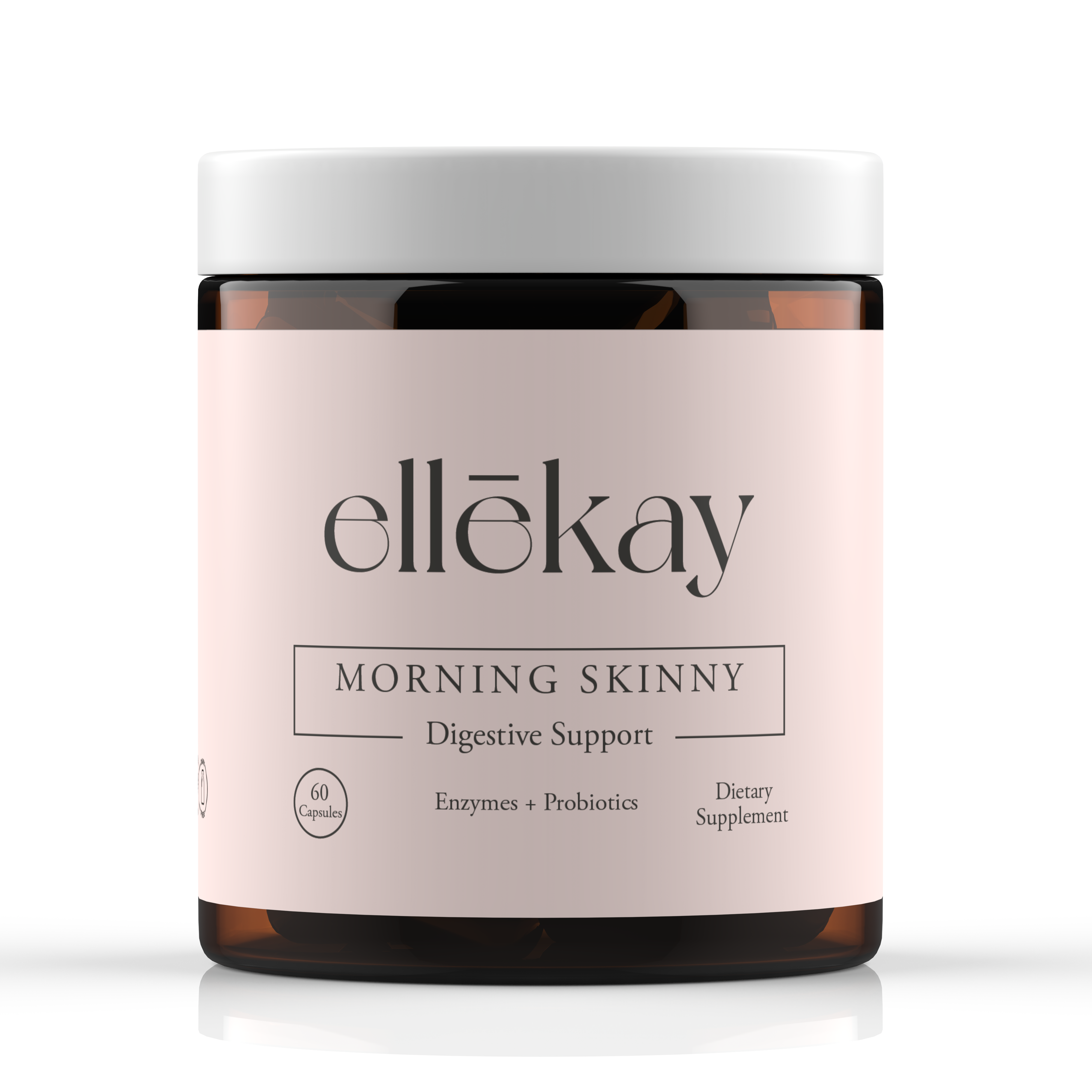
If protein powder and chicken breast leave you gassy and bloated, you're not imagining it. The connection between a high-protein diet and digestion comes down to fiber balance, hydration, and how quickly you raise your protein intake. Pairing smart protein sources with support like the Morning Skinny formula can ease that transition.
By Ellekay Team, Women's Wellness Experts
Why More Protein Can Mean More Bloating
Understanding how a high-protein diet and digestion interact is the first step to enjoying more protein without the downside. Every time you eat, your body works to break down dietary protein into amino acids it can absorb and use for muscle repair, hormone production, and energy. That breakdown process takes more digestive effort than digesting carbohydrates, and it also feeds a different set of bacteria in your gut microbiome. When you add more protein quickly, without adjusting fiber or water intake, your digestive system can respond with bloating, gas, or constipation.
High-protein diets are not inherently bad for digestion. They just require a few adjustments, and most women only need a short stretch of trial and error to find what works for their body weight, activity level, and daily routine.
How High-Protein Diet and Digestion Struggles Are Connected
Protein takes longer to digest than most carbohydrates, which means it sits in your stomach longer and requires more stomach acid and digestive enzymes to break down completely. For many women, the greater issue isn't protein itself, it's what gets pushed off the plate to make room for it. Fiber-rich vegetables, whole grains, and legumes often get replaced by protein bars, shakes, and lean meat, and that swap is usually what triggers constipation and bloating.
Whey-based protein powders can also be rough on a sensitive gut microbiome if you're lactose intolerant, since whey is a dairy derivative. If bloating after meals is a recurring problem regardless of what you eat, stress may be part of the picture too. Stress hormones can slow digestion and change gut motility, so a stretch of high stress can produce bloating and discomfort on its own, separate from anything you're eating.
If you've noticed digestive issues specifically after protein shakes rather than protein-rich meals, that's a useful clue worth paying attention to before you assume more protein is always the culprit.
Best Protein Sources for a Sensitive Gut
Not all protein sources affect digestion the same way. Some are naturally easier on a sensitive stomach, while others are more likely to cause discomfort, especially in large amounts.
Gut-friendly protein sources include:
- Eggs and fish, which are highly digestible and low in fiber-blocking fat
- Plain Greek yogurt or kefir, which pair protein with probiotics
- Lentils, beans, and tempeh, which bring fiber and protein together in one food
- Poultry in moderate portions, paired with a fiber-rich side
Foods that tend to cause more issues include processed protein bars, protein powders with sugar alcohols, and large servings of red meat eaten without enough fiber or water. If you're chasing a lofty protein goal, look at the ingredient label first, not just the grams on the front of the package. Reading that label doesn't take a nutrition degree, fluent English, or German-level precision, and it definitely doesn't require confusing translations of technical jargon. Just scan for added sugar, sugar alcohols, and how much fiber travels with the protein. This is where support like Morning Skinny gut-debloat blend can help close the gap between more protein and a comfortable stomach.
Since digesting protein also depends on your own enzyme output, hormone shifts across your cycle and age can change how much enzyme support your gut needs, a connection explored in digestive enzymes for women.

How Much Protein Your Body Actually Needs
How much protein you actually need depends on your body weight, activity level, and goals, not a single fixed number. The general baseline recommended by the National Academies of Sciences is about 0.8 grams of protein per kilogram of body weight per day for a sedentary adult, but active women, older adults, and anyone doing strength training typically need more.
That range holds true whether you're tall, petite, or somewhere in between. Body weight matters far more than height when it comes to protein math, though both play a role in overall calorie needs. Someone who is 25 years old and lifting weights three times a week has different protein intake needs than someone who is 65 and mostly walking for exercise. Both benefit from adequate dietary protein, just at different levels, and genetics play a role too, to some degree, in how quickly the gut adapts.
The key isn't chasing the highest protein number you can find online, it's matching protein intake to your actual body weight and activity level, then giving your gut enough fiber and water to keep pace. Overall health depends on that balance, not just the protein gram count on a label.
Simple Ways to Ease Digestion on a High-Protein Diet
A few simple habits make a real difference when you're increasing protein intake:
- Add fiber at the same time. Every time you add a protein source, add a fiber source too, like vegetables, chia seeds, or beans.
- Increase your water intake. Protein digestion and fiber both require more water to move through your system comfortably.
- Spread protein across the day. Three moderate servings are usually easier to digest than one enormous, protein-heavy meal.
- Chew thoroughly. Digestion starts in your mouth, and larger protein foods need more mechanical breakdown before they reach your stomach.
- Support your gut directly. Formulas designed to ease bloating can work alongside meals to make the digestive changes that come with eating more protein feel less disruptive.
Maybe you remember hearing about grams of protein back in high school health class, but nobody mentioned that ramping up too fast could backfire. It's high time we talked about pairing more protein with real digestive support, not just counting grams.
If you're comparing enzyme options to help your body break down more protein, broad-spectrum and targeted formulas serve different needs, so it helps to understand multi-enzyme versus single-enzyme supplements before choosing one. And if you want to know exactly which foods trigger your bloating, keeping a simple food and symptom log for a week or two can help you spot patterns you'd otherwise miss.
Frequently Asked Questions
Why does eating more protein cause bloating?
Protein takes more digestive effort to break down than carbohydrates, and many high-protein foods, like shakes and bars, are low in fiber. That combination slows digestion and can lead to gas, bloating, or constipation, especially when protein intake increases quickly without matching increases in fiber and water.
How much protein is too much for digestion?
There's no single cutoff, since it depends on your body weight, activity level, and how gradually you increase intake. As a general guide, adding more than 20 to 30 grams of protein to your usual daily intake within a week or two, without adjusting fiber, is a common trigger for digestive discomfort.
Can a high-protein diet hurt gut health long term?
A well-balanced high-protein diet, one that includes fiber, water, and a variety of protein sources, is not known to harm gut health. Digestive issues usually come from an unbalanced approach, such as relying heavily on processed protein products, rather than from higher dietary protein itself.
What foods help digest protein better?
Fiber-rich vegetables, fermented foods like yogurt and kefir, and foods naturally paired with fiber, like lentils and beans, all support smoother protein digestion. Staying well hydrated and chewing thoroughly also help your digestive enzymes break protein down more efficiently.
Should I take a supplement to help digest more protein?
Some women find that a gut-support formula helps ease the transition when they increase protein intake, especially if bloating has been a recurring issue. It's not a requirement for everyone, but it can be a helpful addition alongside fiber, water, and balanced meals.
Ready to Support Your Gut Through a High-Protein Diet?
Eating more protein doesn't have to mean living with bloating or discomfort. If you have questions about pairing your protein goals with the right gut support, contact the Ellekay team for personalized guidance.