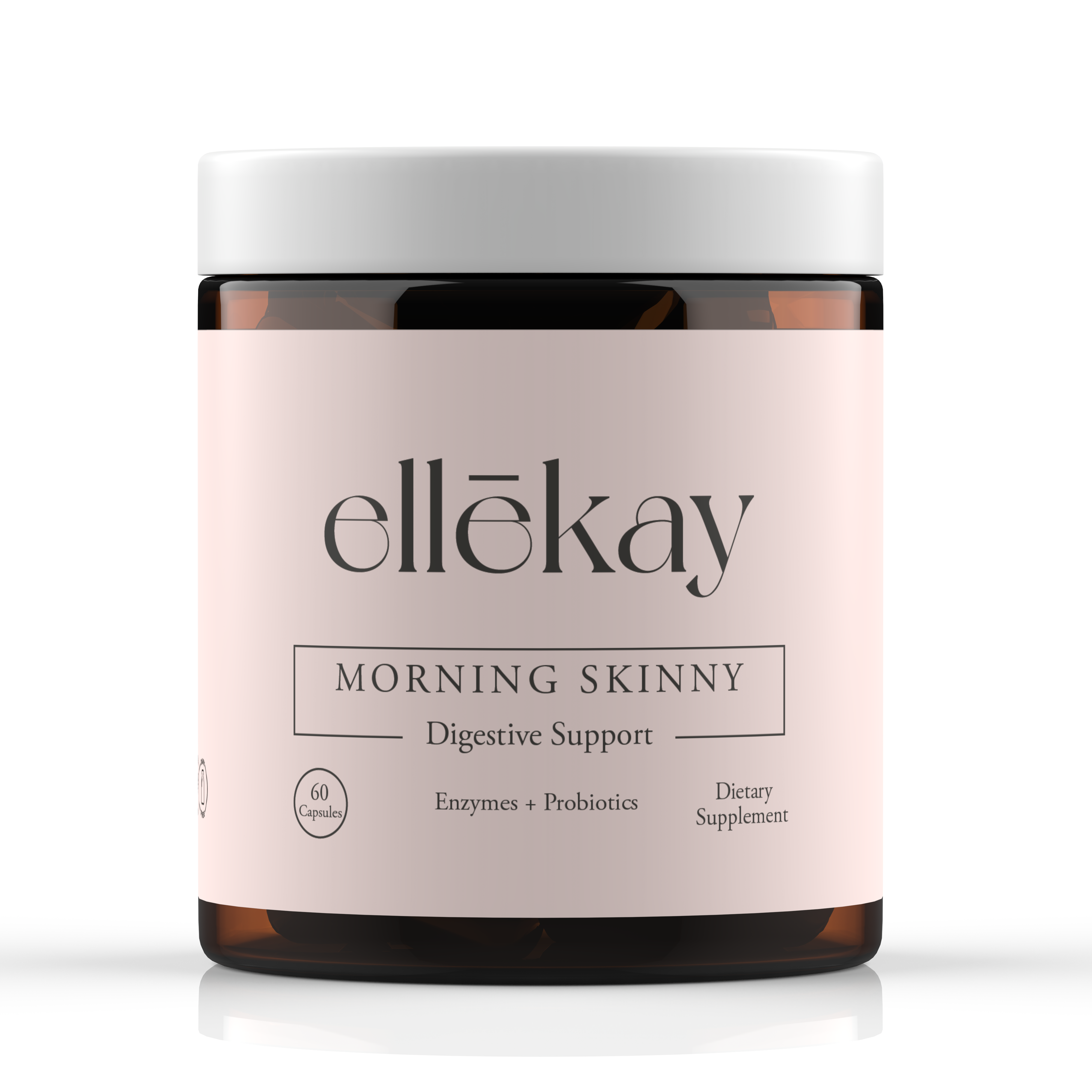
When choosing between multi-enzyme vs single-enzyme supplements, the right pick depends on how many foods your gut struggles to break down. A single enzyme like lactase handles one specific compound, while a multi-enzyme blend supports protein, fat, carbs, and dairy all at once. the Morning Skinny formula is built around comprehensive daily enzyme coverage.
By Ellekay Team, Women's Wellness Experts
What Single-Enzyme Supplements Actually Do
A single enzyme supplement delivers one specific enzyme to address one specific digestion problem. The most familiar example is lactase, the enzyme that breaks down lactose in dairy products. People with lactose intolerance produce little to no natural lactase, which means the lactose in milk, cheese, and yogurt passes through the small intestine undigested and ferments in the colon, causing bloating, gas, cramping, and sometimes diarrhea.
For someone with a clear, isolated dairy sensitivity, a single lactase supplement taken before meals can be highly effective. Similarly, alpha-galactosidase targets the complex sugars in beans and cruciferous vegetables, which many women find hard to digest. Lipase supplements help with fat digestion, and protease enzymes support protein breakdown.
The strength of a single enzyme supplement is its precision. If you know exactly which food category is causing symptoms, you can target it directly without adding enzymes your body does not need.
When the body lacks more than one enzyme, the symptoms tend to overlap rather than stay separate: bloating and gas from carbohydrates that do not break down fully, heaviness after fatty meals, and general post-meal discomfort that does not trace back to one obvious food. That overlapping pattern is often the clearest sign that a single targeted enzyme will not be enough to cover what is actually happening.
Why Multi-Enzyme Blends Cover More Ground
Most meals are not built around a single macronutrient. A typical lunch might include grilled chicken (protein), olive oil dressing (fat), a grain like quinoa or rice (complex carbohydrates), and a dairy-based sauce or cheese (lactose). A single enzyme supplement targeting only one of those components leaves the others unsupported.
Multi-enzyme supplements combine a spectrum of enzymes into one formula. A well-formulated multi-enzyme blend typically includes amylase for starch and carbohydrates, lipase for dietary fat, protease for protein, lactase for dairy, and sometimes cellulase for plant fiber. This broad coverage makes multi-enzyme supplements particularly useful for women who eat varied diets and experience discomfort after multiple types of food, not just one.
Research published in the Journal of the International Society of Sports Nutrition (Oben et al., 2008) found that a multi-enzyme complex significantly improved protein digestion and reduced post-meal GI discomfort compared to placebo. The results suggest that comprehensive enzyme supplementation supports more efficient nutrient breakdown across a range of dietary patterns.
Digestive Enzymes, Gut Lining, and Immune Response
The conversation around digestive enzymes often centers on bloating and gas. But what happens in the gut after meals has consequences beyond comfort.
When food is not fully broken down in the stomach and small intestine, larger, partially digested particles reach the lower GI tract. These particles feed the gut microbiome in ways that can shift the bacterial balance and promote fermentation, which generates gas. More significantly, poorly digested food proteins can interact with the gut lining in ways that trigger an immune response.
The gut wall houses a dense concentration of immune tissue. A 2020 review by Vighi et al. in Clinical and Experimental Immunology noted that approximately 70 percent of the immune system's activity is centered in the gut-associated lymphoid tissue. When digestion is efficient and food is fully broken down before it reaches the intestinal lining, the immune response has less to react to, which contributes to lower baseline inflammation.
This is why supporting digestion with enzyme supplements is not only about preventing post-meal discomfort. It is about reducing the downstream load on the immune system over time.

Multi-Enzyme vs Single-Enzyme Supplements: How to Choose
The practical decision between multi-enzyme vs single-enzyme supplements comes down to two questions: How specific is your problem? How varied is your diet?
Choose a single enzyme supplement if:
- You have confirmed lactose intolerance and dairy is your only trigger
- You only need occasional support before specific meals, such as eating legumes or a cream-heavy dish
- You prefer a minimal supplement stack and only address known sensitivities
Choose a multi-enzyme supplement if:
- You experience bloating, gas, or discomfort after multiple types of meals
- Your diet includes a wide variety of proteins, fats, carbs, and dairy
- You suspect general digestive enzyme insufficiency or have been told you have low stomach acid
- You want one supplement to cover daily digestive support rather than several single-enzyme capsules
For women with IBS or frequent GI symptoms, the case for multi-enzyme supplements is often stronger because their discomfort may not map cleanly onto one food type. IBS symptoms often involve more than one digestive trigger at once, so a multi-enzyme approach for IBS tends to address more of what is actually driving the discomfort than a single targeted enzyme would.
If dairy is your primary concern, it helps to understand lactase on its own terms before deciding between a single enzyme and a broader blend. The lactase and lactose digestion breakdown covers that in more depth.
What a Quality Enzyme Formula Should Include
Not all enzyme supplements are created equal. Here is what to look for before buying.
Enzyme Activity Units, Not Just Milligrams
Enzymes are measured by their activity, not their weight. Lipase is listed in FIP or LU units, protease in HUT or USP units, amylase in DU or SKB units. A label showing only "200mg of enzyme complex" without activity units gives no real information about potency. Always look for a supplement that lists activity units for each enzyme in the blend, because those numbers reflect actual digestive capacity.
Full-Spectrum Coverage
A quality multi-enzyme blend should address all three macronutrients plus dairy and ideally plant fiber. If a formula omits lactase but you consume dairy regularly, look for a product that includes it, or pair with a standalone lactase supplement. The best multi-enzyme supplement for daily use will cover the full range of what you actually eat.
Probiotic Compatibility
Many women pair digestive enzyme supplements with probiotics for layered gut support. Probiotics populate the gut microbiome, while digestive enzymes support the chemical breakdown of food before it reaches the colon. The two approaches work on different levels and can reinforce each other as part of a consistent daily routine.
The Morning Skinny gut-debloat blend combines digestive enzymes and botanical support in a formula designed for daily morning use, so you get broad coverage without managing multiple separate supplements.
Food intolerances and enzyme activity are directly connected: when an enzyme needed to break down a specific food component is missing or insufficient, that food is more likely to trigger intolerance symptoms instead of being digested normally. Addressing the underlying enzyme gap, whether through a single targeted enzyme or a broader blend, is often more effective than eliminating the food outright.
Frequently Asked Questions
Can I take multi-enzyme supplements every day?
Most multi-enzyme supplements are designed for daily use before meals and are considered safe for long-term support in healthy adults. If you have a chronic GI condition like pancreatitis, Crohn's disease, or exocrine pancreatic insufficiency, consult a healthcare provider before adding enzyme supplements to your routine.
Are single-enzyme supplements enough for lactose intolerance?
For isolated lactose intolerance, a single lactase supplement taken before dairy-containing meals can be very effective. However, many women have broader sensitivities beyond dairy alone. If you notice bloating or gas after multiple food types, a multi-enzyme blend is likely a better fit than a single enzyme supplement.
When should I take digestive enzyme supplements?
Take them right before or at the start of a meal so they are present in the stomach when food arrives. Taking digestive enzymes on an empty stomach means they will pass through before food reaches them, which reduces their effectiveness significantly.
Do digestive enzymes work alongside probiotics?
Yes, and they work on complementary levels. Digestive enzymes break down food compounds in the stomach and small intestine. Probiotics support the bacterial environment in the colon. Using both together is a common and effective approach for comprehensive gut health support.
How do I know which digestive enzyme supplement is right for me?
Start by identifying which foods or meals most often cause your symptoms. If one food type is the consistent trigger, a single enzyme targeting that compound may be sufficient. If your symptoms occur after varied meals, a multi-enzyme complex is usually the best choice for practical daily support and full-meal coverage.
Build a Digestive Routine That Works for You
Choosing the right enzyme supplement does not have to feel complicated. Whether a targeted single enzyme or a comprehensive multi-enzyme blend fits your lifestyle better, consistent daily support is what creates real change. For personalized guidance on which formula matches your symptoms, contact the Ellekay team and we will help you find the right starting point.