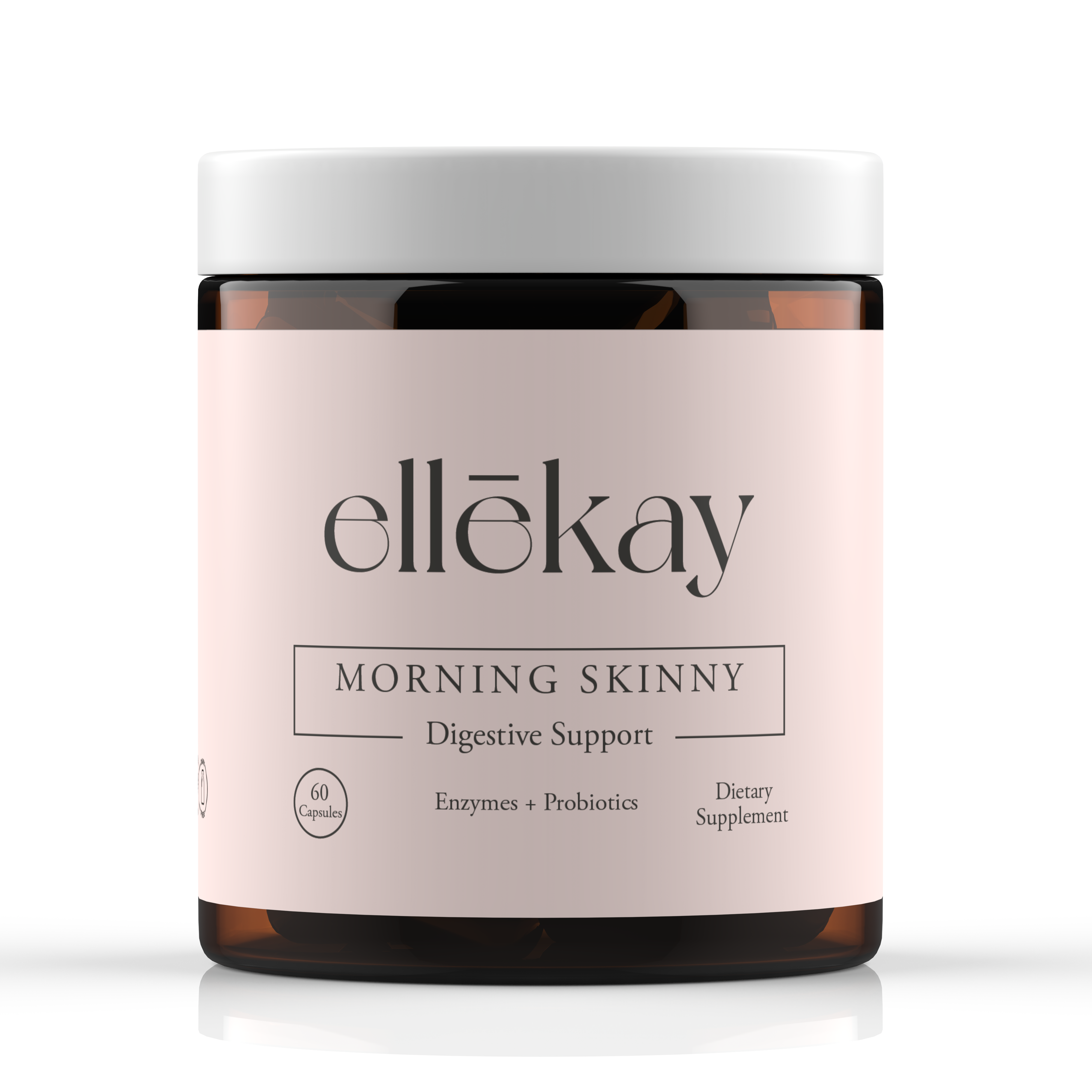
Digestive enzymes for women are one of the most overlooked tools for reducing bloating, supporting nutrient absorption, and maintaining digestive health across every hormonal phase. If your symptoms spike around your cycle or after meals you know should agree with you, the Morning Skinny formula was built to address that exact hormonal and digestive gap.
By Ellekay Team, Women's Wellness Experts
Why Women's Digestion Is More Hormonally Sensitive
Women experience bloating, cramping, and irregular digestion at rates significantly higher than men, and hormones are the primary reason. A 2022 review published in Neurogastroenterology and Motility by Heitkemper and colleagues confirmed that estrogen and progesterone directly modulate gut motility and visceral sensitivity. During the luteal phase, rising progesterone slows intestinal transit. The result is increased fermentation, gas, and that familiar feeling of fullness that has nothing to do with how much you actually ate.
When estrogen drops in perimenopause or after delivery, digestive enzyme production from the pancreas can also decline. This creates a compounding effect: slower transit combined with fewer enzymes means food stays in the gut longer and is broken down less efficiently. The gut health implications ripple outward into energy, skin clarity, and mood.
Stress adds another layer. Elevated cortisol suppresses stomach acid and enzyme secretion, which means women carrying higher chronic stress loads often enter meals already in a digestive deficit.
What Digestive Enzymes Actually Do
Digestive enzymes are proteins produced primarily in the pancreas and small intestine that break food into absorbable particles. Proteases break down proteins. Lipases break down fats. Amylases target starches and carbohydrates. Specific enzymes handle specific substrates: lactase breaks down lactose, while bromelain, sourced from pineapple, breaks down proteins and has demonstrated anti-inflammatory properties in gut tissue.
When enzyme output is sufficient, nutrient absorption proceeds efficiently. When it falls short, you feel it as bloating, heaviness, undigested food, or post-meal fatigue. An enzyme supplement fills that production gap so digestion can complete before bacteria in the colon begin fermenting the remnants.
A 2021 study in Nutrients by Ianiro and colleagues found that multi-enzyme supplementation significantly reduced postprandial bloating and fullness in adults with functional digestive complaints, with effects most pronounced in women.
If you are not sure whether your symptoms point to an enzyme shortfall, watch for bloating that shows up shortly after eating, a fullness that lingers longer than it should, or fatigue that follows heavier meals. These patterns are covered in more depth in the enzyme deficiency breakdown.
Key Ingredients to Look for in Digestive Enzyme Supplements
Not every enzyme blend is formulated with women's hormonal and nutritional needs in mind. Here are the most important ingredients to prioritize:
Bromelain
Bromelain is a proteolytic enzyme from pineapple that breaks down proteins and has anti-inflammatory effects at the gut lining. A 2016 review by Rathnavelu and colleagues in Biomedical Reports documented bromelain's ability to reduce intestinal permeability and modulate immune activity, both meaningful for women whose gut inflammation tracks with hormonal cycles.
Lipase, Amylase, and Protease
Lipase supports fat digestion, which matters for absorbing fat-soluble vitamins including D, E, A, and K. Amylase handles complex carbohydrates. Protease ensures that proteins, fats, and carbohydrates complete the breakdown process before reaching the colon. Women on plant-heavy diets often find additional benefit from enzymes targeting fiber. Cellulase and hemicellulase break down the plant cell walls that human digestive enzymes cannot process on their own, helping release the nutrients bound up inside vegetables, legumes, and whole grains. Including fiber-targeting enzymes in a blend can ease the gas and bloating that sometimes follow high-fiber meals.
Lactase
Lactase breaks down lactose. Dairy sensitivity often increases as women age, and including lactase in an enzyme blend can prevent the gas bloating and discomfort that follows dairy-containing meals without requiring a full dietary elimination.

Digestive Enzymes and Nutrient Absorption: Why the Connection Matters
Even a carefully planned diet underdelivers if the gut cannot absorb what you eat. Nutrient absorption depends on food arriving at the intestinal wall in its simplest form: amino acids from proteins, fatty acids from fats, simple sugars from carbohydrates. Enzymes make that conversion happen. When enzyme output is low, those conversions stall and undigested particles arrive at the colon as fermentation fuel.
The Morning Skinny gut-debloat blend addresses this at the gut lining level, combining targeted digestive support with ingredients designed to reduce the bloat and sluggishness that follow meals when enzymes are not keeping pace.
Women who notice afternoon energy drops, brittle nails, or persistent fatigue despite a solid diet may be experiencing an absorption gap rather than a dietary one. Improving enzyme output often addresses these symptoms before any dietary overhaul is needed.
For women whose digestive sensitivity involves specific food intolerances, the enzyme that helps depends on the trigger: lactase for dairy sugars, protease for protein sensitivities, and broader multi-enzyme blends for general food reactivity. Identifying the specific intolerance first makes it easier to choose a formula that actually addresses it.
How to Choose the Best Digestive Enzymes for Women
When evaluating an enzyme supplement, look for a formula that covers proteins, fats, carbohydrates, and dairy. Potency should be listed in activity units rather than milligrams alone, since activity determines effectiveness in the actual digestive environment. Plant-derived digestive enzymes like bromelain function across a broader stomach pH range than some animal-sourced options, making them more consistent across different digestive conditions.
Dosing timing matters as much as formula choice. Taking one capsule at the start of each main meal, so enzymes are present when food first arrives, produces better results than waiting until bloating has already peaked. Consistent daily use is more effective than reactive dosing after symptoms appear.
For women managing IBS-type symptoms, enzyme support can ease some of the gut sensitivity involved, though results vary by individual and trigger foods. A closer look at digestive enzymes for IBS walks through the evidence in more detail.
A physician can confirm whether enzyme deficiency is contributing to your specific digestive health picture, particularly if symptoms are persistent or severe. For most women, one capsule per meal is the right starting choice before adjusting based on individual response.
Frequently Asked Questions
Can digestive enzymes for women reduce period bloating?
Period bloating is driven largely by progesterone slowing intestinal transit, which increases fermentation and gas. Digestive enzymes help break down food more completely before it reaches the colon, reducing the gas bloating that accumulates during the luteal phase. Using an enzyme supplement consistently with each meal, rather than only when bloating peaks, produces the most reliable results across the full cycle.
What is the difference between digestive enzymes and a probiotic?
Digestive enzymes break down food into absorbable particles at each meal. A probiotic introduces live beneficial bacteria to support the gut microbiome over time. They work on different systems and are complementary rather than interchangeable. Many women benefit from combining both: enzymes handle meal-by-meal digestion while probiotics prebiotics support the bacterial environment that influences long-term gut health, immunity, and mood.
Is one capsule per meal enough for digestive support?
For most women, one capsule taken at the start of each meal covers general digestive support effectively. Higher-fat or higher-protein meals may benefit from an additional capsule. Always follow your product's label directions, and consult a physician if you are managing a diagnosed digestive condition before adjusting your dose.
Are digestive enzymes safe for daily use?
A 2020 review in Clinical and Translational Gastroenterology found no significant adverse effects associated with ongoing broad-spectrum enzyme supplement use in otherwise healthy adults. Plant-derived enzymes including bromelain carry a strong safety record at standard doses. Women who are pregnant or nursing should confirm with their provider before starting any new supplement.
How quickly can enzyme supplements improve digestive health?
Most women notice a reduction in post-meal bloating and discomfort within one to two weeks of consistent daily use. Improvements in energy, skin clarity, and nutrient-dependent functions like hair and nail strength may take four to six weeks, as the body gradually restores reserves depleted during a period of poor nutrient absorption.
Support Your Gut Through Every Hormonal Phase
The best digestive enzymes for women are the ones you take consistently, at every meal, before symptoms have a chance to set in. If you have questions about which formula fits your digestive health goals, Ellekay customer support is ready to help you find the right starting point.