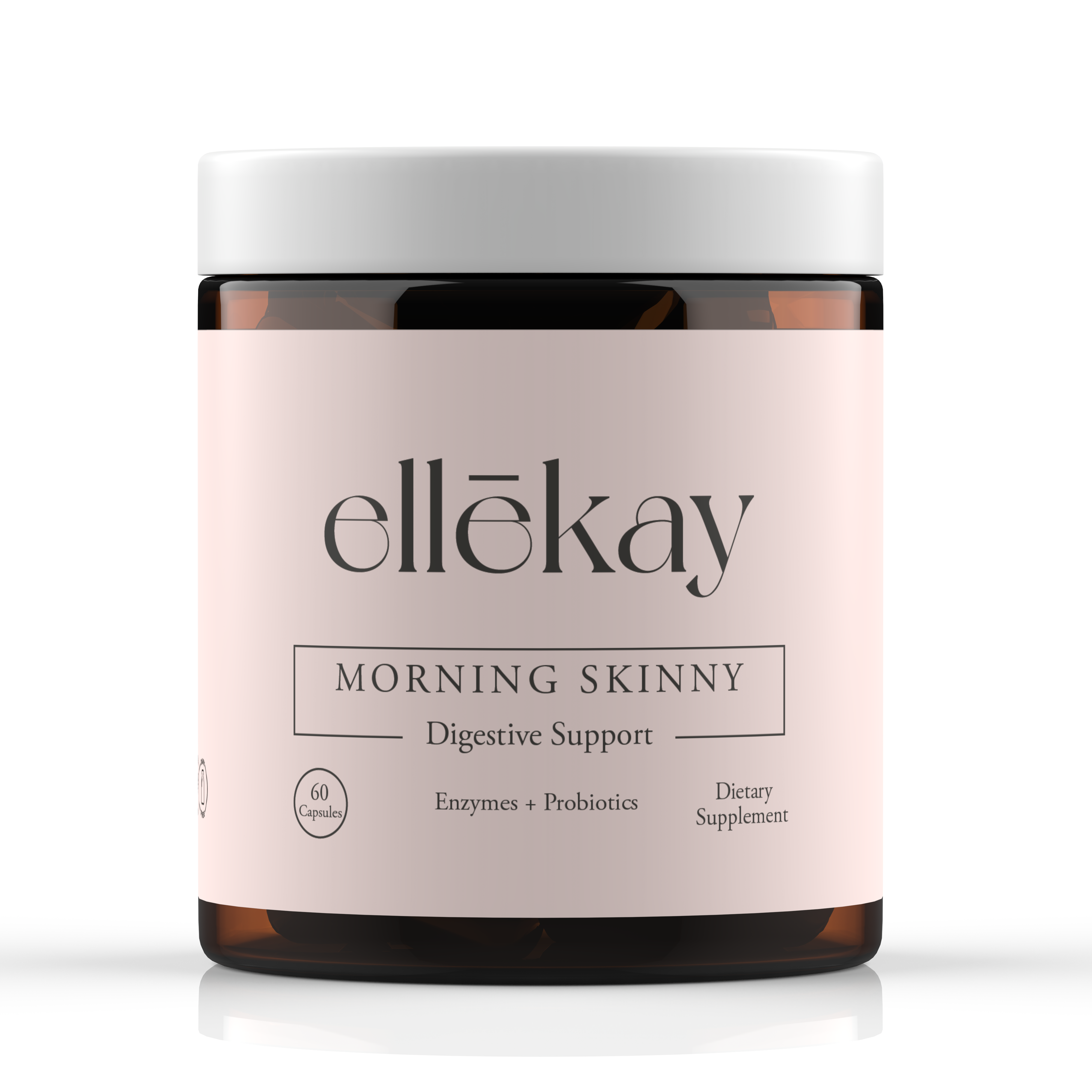
Gut health myths debunked, at last: most popular advice about your microbiome, fermented foods, and probiotics is wrong or oversimplified. If you've tried every trending cleanse and still struggle with digestive issues, you may be working against your body. These fifteen persistent health myths are worth knowing before you choose any supplement, including Ellekay's Morning Skinny.
By Ellekay Team, Women's Wellness Experts
With so many gut health myths debunked by recent microbiome research, the probiotic category sees the most confusion. Beneficial bacteria supplements have moved into mainstream wellness, but the information circulating around them often misses the mark.
Myth 1: All Probiotics Work the Same Way
Different probiotic strains do completely different jobs. Lactobacillus rhamnosus GG has strong clinical evidence for reducing antibiotic-associated diarrhea, while Bifidobacterium longum has been studied for its role in reducing anxiety via the gut-brain axis (Dinan, Stanton, and Cryan, Gastroenterology, 2013). Lumping all gut bacteria into one category is like saying all vegetables are nutritionally identical. The strain matters as much as the dose.
Myth 2: You Only Need Probiotics During or After Antibiotics
Antibiotics do disrupt the gut microbiome significantly, but that doesn't mean beneficial bacteria only matter in a crisis. Research published in Nature (Sonnenburg and Bäckhed, 2016) showed that a consistently diverse microbiome, supported by ongoing probiotic-rich foods and targeted supplements, offers long-term protection against digestive issues, immune dysfunction, and mood disorders. Reactive use misses most of the benefit.
Myth 3: More CFUs Always Means Better Results
Colony-forming units matter, but strain specificity and delivery method matter more. A formula with ten billion CFUs from strains that don't match your health concern is less useful than a targeted lower-dose option. Strain selection changes outcomes more than most labels let on, which is why comparing a specific strain like akkermansia muciniphila against more common probiotic blends is worth doing before you buy.
The Truth About Fermented Foods and Your Gut Microbiome
Fermented foods sit at the intersection of ancient food traditions and modern gut science, but several persistent misconceptions keep women from using them effectively.
Myth 4: Fermented Foods Are Too Harsh for a Sensitive Gut
Among the gut health myths debunked here, this one is both widespread and particularly backwards. A study by Wastyk et al. (Cell, 2021) found that a high-fermented-food diet increased microbiome diversity and decreased inflammatory markers in adults, including those with previously sensitive digestive systems. Kimchi, kefir, sauerkraut, and plain yogurt are generally well-tolerated starting points when introduced gradually over one to two weeks.
Myth 5: Fermented Foods Alone Can Fully Restore Your Gut Microbiome
Fermented foods are a powerful tool for a healthy gut, but they are not a complete strategy on their own. The gut microbiome is also shaped by fiber intake, stress levels, sleep quality, and medications. Fermented foods contribute beneficial bacteria, but those bacteria need prebiotic fiber from vegetables, legumes, and whole grains to truly thrive long-term.
Gut Cleanses, Detoxes, and What the Science Says
The "reset your gut" industry is worth billions, but most of its flagship products are built on health myths rather than evidence.
Myth 6: Your Gut Needs Regular Detoxing
Your liver and kidneys handle detoxification. The gut's job is digestion and absorption. There is no peer-reviewed evidence that commercial gut cleanses remove toxins, improve gut bacteria, or restore balance to the gut microbiome beyond what a fiber-rich whole food diet achieves. Many cleanses actually strip the gut of beneficial bacteria, setting digestion back rather than forward.
Myth 7: Juice Cleanses Reset Your Gut Bacteria
Juice-only programs are very low in fiber, and fiber is what feeds the gut bacteria your microbiome depends on. Sonnenburg and Gardner (Gut Feelings, W.W. Norton, 2022) note that drastic dietary swings toward very-low-fiber eating negatively affect microbiome composition within days. Eating approaches built around consistent, sustainable patterns rather than extreme short-term restriction tend to be far gentler on the microbiome, since they don't strip out the fiber and nutrients your gut bacteria depend on. A three-day juice reset asks your gut to do more with less, which works against it rather than for it.
Myth 8: Gut Health Only Matters If You Have Digestive Problems
This is one of the most consequential health myths because it leads healthy women to overlook proactive microbiome support. Overall health is deeply connected to gut function. Research from Cryan et al. (Physiological Reviews, 2019) demonstrated that the gut microbiome influences immune response, mood regulation, hormonal balance, and cognitive function. You do not need active digestive issues to benefit from working to improve gut health.

How Stress, Sleep, and Lifestyle Shape Your Gut Bacteria
The body is an interconnected system, and some of the biggest factors affecting gut bacteria have nothing to do with food choices.
Myth 9: Stress Only Affects Your Mind, Not Your Gut
The gut and brain are connected through the vagus nerve and a complex signaling network known as the gut-brain axis. When you experience chronic stress, cortisol levels rise and directly alter gut bacteria populations, often reducing Lactobacillus and Bifidobacterium species (Dinan and Cryan, Alimentary Pharmacology and Therapeutics, 2012). This connection also explains why stress reliably triggers symptoms in people with irritable bowel syndrome, including cramping, bloating, and irregular motility.
Myth 10: Sleep Has No Real Impact on Gut Health
Sleep deprivation measurably harms the gut microbiome. A study by Smith et al. (PLOS ONE, 2019) found that even two nights of restricted sleep reduced beneficial bacteria diversity in healthy adults. Consistent quality sleep supports the circadian rhythms that gut bacteria rely on for their own biological processes. If you are trying to improve gut health and have hit a plateau, evaluating sleep quality is as essential as evaluating diet.
Myth 11: Your Gut Microbiome Is Mostly Fixed After Childhood
While early life does shape the microbiome's foundation, the gut microbiome remains dynamic throughout adulthood. Dietary changes, probiotic supplementation, physical activity, and stress reduction can all measurably shift microbiome composition within weeks. This is genuinely good news because it means the choices you make today have real impact on your gut bacteria and, by extension, your overall health for years ahead.
Irritable Bowel Syndrome, Fiber, and Persistent Digestive Misconceptions
The gut health myths debunked in this section are among the most clinically significant, particularly for women who have spent years managing unexplained digestive symptoms without clear answers.
Myth 12: Irritable Bowel Syndrome Is Just Anxiety in Your Gut
Irritable bowel syndrome is a recognized functional gastrointestinal disorder affecting an estimated 10 to 15 percent of adults worldwide (Ford, Lacy, and Talley, New England Journal of Medicine, 2017). While stress and mental health do interact with irritable bowel symptoms through the gut-brain axis, irritable bowel syndrome is not "all in your head." It involves measurable changes in gut motility, gut bacteria composition, and intestinal sensitivity that are clinically distinct from anxiety alone.
Myth 13: Everyone With Bloating Has Irritable Bowel Syndrome
Bloating has many causes: air swallowing, high-FODMAP foods, small intestinal bacterial overgrowth, food intolerances, hormonal fluctuations, and constipation, among others. Irritable bowel is one possible explanation, not the default one. Self-diagnosing based on bloating alone can cause you to miss the actual underlying issue and delay appropriate support. Bloating often intensifies during major hormonal transitions, since shifting estrogen and progesterone levels change gut motility and sensitivity to certain foods. Women navigating digestion during menopause in particular can find more detail on what is actually happening for their bodies.
Myth 14: More Fiber Always Helps Your Gut
Fiber is essential for digestive health, but the type and amount both matter. Soluble fiber, found in oats, apples, and legumes, feeds beneficial bacteria and supports healthy bowel movements. Insoluble fiber speeds transit time, which helps some people but can worsen bloating and discomfort in others. Rapidly adding large amounts of fiber to a low-fiber diet triggers significant gas and digestive issues for most people. Gradual increases of around five grams per week allow your gut bacteria to adapt without creating new problems. Building fiber intake affordably usually comes down to leaning on everyday whole foods like beans, lentils, oats, and seasonal vegetables rather than specialty products, since these staples deliver the same microbiome benefits without the higher price tag.
Myth 15: You Need Expensive Interventions to Improve Gut Health
Supporting a healthy gut does not require a long list of costly supplements or specialty lab panels. Consistently eating a diverse range of whole foods, prioritizing fermented foods, managing stress, getting quality sleep, and staying hydrated are the evidence-backed foundations. Where targeted daily support makes sense, the Morning Skinny gut-debloat blend is formulated to complement a solid routine rather than replace one.
Frequently Asked Questions
Can gut health affect my skin and energy levels?
Yes. The gut microbiome produces short-chain fatty acids, neurotransmitters, and vitamins that directly influence skin barrier function, inflammation levels, and energy metabolism. Research by Bowe and Logan (Gut Pathogens, 2011) linked gut bacteria imbalances to acne, eczema, and persistent fatigue, making gut health relevant to overall health well beyond digestion alone. Supporting your microbiome is one of the most beneficial things you can do for your body.
Do I need a probiotic supplement if I already eat fermented foods?
Not necessarily. If you consistently eat a variety of fermented foods like yogurt, kefir, kimchi, and miso alongside a high-fiber diet, you may already be meeting your gut's needs through food. Probiotic supplements are most beneficial when targeting a specific digestive concern, recovering from antibiotics, or when dietary variety is consistently limited.
Is irritable bowel syndrome curable?
Irritable bowel syndrome is a chronic condition, but it is very manageable. Dietary modifications such as a low-FODMAP diet, stress reduction, targeted probiotic strains, and gut-brain therapies like cognitive behavioral therapy have all shown meaningful symptom reduction in clinical trials (Ford et al., American Journal of Gastroenterology, 2018). Many women experience long periods with minimal or no symptoms through consistent management strategies.
How long does it take to improve gut health?
Measurable changes in gut microbiome composition can appear within two to four weeks of consistent dietary or lifestyle changes, according to research by David et al. (Nature, 2014). Sustained, meaningful improvements typically require several months of consistent habits rather than any single short-term intervention, no matter how intensive.
Can hormonal changes affect my gut bacteria?
Yes, significantly. Estrogen and progesterone receptors are present throughout the gastrointestinal tract, and hormonal fluctuations during the menstrual cycle, pregnancy, and menopause can alter gut motility, microbiome composition, and sensitivity to specific foods. Pregnancy in particular brings some of the most noticeable shifts, so any specific digestive concerns during that window are worth raising directly with your doctor or midwife.
Start Supporting Your Gut With Real Evidence
Getting gut health right comes down to replacing misconceptions with science, and that starts with knowing which advice to actually trust. If you have specific questions about your digestive health or which approach fits your body and goals, contact the Ellekay team for personalized guidance.