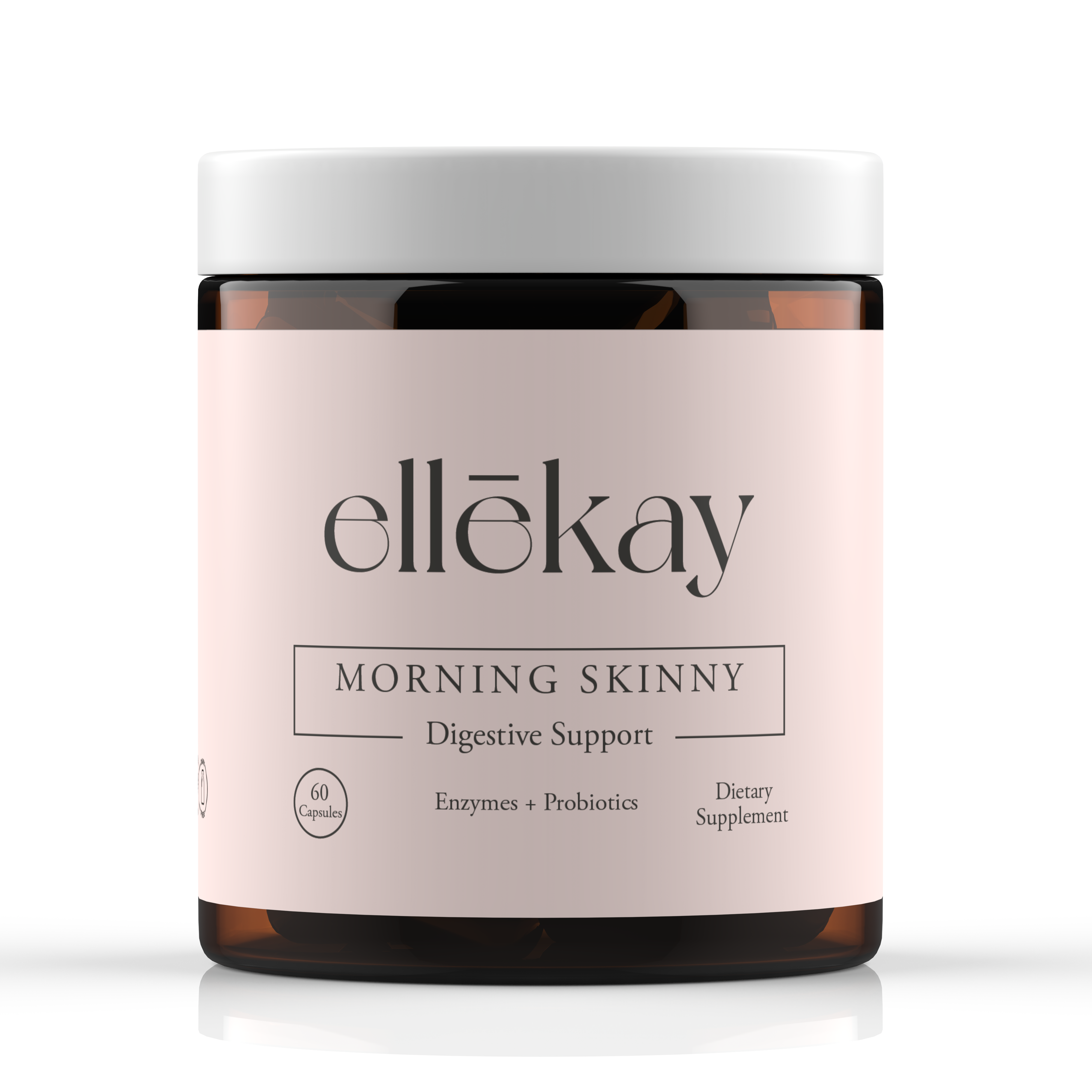
GLP-1 bloating is one of the most common side effects women notice after starting Ozempic, Wegovy, or similar medications, and it happens because these drugs slow gastric emptying. A gentle daily enzyme capsule, paired with a gut-debloat blend like Morning Skinny gut-debloat blend, can ease the pressure while your digestive system adjusts.
By Ellekay Team, Women's Wellness Experts
Why Does Ozempic Cause Bloating and Gas?
Ozempic, Wegovy, and other GLP-1 medications work by mimicking a hormone that slows digestion, which is part of how they support weight loss. That same mechanism is why bloating shows up so often: these drugs slow gastric emptying, so food sits in the stomach longer than usual. The extra time gives naturally occurring gut bacteria more opportunity to ferment food in the digestive system, which produces gas, pressure, and that uncomfortable full feeling. For many women, Ozempic bloating starts within the first few doses, often alongside nausea and vomiting, both of which are listed among the most common side effects in the FDA prescribing information for these medications.
Does Mounjaro or Zepbound Cause Bloating Too?
Yes. Mounjaro and Zepbound (tirzepatide) act on two gut hormone receptors instead of one, and some women find the digestive side effects, including bloating and gas, feel slightly more pronounced, especially in the first few weeks of a new dose. The underlying cause is the same: slower stomach emptying gives food more time to sit and ferment before it moves through the digestive system.
How Long Does GLP-1 Bloating Last?
For most people, bloating is worst in the days right after starting a GLP-1 medication or increasing the dose, then eases over the following one to two weeks as the body adjusts to the new pace of digestion. It rarely disappears completely while you're still on the medication, but the intensity usually settles into something manageable rather than staying at that first-week level.
Will Bloating Go Away as Your Body Adjusts to the Dose?
In many cases, yes, though the timeline is individual. Bloating often flares again with each dose increase and then calms down over one to two weeks, so the pattern tends to repeat at every step up rather than resolving once and for all. If bloating feels severe or doesn't ease at all after a few weeks at a stable dose, that's worth a conversation with the prescriber rather than something to try to wait out indefinitely.
What Foods Make GLP-1 Bloating Worse?
Because digestion is already slower on a GLP-1 medication, certain foods make bloating noticeably worse:
-
Fried and high-fat foods sit in a slowed stomach even longer, which can worsen nausea, vomiting, and gas.
-
Carbonated drinks add extra gas directly into an already full digestive system.
-
Large portions, even of healthy food, are harder to move through at a slower pace.
-
Sugar alcohols (common in many "sugar-free" snacks) ferment quickly and are a frequent trigger for gas and bloating.
-
High-fiber foods added too fast can overwhelm digestion that's already working slower than usual.
The fix isn't to avoid these foods entirely for most people, it's learning to eat smaller portions of them and paying attention to which ones your body handles worst.

Can Digestive Enzymes Help With Ozempic or Wegovy Bloating?
Many women turn to digestive enzymes for Ozempic bloating specifically because enzymes target the mechanism causing the problem rather than just the symptom. Digestive enzymes (protease, lipase, and amylase, which break down protein, fat, and carbohydrates) support the digestive system in processing food more efficiently while it's moving through the gut more slowly than usual. That can mean less fermentation, less gas, and less discomfort after meals. Enzyme blends vary widely, from single-enzyme capsules to multi-enzyme complexes, and blend strength and dosing units can differ significantly from one brand to the next, so the label matters as much as the ingredient list. Many women pair a daily enzyme routine with a gut-support blend such as the Morning Skinny formula, taken with meals for extra digestive comfort during the adjustment period.
How Do Enzyme Capsules Work When GLP-1 Drugs Slow Stomach Emptying?
When gastric emptying slows down, food has more time to sit and ferment before it's fully broken down. Enzyme capsules taken with a meal start breaking down fats, proteins, and carbohydrates earlier in the process, which can reduce how much undigested food is left to ferment later on. This doesn't speed up gastric emptying itself, it makes the food that's waiting there gentler on the gut.
What Else Helps Relieve Bloating While on a GLP-1 Medication?
A few gentle habits tend to help most people alongside any enzyme routine:
-
Eat smaller, more frequent meals. Sticking to smaller frequent meals rather than two big ones tends to help most people, since a full stomach on top of slowed emptying is a common recipe for discomfort.
-
Drink water between meals, not large amounts with meals, to avoid adding more volume to an already fuller stomach.
-
Eat slowly and stop before feeling full, since slowed digestion means fullness signals arrive later than usual.
-
Walk after eating. Gentle movement can help ease gas and speed the feeling of digestion along.
-
Support gut bacteria. Not all probiotics target gas and bloating the same way: specific bacterial strains tend to matter more than the total CFU count on the label.
Timing meals and portions around how the medication affects you, rather than your old eating schedule, is usually the biggest lever for feeling better day to day.
When Is GLP-1 Bloating a Sign of a More Serious Problem?
Bloating, gas, and mild constipation are expected parts of starting a GLP-1 medication. But certain symptoms go beyond normal digestive side effects and are worth reporting to the prescriber promptly: severe or worsening abdominal pain, an inability to keep food or water down, vomiting that doesn't stop, or bloating so severe it doesn't ease at all between meals. These can be signs the stomach has slowed far beyond the expected range.
What's the Difference Between Normal GLP-1 Bloating and Gastroparesis?
Normal GLP-1 bloating is uncomfortable but comes and goes with meals and generally eases somewhat between them. Gastroparesis (severely delayed stomach emptying) is more severe and persistent: frequent vomiting, feeling full after only a few bites, and bloating that doesn't let up, and the Mayo Clinic notes it has been reported, though rarely, in people using GLP-1 medications. If symptoms fit that second pattern, it needs a medical evaluation rather than home remedies.
Frequently Asked Questions
Is bloating a sign that Ozempic is working?
Not directly. Bloating reflects slowed gastric emptying, the same mechanism that supports appetite control and weight loss, but bloating itself isn't a marker of how well the medication is working for you. Appetite changes, fullness after smaller meals, and gradual weight changes are better indicators than gas or bloating.
Can you take digestive enzymes every day with Ozempic?
For most people, yes, digestive enzymes taken with meals are generally considered safe to use daily alongside a GLP-1 medication. Since everyone's digestive system responds differently, it's worth mentioning any new supplement, including enzymes, to your prescriber, especially if you're managing other health conditions.
Will GLP-1 bloating go away on its own?
It often eases within one to two weeks at a stable dose, though it can flare again with each increase. Most people find it becomes more manageable over time rather than disappearing completely while still on the medication.
Does Wegovy cause bloating as much as Ozempic?
Both contain semaglutide and work the same way, so bloating patterns tend to be similar between the two. Individual experience usually depends more on dose and how quickly it's increased than on which brand name happens to be on the pen.
What's the fastest way to relieve GLP-1 bloating?
Eating smaller portions, slowing down at meals, walking afterward, and sipping water between meals rather than during them tend to bring the fastest relief. A digestive enzyme taken with meals can add extra support on days when bloating feels worse than usual.
Ease Into Your GLP-1 Journey with Gentle Gut Support
Bloating doesn't have to be something you just push through while your body adjusts to a GLP-1 medication. Browse the ingredient list and usage guidance on the Morning Skinny product page to see whether a daily enzyme and probiotic blend fits your routine.