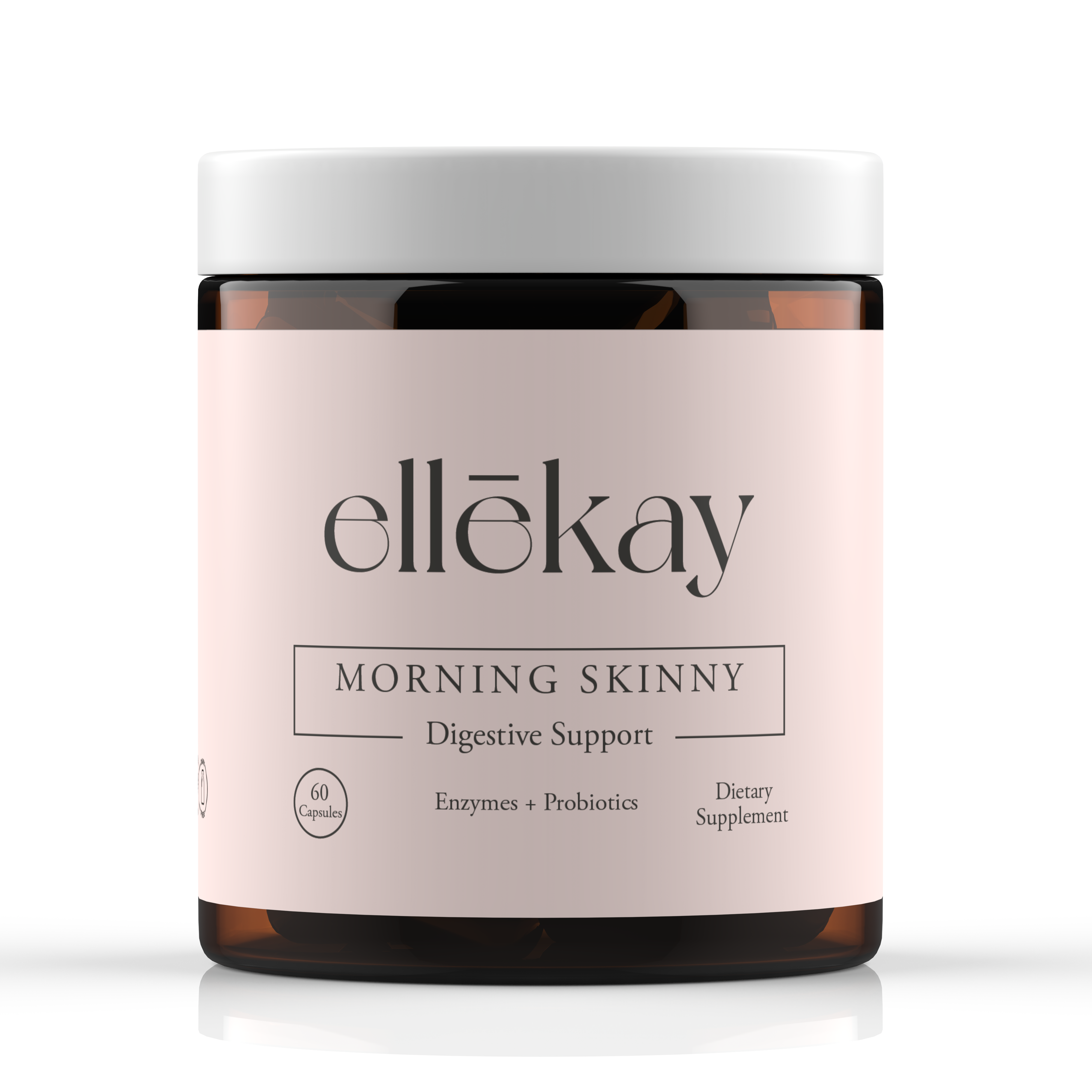
With digestive enzyme brands compared side by side, the real differences come down to which enzymes are in the blend, how their activity units are measured, and what you're paying for beyond the capsule. the Morning Skinny formula applies the same standards, and the comparisons below work no matter which supplement you're weighing.
By Ellekay Team, Women's Wellness Experts
What Are the Best Digestive Enzyme Brands to Compare in 2026
Choosing the right digestive enzyme supplement starts with matching the blend to your symptoms, not the flashiest label. Enzyme supplements generally split into three approaches: pharmaceutical-style formulas that concentrate a few high-dose enzymes for one complaint, whole-food-based blends that draw on fruit and vegetable enzyme sources at lower potency, and women's-specific broad-spectrum blends that pair core digestive enzymes with ingredients aimed at bloating, hormonal shifts, and gut health.
None of these categories is automatically best for everyone. A pharmaceutical-style formula may suit someone with a diagnosed digestive condition, while a broad-spectrum women's formula covers more everyday triggers for someone without one. The right pick depends on which symptoms show up and when, not which bottle lists the highest number.
What's the Difference Between Broad-Spectrum and Single-Enzyme Blends
Digestion involves several organs working in sequence, and the enzymes digestive systems need come from different points along that path. Salivary glands release the first enzyme, an amylase that begins breaking down starches; by the stomach, acid and additional enzymes take over protein breakdown. From there, the small intestine does most of the work: the pancreas and gallbladder release bile and pancreatic enzymes that break food into nutrients small enough for the intestinal wall to absorb, before whatever is left moves to the colon.
A single-enzyme blend targets one weak link, usually lactase for dairy or alpha-galactosidase for beans and cruciferous vegetables. A broad-spectrum blend covers several stages at once: protease for protein, amylase for carbohydrates, lipase for fat, and often a cellulase or hemicellulase to break down plant fiber that human enzymes don't process well on their own. If bloating shows up after nearly every meal rather than one specific food, a broad-spectrum blend generally covers more ground than a single-enzyme product.
What Ingredients Should a Quality Digestive Enzyme Blend Include
A quality blend should list protease, amylase, and lipase by name and unit count, not just as a proprietary blend total. Beyond the core three, check for:
- Lactase, if dairy is a known trigger
- Alpha-galactosidase, for beans, lentils, and cruciferous vegetables
- Cellulase or hemicellulase, to help break down plant fiber
- Bile salts or ox bile, which support fat digestion alongside lipase, particularly useful if your gallbladder has been removed
- Prebiotic fiber or probiotics, added by some brands for broader digestive support beyond the enzymes themselves
Brands that hide individual enzyme units behind a single "proprietary blend" number deserve more questions, since potency can't be compared without each enzyme's units listed separately.
What Do Enzyme Activity Units Like HUT, DU, and USP Actually Measure
Enzyme potency isn't measured in milligrams like most supplements, since a milligram of enzyme protein doesn't reveal how active it is. Labels instead use activity units specific to each enzyme type:
- HUT (Hemoglobin Unit, Tyrosine base) measures protease activity, how well the enzyme breaks down protein.
- DU (Dextrinizing Units) measures amylase activity, how well the enzyme breaks down starch.
- USP or FCC units measure lipase activity, how well the enzyme breaks down fat. Many brands have shifted from USP to FCC (Food Chemicals Codex) units for lipase, so a lower FCC number isn't automatically a weaker product, the two scales aren't directly interchangeable.
Because these units aren't interchangeable, "10,000 units" on one label only means something next to "10,000 units" on another if both describe the same enzyme measured the same way.
How Many Enzyme Units Do You Need per Meal
There's no single number that fits everyone. Enzyme needs scale with meal size, fat and fiber content, and individual digestive capacity. Larger, higher-fat meals generally call for more lipase, and meals heavier in beans, whole grains, or cruciferous vegetables call for more of the enzymes that target complex carbohydrates and fiber. Many people start at the suggested serving and adjust up on heavier meals, but anyone with a diagnosed condition should work with their doctor or dietitian rather than guessing from a label.

Digestive Enzyme Brands Compared by Cost: What Drives the Price per Serving
Once digestive enzyme brands are compared on potency, ingredients, and testing, price becomes an easier line item to evaluate. What you pay breaks down into factors that move independently of each other:
-
Enzyme potency. Higher HUT, DU, and FCC unit counts cost more to manufacture, since a higher activity number takes more raw enzyme material.
-
Ingredient breadth. A broad-spectrum blend with six or more enzymes plus supporting ingredients like bile salts or probiotics costs more per serving than a single-enzyme product.
-
Delivery format. Delayed-release or dual-layer capsules, built to survive stomach acid and release enzymes further along the tract, cost more than a standard capsule.
-
Third-party testing. Independent lab verification adds real cost, and it's one of the few line items worth paying extra for.
-
Serving size per bottle. A bottle sized for 30 servings and one sized for 90 servings of the same formula show different per-serving math.
What's bundled versus billed separately varies by brand: some fold probiotics or prebiotic fiber into the capsule itself, raising cost but simplifying your routine to one product; others sell those as separate add-ons, lowering the listed price but adding a second purchase for the full stack.
Before comparing prices, ask: what's the per-serving unit count for each enzyme, is that potency guaranteed through the expiration date or only at manufacture, and is the serving size one capsule or two? Two products priced the same per bottle can differ in cost per unit once serving size and potency are accounted for.
If cost is the main obstacle to taking enzymes consistently, matching a formula to your actual triggers rather than defaulting to the broadest blend on the shelf is one of several affordable gut support strategies worth trying before assuming every effective option is out of reach.
How Do You Know If a Digestive Enzyme Brand Is Third-Party Tested
Third-party testing means an independent lab, not the manufacturer, verifies that a product contains what the label claims and is free of contaminants. Look for a certification mark from an organization like NSF International or USP, or a certificate of analysis the brand makes available on request or posts on the product page. A brand that can't produce that documentation, or only references "quality testing" without naming who performed it, hasn't demonstrated third-party verification.
What Is the Best Digestive Enzyme Brand Overall
"Best" depends on which symptom is driving the search. For general bloating and sluggish digestion, a broad-spectrum supplement with all three core enzymes plus supporting ingredients covers the most ground. For a single known trigger like dairy or beans, a targeted single-enzyme product is often the more efficient, lower-cost choice. For women dealing with bloating tied to hormonal shifts, a formula built around that pattern, like Morning Skinny, tends to outperform a generic multi-enzyme sold as unisex.
Are More Expensive Digestive Enzyme Brands Actually More Effective
Not automatically. Price often tracks with potency, ingredient breadth, delivery format, and third-party testing, but a higher price alone doesn't guarantee more of any of them. The more reliable measure is comparing actual enzyme units per serving and testing documentation, rather than assuming the pricier bottle is stronger. Two brands charging different prices can list nearly identical HUT, DU, and FCC numbers, in which case the cheaper option is doing the same job. A low-cost product listing only a proprietary blend total, with no individual enzyme units and no test documentation, is harder to evaluate on effectiveness.
If you're still weighing potency against price for your specific triggers, you can contact the Ellekay team for a personalized read on which units actually matter for your symptoms.
Frequently Asked Questions
What is the best digestive enzyme brand overall?
There isn't one universal answer, it depends on the symptom you're solving for. A broad-spectrum blend covers the most ground for general bloating after mixed meals, while a targeted single-enzyme product, like a straight lactase, is usually the more efficient, lower-cost pick for one known trigger food.
Do digestive enzyme brands differ for lactose or gluten sensitivity?
Yes. Lactose intolerance calls for lactase specifically, and most broad-spectrum blends include only a small amount unless formulated as a dairy-focused blend. Gluten sensitivity and celiac disease aren't resolved by enzyme supplements: some products include DPP-IV to help digest trace gluten exposure, but this doesn't replace a gluten-free diet for celiac disease.
When is the best time to take digestive enzymes for bloating?
Most digestive enzyme supplements are designed to be taken at the start of a meal or within the first few bites, since that's when the enzymes need to be active alongside food moving through the stomach and small intestine. Taking them well after a meal reduces how much benefit you get from that dose.
Can digestive enzymes help with irritable bowel syndrome?
Some people with IBS find a broad-spectrum enzyme helps reduce bloating and discomfort tied to specific foods, but enzymes address digestion, not the broader gut-motility and sensitivity patterns involved in IBS. Anyone with a diagnosed condition should treat an enzyme supplement as one part of a plan built with their doctor, not a standalone fix.
Are digestive enzymes safe to take every day?
For most healthy adults, yes, digestive enzyme supplements are taken daily alongside meals with no evidence of harm from routine use. People with certain conditions, including active ulcers or pancreatitis, should check with their doctor before starting one.
Find the Digestive Enzyme Blend Built for Your Body
With digestive enzyme brands compared on potency, ingredients, and testing rather than price alone, the decision comes down to which formula actually matches your triggers. Explore Ellekay's Morning Skinny to see exactly which enzymes and units are in the formula before you decide.