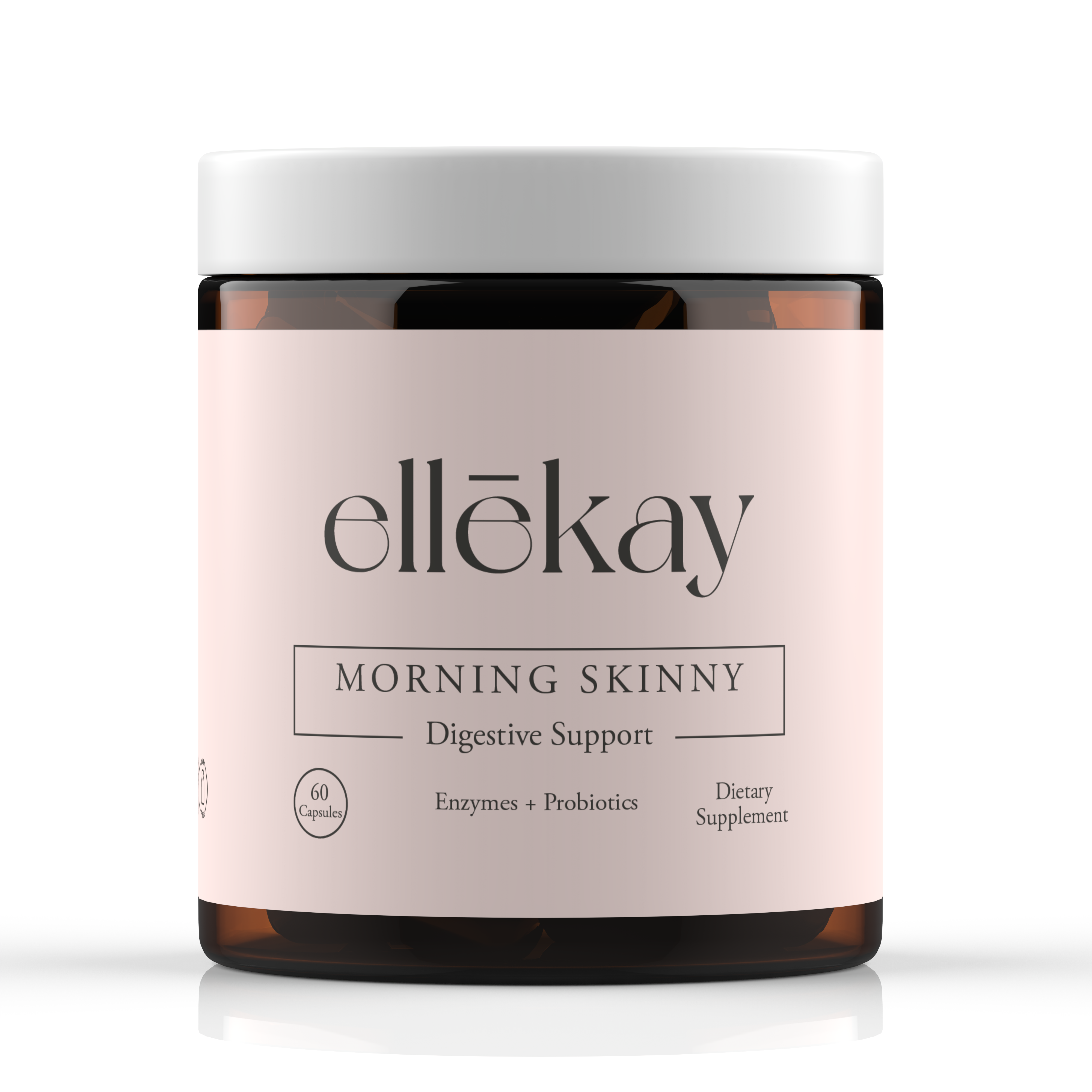

Peppermint oil capsules for bloating can help when cramping and gas are the main complaint, because menthol relaxes gut muscle. A full digestive blend covers more ground after a big dinner. Here is how each works and who each suits, plus the full digestive blend ingredients so you can judge for yourself.
By Ellekay Team, Women's Wellness Experts
| What you compare | Peppermint oil | Full digestive blend (Morning Skinny) |
|---|---|---|
| Main action | Menthol relaxes the muscle in the gut wall | Enzymes work on the meal, herbs and prebiotic fiber support the gut |
| Best for | Cramping, gas and abdominal pain with IBS symptoms | Bloat after a large dinner |
| Form | Capsules, often coated | 2 vegetable capsules per serving |
| When to take | Per the label, often before or between meals | With water after the largest meal of the day |
| Main watch-out | Heartburn | Contains inulin, not low FODMAP certified |
| Price | Varies by brand, check the label | See myellekay.com for current pricing (60-capsule jar, 30 servings) |
Do peppermint oil capsules for bloating actually work?
Sometimes, and the strongest evidence is for irritable bowel syndrome (IBS), not for bloating on its own. The American College of Gastroenterology's 2021 IBS guideline suggests peppermint oil for overall IBS symptoms, and the NIH's National Center for Complementary and Integrative Health says it may ease them. Both describe symptom relief, not a cure. Among IBS treatments, peppermint oil is a modest, symptom-level option.
The mechanism is simple. Menthol, the main active compound in peppermint oil, relaxes smooth muscles, the involuntary muscles in the wall of your intestines. That calms spasms, the sudden tightening waves that trap gas and cause abdominal pain. When spasm is the cause, that relieves cramping. Doctors group this kind of action under antispasmodics, medicines that quiet gut cramping.
Not every swollen belly is a muscle problem, though. Fast eating, fermentable fiber, constipation and food intolerances (trouble digesting a food such as lactose) can all cause bloating, and a muscle relaxer is unlikely to help with those. Different causes call for different treatments. If your bloat arrives with cramps, gas and changes in constipation or diarrhea, peppermint oil is a fair thing to raise with your clinician. If it arrives after one big dinner, a different tool may fit better.
Does peppermint oil help with bloating?
It helps most when bloating comes with cramping, gas or other symptoms of irritable bowel syndrome. It helps less when a heavy meal or a hard-to-digest food is the driver. Antispasmodics as a class target muscle spasm, so they do little when a big meal is to blame. Think of peppermint oil as a remedy for gut spasms rather than a fix for every kind of bloat. Peppermint tea is a gentler remedy, but teas steep only a small amount of oil, so the effect is milder than a capsule's.
How long do peppermint capsules take to work for bloating?
Some people notice calmer cramping within a day or two. Studies generally ran for a few weeks, so give a daily routine a few weeks before you judge it. A full digestive blend works on a different clock. Morning Skinny's enzymes act on the meal they arrive with, and that often relieves bloat within the hour.
What are enteric coated peppermint capsules and do you need the coating?
Enteric coated peppermint capsules carry a coating that resists stomach acid and dissolves further down, in the small intestine. (Enteric simply means "of the intestines.") That matters because plain peppermint oil can release in the stomach, where it may relax the smooth muscles of the valve at the top and set off heartburn. With coated capsules, the menthol reaches the intestines, where spasms happen.
Do you need it? For irritable bowel syndrome symptoms, coated capsules are generally the better choice, but if you are prone to heartburn, a coated shell does not remove the risk, so it is safer to skip peppermint oil or check with a doctor first. One caution: antacids and other acid reducers can dissolve the shell early, so ask a pharmacist about timing if you take them.
Which are the best peppermint capsules for bloating?
We do not rank brands here, because the right capsule depends on what is printed on its label. When you shop for the best peppermint capsules for bloating, check four things:
- The label says the capsule dissolves in the intestines, not the stomach.
- Peppermint oil is the active component, with the dose per capsule clearly printed.
- The list of other contents is short, without fillers you react to.
- The brand notes third-party testing.
Dosage and shell design differ from product to product, so read each brand's own Supplement Facts label. Also skip diffuser oils. Essential oils sold for aromatherapy are not made for swallowing, and diffuser-grade peppermint oil and peppermint oil capsules are not the same product.