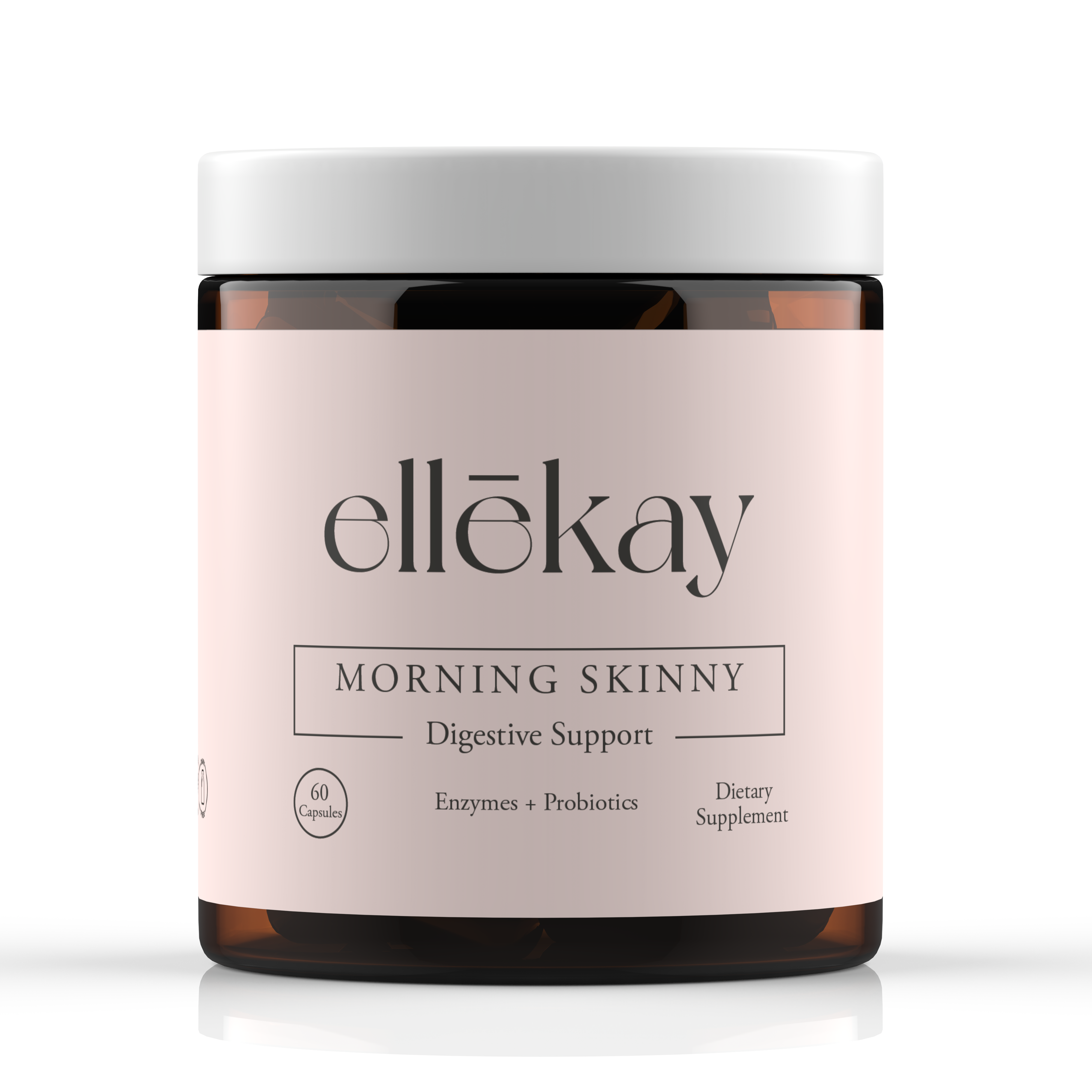
This digestive enzyme faq answers the 25 questions women ask most, from how enzymes break food down in the small intestine to when to take digestive enzyme supplements for best results. Digestive enzymes help your body absorb what it needs from every meal, and the Morning Skinny formula is built around that exact science.
By Ellekay Team, Women's Wellness Experts
How Your Digestive System Uses Enzymes
Digestion begins the moment food enters your mouth. Salivary glands in your cheeks and under your tongue produce saliva containing amylase, which starts converting carbohydrates into simpler sugars before you even swallow. Food then travels down the esophagus. Once it reaches the stomach, gastric acid and pepsin begin breaking proteins apart. This esophagus stomach sequence is the opening act of a coordinated, multi-stage digestive process.
From there, the partially broken-down mixture enters the small intestine, where the pancreas contributes the bulk of digestive enzyme activity: lipase to digest fats, proteases to process proteins, and amylase to handle remaining carbohydrates. The wall of the small intestine also produces brush-border enzymes that complete the breakdown of nutrients into particles small enough to absorb into the blood. Whatever the small intestine cannot process passes into the large intestine, or colon. There, water is extracted before waste moves toward the rectum and finally the anus.
This entire tube, from mouth to anus, is the digestive tract. When enzyme output drops at any point, the lower digestive tract ends up doing work it was not designed for, and symptoms like bloating, gas, and post-meal fatigue follow.
What Enzymes Your Body Relies On
Each digestive enzyme has a specific job. Lipase breaks down fats so fatty acids can absorb through the intestine wall and into the blood. Amylase converts carbohydrates to glucose. Proteases cleave protein chains into amino acids. Lactase, produced in the small intestine, digests lactose from dairy. Without adequate lactase, undigested lactose ferments in the colon, producing gas and discomfort. Women who notice this pattern after dairy often benefit from reviewing lactase and lactose digestion in more detail.
Fiber presents a separate challenge. The digestive tract does not produce cellulase or hemicellulase naturally, so plant fiber typically passes through the intestines largely intact. Targeted enzyme supplements that include cellulase and hemicellulase can help fill this gap, which matters most for women eating a plant-forward diet rich in vegetables, legumes, and whole grains.
Understanding which enzymes digestive function depends on allows you to choose a supplement that targets your actual symptoms rather than guessing.
Women Health and the Enzyme Connection
Enzyme output is not fixed. It declines naturally with age, but women face additional variables. Hormonal shifts tied to the menstrual cycle, pregnancy, perimenopause, and menopause can reduce gastric acid secretion and alter the function of the glands responsible for enzyme production. Chronic stress, a major factor in the women health picture, suppresses digestive output further.
Research by Whitcomb and Lowe, published in Gastroenterology (2007), confirmed that even mild decreases in pancreatic enzyme levels cause measurable changes in fat and vitamin absorption. When digestive enzymes are insufficient, the gi tract cannot compensate on its own, and symptoms including persistent bloating, fatigue after meals, and signs of nutritional deficiency develop.
Diseases like chronic pancreatitis, celiac disease, and inflammatory bowel conditions directly impair enzyme production or activity, and the symptoms often overlap with everyday digestive complaints. If those symptoms sound familiar, it is worth reviewing the signs of enzyme deficiency and what to do next.
Digestive enzyme supplements offer a practical way to restore function without overhauling your entire diet.

Top Digestive Enzyme FAQ Questions: When and How to Take Enzymes
The most common entry in any digestive enzyme faq is timing. The rule is simple: take digestive enzyme supplements with the first bite of a meal. This positions the enzymes in the stomach small intestine pathway at the same moment food arrives, giving them the best chance to break food down before undigested material reaches the colon.
For meals high in fat or protein, a formula with stronger lipase and protease activity works better. For a plant-based or fiber-heavy diet, look for cellulase and hemicellulase alongside the core enzyme lineup.
Women managing irritable bowel syndrome often find enzyme support reduces post-meal flares, since incomplete breakdown of food is a common trigger for IBS discomfort. The right enzyme blend depends on individual triggers, so women with IBS should talk with a healthcare provider about which formula fits their specific symptoms.
The Morning Skinny gut-debloat blend combines enzyme activity with complementary gut-support ingredients and is designed to take digestive health into your morning routine without adding complexity.
Frequently Asked Questions
Are enzyme supplements safe for daily use?
For most healthy adults, daily use of digestive enzyme supplements is considered safe. Enzymes work within the gut tube and are not absorbed into the blood or organs. If you have a diagnosed organ condition affecting the pancreas or liver, or if you take prescription medication, speak with a healthcare provider before starting a new supplement regimen.
Do digestive enzymes help with bloating after meals?
Yes. Bloating commonly results from partially digested food fermenting in the colon. When the stomach and small intestine do not fully break down what you eat, bacteria in the lower colon produce gas. Digestive enzymes help process food more completely before it reaches that point, reducing discomfort for most women.
Should I take digestive enzyme supplements on an empty stomach?
No. The enzymes digestive processes require need food to act on. Without a meal present, gastric acid can degrade the enzymes before food arrives. Always take digestive enzyme supplements with your first bite to get the most out of each dose.
What is the difference between digestive enzymes and probiotics?
Digestive enzymes break food into absorbable nutrients within the digestive tract. Probiotics are live bacteria that support gut microbiome function. Both contribute to women health goals, but through different mechanisms. Many women find that using both together provides better overall digestive support than either alone.
How long before results show with digestive enzyme supplements?
Most women notice less bloating and a lighter feeling after meals within the first week of taking digestive enzyme supplements. More significant improvements, including steadier energy and better nutrient absorption, typically develop over four to six weeks of consistent daily use.
Get Your Digestive Health Questions Answered
Understanding your enzyme needs is one of the most direct steps toward feeling better after every meal. If this digestive enzyme faq raised more questions than it answered, contact the Ellekay team for guidance on finding the right formula for your body.