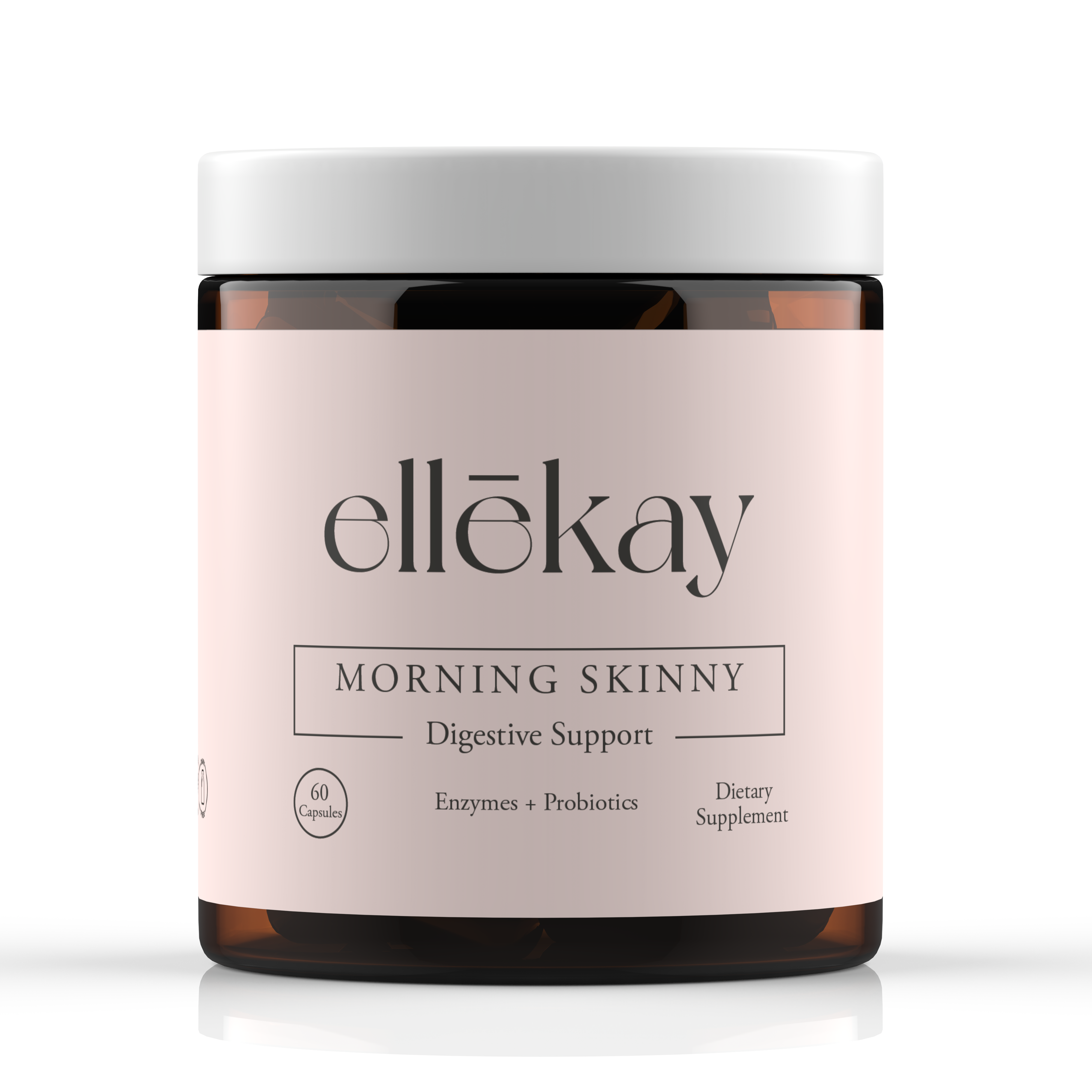
Most women drink less water than their gut actually needs, and that gap shows up as bloating, irregularity, and sluggish digestion. Hydration and gut health are directly connected: water softens stool, moves food through your digestive tract, and helps the Morning Skinny formula work the way it's designed to.
By Ellekay Team, Women's Wellness Experts
How Water Intake Shapes Your Digestive System
Your digestive system relies on water at every single step, from the moment food enters your mouth to the moment waste leaves your body. Saliva, stomach acid, and the mucus lining your digestive tract are almost entirely water, and without enough of it, your body struggles to break food down efficiently.
Adequate water intake also plays a direct role in nutrient absorption. As food moves through the small intestine, water helps dissolve vitamins and minerals so they can pass into your bloodstream. When you're under-hydrated, this process slows, and nutrient absorption becomes less efficient, meaning you can eat a nutrient-dense meal and still miss out on much of its benefit.
Water is also essential for keeping stool soft enough to move through the colon without strain. This is where regular bowel movements come in: dehydration is one of the most common, and most overlooked, causes of constipation. The colon pulls water from waste as it passes through, and if your body doesn't have enough water reserves, it pulls even more, leaving stool hard and difficult to pass.
Why Proper Hydration Supports a Healthy Gut Microbiome
Your gut microbiome, the trillions of bacteria living in your digestive tract, needs a specific environment to thrive, and hydration plays a bigger role in that balance than most people realize. Proper hydration helps maintain the mucus layer that lines your intestines, which acts as a home base for beneficial bacteria. When you drink water consistently throughout the day, you're supporting the conditions that let good bacteria multiply and crowd out the less helpful strains.
Gastroenterology research consistently points to fluid balance as one of several factors, alongside fiber and diet diversity, that shapes a healthy microbiome. Maintaining that balance isn't about drinking a huge volume all at once, it's about steady, consistent water intake spread across your day. Reaching for the Morning Skinny gut-debloat blend alongside your morning glass of water is one way many women build that habit into a routine they'll actually stick with, since digestive support works best when it's paired with the fluid your body needs to use it.
If bloating around your cycle is a recurring frustration, hormonal shifts are often part of what's going on alongside hydration. Estrogen and progesterone fluctuations can slow digestion and change how much water your body holds onto at different points in the month. Staying consistent with your water intake throughout your cycle, rather than only reacting once bloating shows up, tends to help more than catching up after the fact.
How Much Water You Actually Need for Digestive Health
There's no single number that fits every woman, since water needs shift with body size, activity level, and climate. As a general guideline, the National Academies of Sciences, Engineering, and Medicine recommends about 11.5 cups (roughly 2.7 liters) of total fluids per day for adult women, a figure that includes water from food as well as beverages. If you live somewhere hot or spend time exercising outdoors, your fluid needs climb higher than that general guideline, since sweat pulls fluid your digestive system would otherwise use. That's especially true when heat and travel throw off your usual routine, since both tend to increase fluid loss right when your body needs more of it.
A simple way to track this without overthinking it: keep a water bottle with you and refill it on a schedule rather than waiting until you feel thirsty. Thirst is actually a late signal, by the time you notice it, your body is already running behind on fluid. Filling a water bottle two or three times over the course of a workday is an easier target to hit than trying to calculate ounces from memory.

Pay attention to your bowel movements and urine color as a rough daily check: pale yellow urine and regular, easy-to-pass stool are both signs your digestive tract is getting what it needs.
Signs Your Digestive Tract Needs More Water
Bloating, straining during bowel movements, and stool that's hard or pellet-like are some of the clearest signs your body isn't getting proper hydration. When your digestive tract doesn't have enough water to work with, waste moves through more slowly, which gives your gut more time to reabsorb water from it, and that only makes the problem worse. Sluggish digestion, occasional headaches, and even bad breath can trace back to something as simple as not drinking water consistently enough.
If digestive changes have shown up more since your 40s or 50s, hormonal shifts during this stage of life can slow digestion and change how your body manages fluid balance, which is part of why staying on top of water intake tends to matter even more during these years.
Preventing this cycle usually comes down to habit rather than willpower. Reduce your reliance on caffeinated or sugary drinks as your main fluid source, since some of them work against proper hydration rather than for it. Discomfort after meals, especially a heavy, bloated feeling, is often your gut telling you it needs more fluid to move things along, not less food.
Simple Ways to Build Better Water Intake Into Your Day
Small, repeatable habits do more for your water intake than any single big glass of water ever will. Start your morning with a full glass before coffee, since your body is naturally dehydrated after a night of sleep and your digestive system benefits from fluid before it's asked to process food. Keep a water bottle on your desk, in your bag, or in the car, visibility alone makes people drink more throughout the day.
If plain water feels boring, add cucumber, lemon, or mint rather than reaching for sugary alternatives. Small changes like these compound over time, and building water into a morning digestion routine is one of the easiest habits to make stick.
Frequently Asked Questions
How much water should I drink for good digestion?
Most adult women need roughly 11.5 cups of total daily fluids, including water from food, according to National Academies of Sciences, Engineering, and Medicine guidance. Your exact water intake needs may be higher if you're active, live in a hot climate, or eat a lot of fiber, since fiber pulls extra water into the digestive tract to work properly.
Can drinking too much water hurt digestion?
For most healthy women, it's difficult to overdo water intake through normal drinking habits. Problems are far more common from under-hydration than over-hydration. If you have a kidney or heart condition, talk with your doctor about a target that fits your specific health needs.
Does hydration help with bloating?
Yes. Proper hydration helps move food and waste through your digestive tract efficiently, which reduces the buildup that often causes bloating. Ironically, mild dehydration can make your body retain fluid, which can make bloating feel worse, not better.
What are signs I'm not drinking enough water for my gut?
Hard or infrequent bowel movements, bloating, dark urine, and sluggish digestion after meals are common signs. If these symptoms show up regularly, increasing your daily water intake and tracking your bathroom habits for a week or two is a reasonable first step before considering other causes.
Does the time of day I drink water matter for digestion?
Spreading water intake evenly across the day tends to support digestion better than drinking most of it at once. A glass first thing in the morning and a glass alongside or before meals can help your digestive system stay ahead of its fluid needs rather than catching up.
Build a Hydration Habit That Supports Your Gut
Getting your water intake right is one of the simplest, most overlooked levers for better digestion, and it works best paired with the right daily habits. If you have questions about which routine fits your body, contact the Ellekay team and we'll help you figure out where to start.