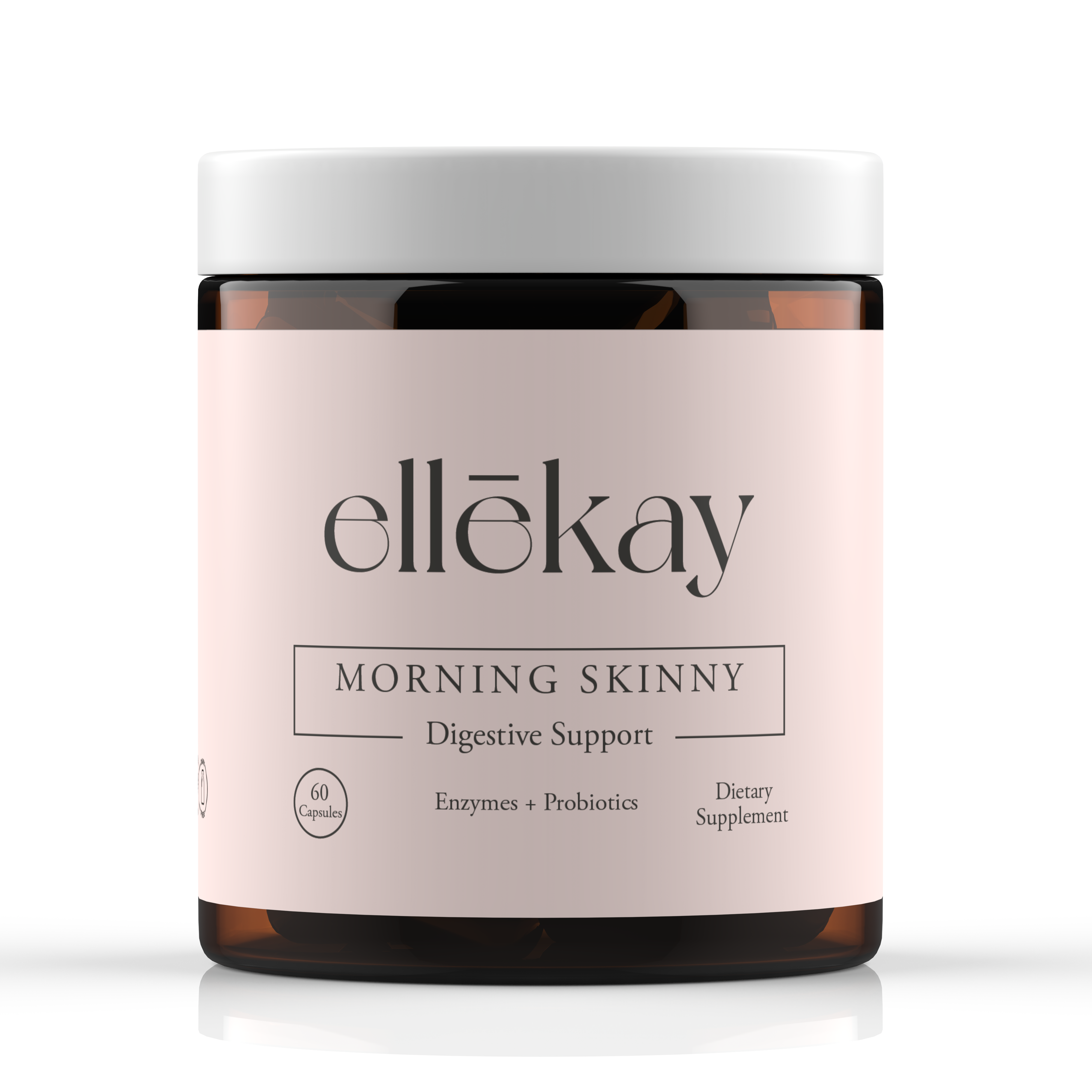
A cheap bloat capsule and a premium one often share ingredient names on the label, yet what changes between a cheap and a premium bloat capsule comes down to dosage, sourcing, and testing. The Morning Skinny gut-debloat blend lists its digestive enzymes at exact amounts instead of hiding them in a vague blend.
By Ellekay Team, Women's Wellness Experts
Price differences between bloat capsules rarely come from marketing alone. Three factors drive most of the gap: how much of each active ingredient is actually inside the capsule, whether that ingredient is a raw commodity version or a patented, clinically studied form, and whether the batch was verified by an outside lab before it shipped. A premium bloat capsule usually spends more in all three places, while a budget option often cuts one or more to hit a lower shelf price, which matters for anyone relying on the formula for everyday gut health.
How Ingredient Dosage Differs Between Cheap and Premium Formulas
Digestive enzymes like protease, amylase, and lipase are dosed in specific units, and the difference between a token amount and a clinically studied dose can be a full order of magnitude. A budget capsule may include a digestive enzyme blend at a fraction of the dose used in published research, just enough to list it on the label. A premium formula tends to match or approach the doses used in the studies behind each ingredient, which is part of why the ingredient cost, and the final price, climbs.
What Ingredients Make a Bloat Capsule More Expensive
Certain inputs cost noticeably more per unit: patented enzyme strains, alpha-galactosidase for gas bloating relief after bean or cruciferous-heavy meals, standardized ginger or fennel extracts, and targeted probiotic strains all carry higher raw material costs than generic versions of the same category. A formula built for digestive support across the full digestive tract, rather than one narrow symptom, also tends to use more distinct active ingredients, and each one adds to the bill of materials before the capsule is even filled.
Why Some Bloat Capsules Use Proprietary Blends Instead of Listed Dosages
A proprietary blend lets a brand list a group of ingredients and a combined weight without breaking out how much of each one is actually inside. It is legal under current supplement labeling rules, and it is also cheaper to formulate around, since a brand can lean on a small amount of an expensive ingredient next to cheap fillers and still name it on the front label. The tradeoff lands on the buyer: there is no way to confirm the dose of any single ingredient in a proprietary blend, including the digestive enzymes doing the actual work. Brands that fully disclose each amount are making a more expensive formulating choice, and pricing usually reflects it.
Does Third-Party Testing Explain the Price Gap in Bloat Supplements
Independent lab verification, checking that a capsule actually contains what the label claims, at the potency claimed, and free of heavy metal or microbial contamination, is a real line item, not a marketing badge. Testing an entire production batch through an outside lab costs money per batch, and that cost is either absorbed into a slimmer margin or passed to the shelf price. A capsule that says clinically studied ingredient doses and carries a certificate of analysis has paid for verification that a cheaper, untested product simply has not. That does not make every untested product unsafe, but it does mean the buyer is trusting the label instead of a lab.

Are Fillers and Binders Different in Low-Cost Versus High-Cost Capsules
Shoppers often skip content like the other ingredients line when comparing bottles, but that line is exactly where filler-heavy formulas reveal themselves. When the active dose is small, a capsule still needs to be filled to a standard size, and that gap gets filled with something: rice flour, magnesium stearate, silica, or microcrystalline cellulose. None of these are inherently harmful in small amounts, but a capsule that is mostly filler because the active dose is minimal is spending its ingredient budget differently than one where the fill volume is mostly active enzyme blend. Reading the other ingredients line next to the supplement facts panel, not just the front label, is the fastest way to see how much of the capsule is actually doing digestive tract work.
Checking whether a formula lists exact per-serving amounts takes less than a minute against the supplement facts panel on the Morning Skinny formula, which spells out its digestive enzymes individually instead of folding them into an unnamed blend.
Is a Premium Bloat Capsule Actually More Effective Than a Cheap One
Price alone does not guarantee results, and a high price tag on its own is not proof of a better formula. Effectiveness tracks with dose and ingredient quality, not the number on the sticker. A premium capsule that actually hits clinically studied amounts of its key digestive enzymes will generally outperform a cheap version of the same ingredient list dosed at a fraction of the amount, but a premium price without disclosed dosing is not automatically better than a transparent budget option. Once a woman notices her cheap capsule is underdosed, she often reevaluates the entire shelf rather than swapping one bottle, a pattern visible in the volume of bloat-relief brand switches driven by exact-dosing comparisons rather than price alone.
How to Tell if a Cheaper Capsule Is Still a Good Value
A lower price is not automatically a worse deal. Start with the supplement facts panel: if every digestive enzyme and every other active ingredient lists a specific milligram or unit amount, the formula is being transparent regardless of price. Next, check for a third-party testing seal or a certificate of analysis. Finally, compare cost per serving at the actual dose used in research, not the price per bottle, since a smaller premium bottle dosed correctly can be a better value than a large budget bottle dosed too low to matter. Buying more than one jar at a time is often where the real savings show up: the per-jar savings from a multipack usually beat trading down to a lower tier, and qualifying orders still include free shipping either way.
Frequently Asked Questions
Are expensive bloat capsules worth the extra money?
Often, yes, if the extra cost buys a higher, clinically studied dose of the active ingredients and independent testing, since both directly affect whether the formula can do what it claims. It is not worth it if the higher price is only funding packaging, marketing, or an undisclosed proprietary blend. Checking the supplement facts panel against the ingredient list is the fastest way to tell which situation applies before paying more.
Do cheap bloat pills work as well as premium ones?
Sometimes. A budget capsule that discloses full dosing and happens to match a clinically studied amount can work as well as a pricier competitor. Most of the time, though, a lower price comes from a lower dose, cheaper enzyme sourcing, or a proprietary blend that hides the real amounts, any of which can reduce how well the formula supports digestion and gas bloating relief.
How much should a bloat relief capsule cost?
There is no single right number, since cost depends on which digestive enzymes are included, how many are dosed at clinically studied levels, and whether the batch is third-party tested. A more useful question is what a given price is buying: full dosing transparency and testing usually cost more to produce than a proprietary blend with fillers. Comparing the supplement facts panel across a few options shows what a fair price looks like for a given dose.
Is a higher price always a sign of better quality in bloat supplements?
No. Price correlates with quality only when it is funding real dosing and testing, not brand markup. A capsule priced high but built on a proprietary blend can be less transparent than a moderately priced option that lists every digestive enzyme amount. The label, not the price tag, is the reliable signal of quality.
Get the Full Ingredient Breakdown Before You Buy
Now that you know what changes between a cheap and a premium bloat capsule, comparing a few supplement facts panels side by side is the fastest way to see what a price tag is actually paying for. For questions about dosing, sourcing, or testing on any Ellekay formula, reach Ellekay support before you decide.