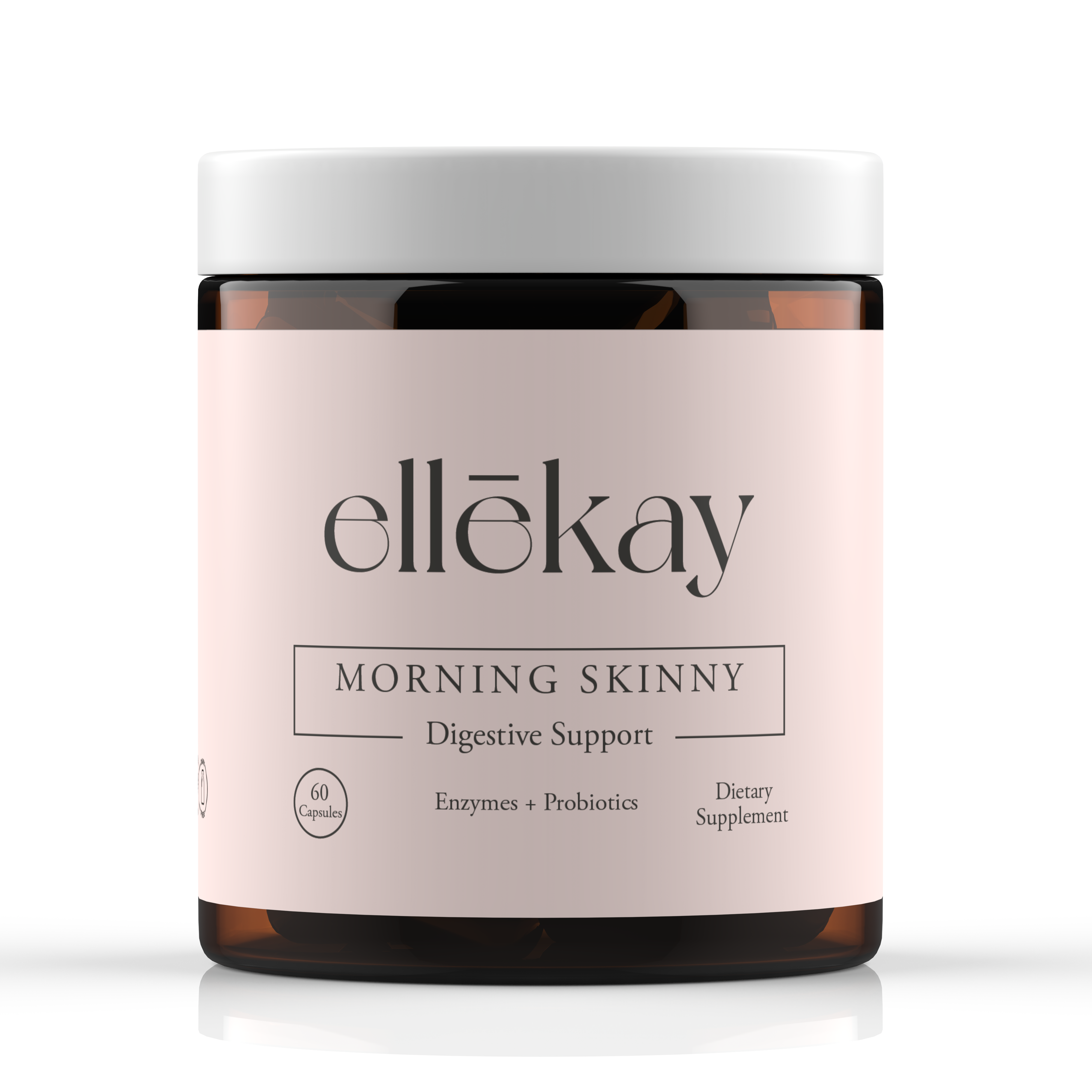
If your jeans feel tighter every month before your period starts, you are not imagining it. PMS bloating is one of the most common premenstrual syndrome symptoms, driven by shifting hormones that trigger water retention in the days before your cycle. Pairing that knowledge with support like the Morning Skinny formula can help you feel more like yourself again.
By Ellekay Team, Women's Wellness Experts
What Causes PMS Bloating? Understanding the Hormonal Shift
PMS bloating starts with your menstrual cycle itself. In the days leading up to your period, estrogen progesterone levels shift rapidly during what is known as the luteal phase. Progesterone rises first and then drops, while estrogen fluctuates alongside it, and this hormonal seesaw signals your body to hold onto extra fluid. The result is the puffy, tight feeling so many women recognize as part of premenstrual syndrome PMS.
According to the American College of Obstetricians and Gynecologists, as many as 90 percent of menstruating women experience some physical or emotional premenstrual symptoms, and bloating is consistently reported as one of the most disruptive. The hormonal shift does not just affect fluid balance either, it can also slow digestion, which is why bloating during this window often feels different from bloating caused by food alone.
Not every woman experiences PMS bloating the same way. Some notice it mainly in the abdomen, while others feel puffiness in their hands, feet, or face as well. Genetics, baseline hydration habits, and how sensitive your body is to hormonal swings all play a role in how noticeable the bloating becomes each month. Women with a family history of PMS symptoms often report a similar pattern themselves, which suggests a hereditary component alongside the hormonal one.
Common PMS Symptoms and How Bloating Fits In
Bloating rarely shows up alone. Most women experience a cluster of pms symptoms in the same window, including mood swings, breast tenderness, fatigue, and food cravings. The emotional and physical symptoms are connected, the same hormonal changes that cause water retention also affect neurotransmitters like serotonin, which is why irritability and low mood often arrive alongside the bloating period that precedes menstruation.
Tracking your symptoms across a full cycle can help you separate normal premenstrual changes from something that needs medical attention. If bloating, mood swings, or pain significantly disrupt your daily life every month, that pattern crosses from typical PMS into premenstrual dysphoric disorder, and it is worth bringing up with a healthcare provider.
Why Bloating Feels Worse for Some Women
Sensitivity to normal hormone fluctuations varies widely. Some women barely notice the shift from estrogen to progesterone dominance, while others feel it in their digestion, mood, and energy all at once. Stress, poor sleep, and a diet high in processed sodium can all amplify how intense premenstrual symptoms feel, even when hormone levels themselves are within a typical range.
Why Water Retention Peaks Before Your Period
Water retention is the biggest driver of that swollen, uncomfortable feeling before your period. As progesterone drops in the last days of the luteal phase, your body's sodium balance shifts, and cells hold onto more water than usual. This is separate from weight gain, it is fluid shifting into tissue, and it typically resolves within a day or two of your period starting.
Digestion slows during this phase too. Progesterone relaxes smooth muscle throughout the body, including in the gut, which can leave you feeling gassy and full even if you have not changed what you eat. That connection between slower digestion and bloating is not limited to your cycle either: bloating after eating follows a similar pattern whenever digestion slows down for other reasons.

Simple Ways to Reduce Bloating During Your Cycle
The good news is there is a lot you can do to help reduce bloating before and during your period. Small, consistent habits tend to work better than dramatic changes made only when symptoms hit.
- Increase water intake. It sounds counterintuitive, but staying well hydrated helps reduce water retention because your body is less likely to hold onto fluid when it is not conserving what it has.
- Cut back on excess sodium in the days before your period, since sodium encourages the body to retain more water.
- Choose potassium-rich foods like bananas, spinach, and avocado, which help balance sodium's effect on fluid retention.
- Move your body. Light to moderate exercise supports circulation and lymphatic drainage, both of which help reduce bloating tied to fluid shifts.
- Prioritize sleep. Poor sleep raises cortisol, and elevated cortisol can worsen fluid retention and food cravings during the luteal phase.
- Support digestion directly. The Morning Skinny gut-debloat blend is formulated with ingredients that target sluggish digestion and puffiness, which makes it a natural pairing for the digestive slowdown that shows up during PMS.
Magnesium and vitamin B6 are also commonly discussed for premenstrual syndrome support. Enzyme support can help too, since digestive enzymes ease some of the extra digestive work your body takes on when hormones shift. Combining a few of these habits, rather than relying on just one, tends to produce the most noticeable relief from PMS bloating month over month.
Lifestyle Changes That Support Hormone Balance
Beyond the days right before your period, broader lifestyle changes make PMS bloating less intense over time. Regular exercise, consistent sleep, and stress management all influence how your body handles the estrogen progesterone shifts each month, since chronic stress raises cortisol, and cortisol competes with progesterone production.
Sleep quality deserves particular attention. Aiming for seven to nine hours a night helps regulate cortisol and supports the hormonal rhythm your body relies on throughout your menstrual cycle. Women who sleep poorly in the week before their period often report more intense bloating, cramping, and mood changes than those who maintain a consistent sleep schedule.
Fiber-rich foods, fermented foods, and calming herbs also play a role in how your gut responds to hormonal changes. Ingredients like lemon balm are often used to ease digestive tension tied to stress and hormone fluctuation, since calming herbs can help settle the gut when cortisol and hormone shifts overlap. If your bloating pattern seems tied to your weight or has changed significantly over time, it is worth raising with your healthcare provider, since a shift like that can point to something beyond typical premenstrual bloating.
None of these changes need to happen overnight. Most women notice a difference within two or three cycles of consistent habits, since hormonal patterns take a few months to respond to lifestyle changes. For more educational articles like this one, explore our blog resources as you fine-tune what works best for your body and your cycle.
Frequently Asked Questions
Why does PMS cause bloating specifically?
PMS bloating happens because progesterone and estrogen shift sharply in the days before your period, prompting your body to retain more water and sodium than usual. This same hormonal shift can slow digestion, adding a gassy, full feeling on top of fluid retention. For most women, it peaks a day or two before the period starts and fades once bleeding begins.
How long does PMS bloating usually last?
PMS bloating typically begins three to five days before your period and resolves within the first day or two of bleeding, once progesterone drops and fluid balance resets. If bloating lasts well beyond your period or feels severe every single cycle, it is worth discussing with your doctor to rule out other causes.
Can diet really help reduce bloating during PMS?
Yes. Cutting back on excess sodium, staying hydrated, and eating fiber-rich, fermented foods all support digestion and fluid balance during the premenstrual window. Many women also find that consistent support, like a gut-focused supplement such as Morning Skinny, makes the digestive slowdown that comes with PMS more manageable month to month.
Does exercise help with PMS bloating?
Yes, moderate exercise is one of the most consistently recommended ways to ease common PMS symptoms, including bloating. Movement supports lymphatic drainage and circulation, which helps reduce the feeling of fluid retention, and it can also improve mood and energy during the premenstrual window. Even a daily walk can make a noticeable difference.
Is PMS bloating different from regular bloating?
Yes. PMS bloating is driven specifically by the estrogen and progesterone shifts of the luteal phase, which cause water retention and slower digestion. Regular bloating is more often tied to specific foods, eating too quickly, or digestive sensitivities. The two can overlap, but PMS bloating follows a predictable monthly pattern tied to your cycle.
Feel Lighter and More Like Yourself Every Cycle
You do not have to accept PMS bloating as an unavoidable part of every month. If you want personalized guidance on symptom support or product questions, contact the Ellekay team.