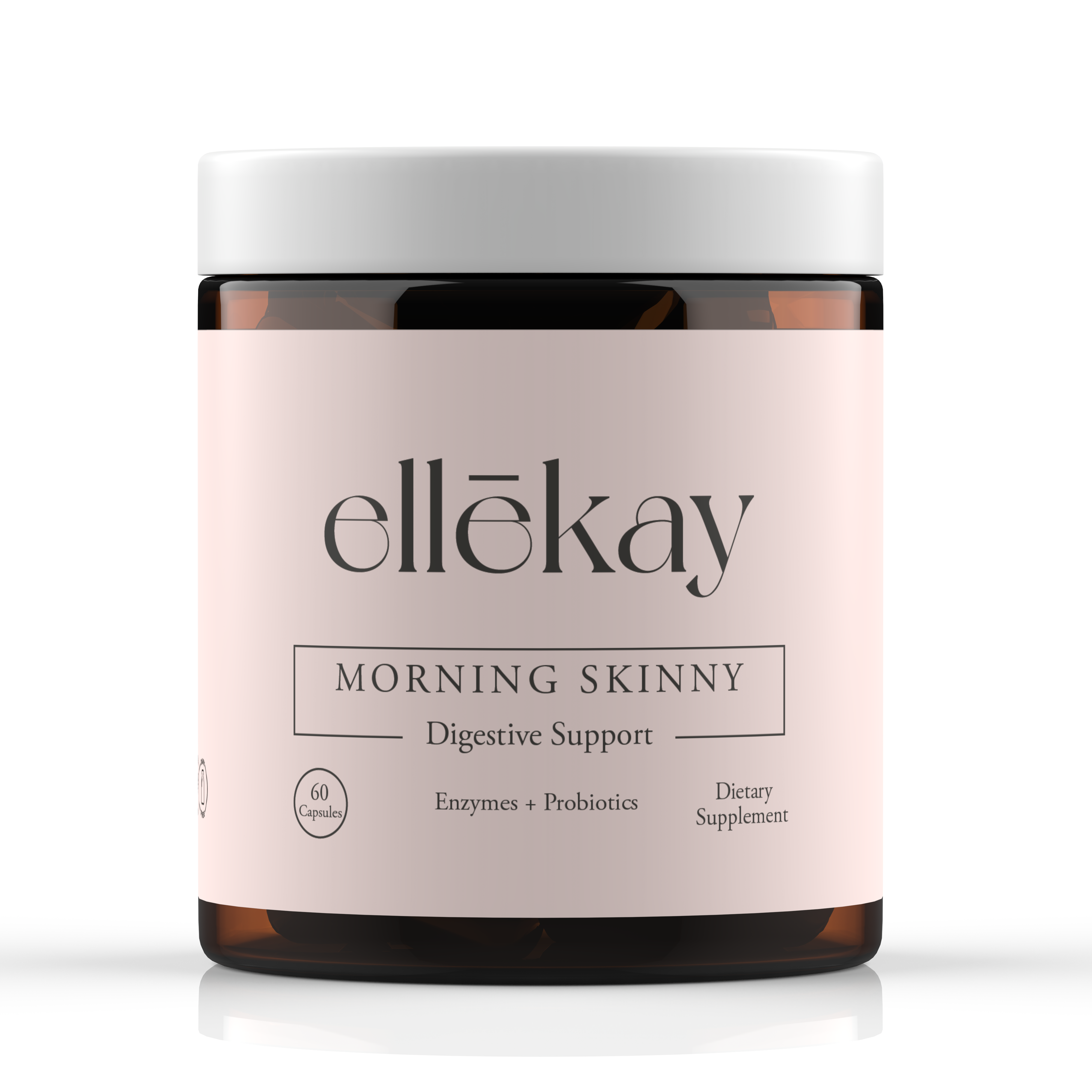
If your waistband feels tighter by afternoon and it's not something you ate, you're likely not imagining it. Perimenopause and bloating often arrive together in your 40s, as shifting hormone levels slow digestion and trap gas and fluid. Many women turn to the Morning Skinny gut-debloat blend for relief, but understanding the root cause of gastrointestinal symptoms matters even more.
By Ellekay Team, Women's Wellness Experts
What's Really Happening to Your Gut During Perimenopause
Perimenopause typically begins in your early to mid-40s, sometimes earlier, as your ovaries gradually produce less estrogen and progesterone. These hormonal changes don't just affect your cycle and mood, they reshape how your entire gastrointestinal system operates. Estrogen progesterone fluctuations influence gut motility, the speed at which food moves through your digestive tract, and they also affect the composition of your gut microbiome.
Research on women health increasingly points to a two-way relationship between hormones and the gut. As estrogen and progesterone rise and fall unpredictably during perimenopause, the gut microbiome shifts too, sometimes favoring bacteria that produce more gas as they break down food. This is part of why bloating perimenopause complaints spike even among women who never had digestive issues before their 40s.
This is also why perimenopause is often when digestive health concerns that were once mild or occasional become harder to ignore. Gastrointestinal symptoms like bloating, gas, constipation, and irregular bowel patterns tend to cluster together during this transition, rather than showing up as a single isolated complaint.
None of this means something is wrong with you. It means your body is moving through a significant hormonal transition, and your gut is simply one of the systems responding. Naming what's happening, rather than assuming it's just stress or aging, is often the first step toward finding relief that actually works for your body.
The Real Causes of Perimenopause and Bloating in Your 40s
Several overlapping factors drive perimenopause and bloating, and most women experience more than one at once.
Water Retention and Fluid Shifts
Falling progesterone levels can cause your body to hold onto more water and fluid than usual. This water retention often peaks in the days before your period, but during perimenopause, cycles become unpredictable, so retention can show up with little warning.
Slower Digestion
Higher estrogen relative to progesterone, common in early perimenopause, can slow digestion, giving gas more time to build up before it moves through. That trapped gas is a major contributor to the tight, swollen feeling many women describe.
Diet and Lifestyle Factors
Small dietary patterns matter here too. Processed foods, low fiber intake, and inconsistent water intake all compound hormonal bloating. Alcohol and carbonated drinks can compound the effect further, since both irritate the gut lining and increase gas production. A lifestyle heavy in processed foods and light on whole foods gives your gut microbiome less of what it needs to keep digestion moving smoothly. If bloating has also come with a stalled weight loss, the two are often connected rather than coincidental. An out of balance gut microbiome can affect how efficiently your body processes food, so supporting digestion sometimes helps loosen a plateau that diet and exercise changes alone have not moved.
Underlying Digestive Conditions
For some women, perimenopause is when an underlying condition like irritable bowel syndrome first becomes noticeable, or existing irritable bowel symptoms worsen. If bloating is severe, persistent, or paired with pain, a doctor visit is worth the time to rule out other causes.
The Gut Microbiome and Hormone Connection
Scientists have identified what's sometimes called the estrobolome, a collection of gut bacteria that helps metabolize and regulate circulating estrogen. When your gut microbiome is out of balance, it can affect how efficiently your body clears used estrogen, potentially prolonging the hormonal swings that make perimenopause bloating worse.
This connection also works in reverse. Declining estrogen has been linked to reduced diversity in the gut microbiome, which may explain why digestive health often becomes less predictable during this stage of life. Supporting your gut microbiome with fiber, fermented foods, and adequate water intake is one of the more evidence-backed ways to ease this hormonal transition. Soluble fiber sources like oats, chia, and cooked vegetables tend to be gentler on a sensitive gut during this transition than large amounts of raw cruciferous vegetables, which can produce more gas for some women. Some women also turn to lemon balm for digestion, a gentle herbal option traditionally used to calm occasional digestive upset without irritating a sensitive gut.

How Bloating Affects Mental Health and Sleep
Gut symptoms don't stay contained to your stomach. The gut and brain communicate constantly through what's known as the gut-brain axis, so ongoing gastrointestinal symptoms during perimenopause can affect mental health, mood, and sleep quality.
Poor sleep, in turn, raises cortisol and can worsen digestive health the next day, creating a cycle that's hard to break without addressing the hormonal changes at the root. Many women also notice that anxiety and irritability, common during perimenopause menopause, intensify on days when bloating is at its worst. Recognizing this feedback loop is often the first step toward feeling more like yourself again.
If your energy, sleep, or mood have shifted alongside your digestion, that shift is often meaningful on its own, and learning the signs of gut health improvement can help you confirm whether the changes you are making are actually working.
Practical Ways to Reduce Bloating and Support Digestive Health
You can't control when perimenopause starts, but you can reduce how much bloating disrupts your day.
Prioritize Water and Fiber
Drinking enough water actually helps reduce water retention, since dehydration signals your body to hold onto fluid. Pairing water intake with fiber-rich foods supports regular digestion and feeds a healthier gut microbiome. Aim for consistent water intake throughout the day rather than large amounts at once, since steady hydration supports smoother digestion and helps your body release retained fluid rather than store it.
Limit Processed Foods
Small dietary adjustments, like cutting back on processed foods, excess sodium, and refined sugar, can lower the fluid retention and gas production that make bloating perimenopause symptoms worse.
Support Your Gut Directly
This is where a targeted formula can help. The Morning Skinny product page details a gut-debloat blend designed to support digestion and ease the swollen, heavy feeling many women notice most in their 40s. Reading labels carefully matters too. Look for a short, recognizable ingredient list and clear information about what each ingredient is meant to do, rather than a vague proprietary blend, since that transparency is usually a good sign you are getting what the label promises.
Track Patterns With a Doctor
If lifestyle changes aren't enough, or if weight changes, pain, or irregular bowel habits show up alongside bloating, loop in a doctor. Keeping a simple log of what you eat, your stress levels, and your sleep can help your doctor spot patterns faster. This is especially worth doing if bloating appears alongside heavy or irregular bleeding, since that combination deserves medical attention regardless of age. Some gastrointestinal symptoms need medical evaluation rather than a supplement or diet fix alone.
Frequently Asked Questions
What does perimenopause bloating feel like?
Perimenopause bloating often feels like tightness or fullness in the lower abdomen that builds throughout the day, sometimes with visible swelling. It can come with gas, mild cramping, or a sense that clothes fit differently by evening, even without a change in diet the day before.
How long does perimenopause bloating typically last?
There's no single timeline, since perimenopause itself can last anywhere from a few years to closer to a decade before menopause begins. Bloating tends to ebb and flow with hormone swings rather than staying constant, often easing once estrogen and progesterone stabilize after menopause.
Can perimenopause trigger irritable bowel syndrome?
Perimenopause doesn't directly cause irritable bowel syndrome, but hormonal changes can unmask symptoms in women who were already sensitive, or intensify existing irritable bowel patterns. If gastrointestinal symptoms are new, persistent, or severe, a doctor can help determine whether IBS or another condition is involved.
What helps reduce hormonal bloating the fastest?
Increasing water intake, cutting back on processed foods and sodium, and gentle movement after meals tend to bring the quickest relief. Many women also add a targeted gut-support supplement alongside these lifestyle habits for more consistent, longer-term results.
Does diet alone fix perimenopause bloating?
Diet changes help significantly, but hormones are still driving much of the pattern, so results vary from woman to woman. Combining a lower-processed, higher-fiber diet with adequate water intake, movement, and stress management typically brings more consistent improvement than diet changes alone, especially as estrogen and progesterone continue to shift throughout perimenopause.
Get Support for Your Perimenopause Gut Health Journey
Perimenopause and bloating don't have to run your day to day life. If you have questions about which gut-support routine fits your body best, contact the Ellekay team for personalized guidance.