Akkermansia muciniphila repairs leaky gut by strengthening tight junctions between intestinal cells, stimulating mucin production to thicken the protective mucus layer, and reducing the passage of bacterial toxins into the bloodstream. Research confirms this bacteria directly rebuilds two of the gut barrier's most critical structural components. The leaky gut akkermansia connection is now one of the most studied relationships in microbiome science.
What Is Leaky Gut and Why It Matters
Leaky gut is a non-clinical term for increased intestinal permeability, a condition where gaps form between the epithelial cells lining your small intestine. Under healthy conditions, these cells are held together by protein complexes called tight junctions that act as molecular seals, allowing nutrients through while blocking bacteria, toxins, and undigested food particles.
When tight junctions weaken, the gut barrier becomes permeable. Bacterial endotoxins, particularly lipopolysaccharide (LPS) from gram-negative bacteria, can slip through into the bloodstream. The immune system interprets LPS as a pathogen signal and responds with inflammation, not just locally in the gut, but systemically throughout the body.
Research published in journals including Springer Nature's Internal and Emergency Medicine links increased intestinal permeability to insulin resistance, obesity, inflammatory bowel disease, skin conditions, autoimmune diseases, and neurological symptoms. This is why gut microbiome researchers consider gut permeability akkermansia research a central variable in whole-body health science.
Why Akkermansia Is Uniquely Positioned to Repair the Gut Lining
Most probiotics work in the intestinal lumen, the open channel where food travels through. Akkermansia muciniphila works in a completely different location: the mucus layer coating your intestinal wall. This is the exact location where the structural integrity of the gut barrier is maintained, making akkermansia leaky gut research particularly relevant.
Akkermansia's metabolism is built around mucin, the glycoprotein that gives mucus its thick, protective consistency. When Akkermansia metabolizes mucin, it sends molecular signals to goblet cells (the intestinal cells that produce mucus) to upregulate production. The result is a thicker, more resilient mucus layer, which is the first line of defense against intestinal permeability issues.
Simultaneously, Akkermansia's outer membrane protein Amuc_1100 interacts with TLR2 receptors on intestinal epithelial cells, triggering anti-inflammatory signaling pathways and supporting the akkermansia intestinal repair process from within.
The structural mechanism: Akkermansia muciniphila restores tight junction protein expression, specifically occludin and claudin proteins, the molecular zippers between intestinal epithelial cells. A 2024 study in PMC confirmed that Akkermansia reversed IL-1 induced damage to these proteins, closing the cell gaps that allow LPS and other toxins to enter the bloodstream.
How the Mucus Layer Protects Against Leaky Gut
The mucus layer is a two-tier defense system. The outer loose layer serves as habitat for beneficial bacteria, including Akkermansia. The inner dense layer is nearly bacteria-free and acts as a direct physical barrier to the epithelial cells below.
When the mucus layer thins (typically from poor diet, high saturated fat intake, antibiotic use, or microbiome dysbiosis), bacteria and their toxins can more easily reach the epithelial layer and penetrate tight junctions. This thinning is one of the earliest measurable signs of gut barrier dysfunction.
Akkermansia muciniphila's role in maintaining mucin production means it directly counteracts this thinning process. Studies measuring mucosal thickness in mice with low Akkermansia compared to mice with healthy Akkermansia levels show measurably thinner mucus layers and greater intestinal permeability in the low-Akkermansia group. This is the core mechanism behind gut permeability akkermansia research.
 morning skinny gut lining wellness supporting">
The Connection Between Leaky Gut, LPS, and Systemic Symptoms
Understanding why leaky gut causes such diverse symptoms requires understanding lipopolysaccharide (LPS) toxin dynamics. LPS is a component of the outer membrane of gram-negative bacteria that live normally in your gut. When the intestinal barrier is intact, LPS stays in the gut lumen. When the barrier is compromised, LPS enters the bloodstream.
Once in circulation, LPS binds to TLR4 receptors on immune cells and triggers a low-grade but chronic systemic inflammation response. This inflammation is the mechanism researchers believe connects leaky gut to:
- Insulin resistance and type 2 diabetes risk
- Obesity and difficulty losing weight despite caloric restriction
- Brain fog and mood symptoms through the gut-brain axis
- Skin conditions including acne, eczema, and psoriasis
- Elevated inflammatory markers like C-reactive protein (CRP)
- Joint pain and autoimmune flares
Akkermansia's ability to reduce LPS translocation by strengthening the gut barrier makes the akkermansia leaky gut relationship directly relevant to all of these downstream conditions, not just digestive symptoms. Akkermansia intestinal repair targets the root structural problem rather than managing symptoms downstream.
Supporting Your Gut Barrier Daily
Repairing leaky gut is not a single intervention. It requires consistent attention to the inputs that either support or degrade the gut barrier. Key factors that damage the intestinal lining include processed food consumption, high saturated fat diets, alcohol, chronic stress, and antibiotic overuse without microbiome rebuilding.
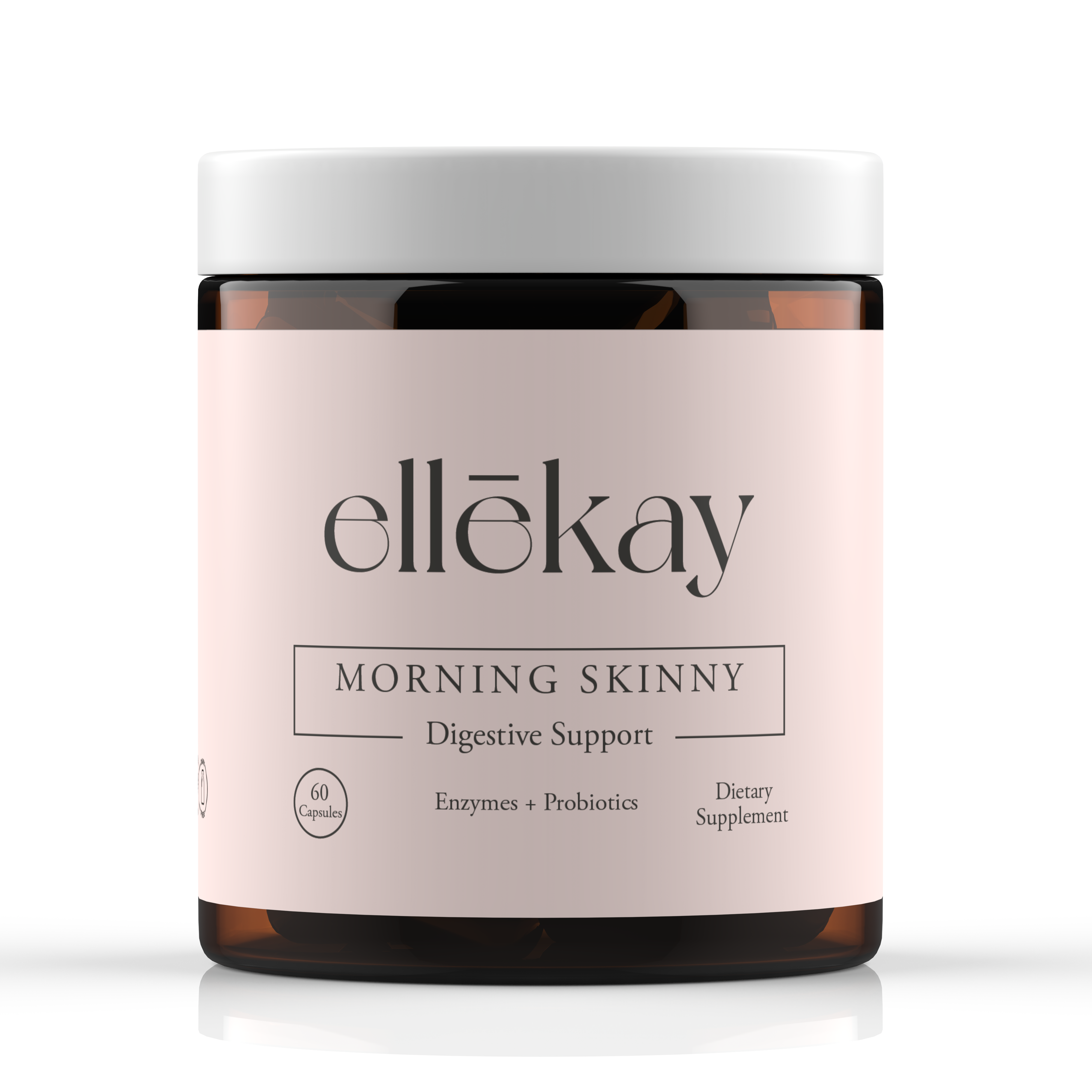
Key factors that support gut permeability include polyphenol-rich foods (which feed Akkermansia), prebiotic fiber, quality sleep, stress management, and daily gut-supporting habits. Ellekay's Morning Skinny is designed around this understanding. Your gut does significant gut lining repair work overnight, and supporting that process with the right inputs creates cumulative improvement over time. For more information about our approach to gut health and digestive wellness, visit our Contact page.
Frequently Asked Questions
Can Akkermansia heal leaky gut?
Research shows Akkermansia muciniphila can significantly reduce intestinal permeability, the defining feature of leaky gut. The leaky gut akkermansia mechanism involves two parallel processes: stimulating goblet cells to increase mucus production (thickening the first physical barrier) and restoring tight junction protein expression including occludin and claudin-3 (strengthening the molecular seals between intestinal cells). This makes Akkermansia one of the most mechanistically direct probiotics for akkermansia intestinal repair.
How does Akkermansia reduce intestinal permeability?
Akkermansia reduces intestinal permeability through two primary mechanisms: stimulating goblet cells to produce more mucin (thickening the mucus layer) and restoring expression of tight junction proteins including occludin and claudin-3. A 2024 PMC study confirmed both effects. The gut permeability akkermansia research shows this bacteria operates at the exact structural level where intestinal barrier dysfunction originates.
What are the symptoms of leaky gut?
Leaky gut symptoms are wide-ranging because increased intestinal permeability triggers systemic inflammation through LPS translocation. Common symptoms include bloating, food sensitivities, chronic fatigue, brain fog, skin conditions (acne, eczema), joint pain, and mood disturbances. The diverse symptom profile reflects the fact that LPS-triggered inflammation affects virtually every organ system. Addressing the leaky gut akkermansia connection at the root level targets all of these downstream effects.
Does leaky gut cause inflammation?
Yes. The primary mechanism linking leaky gut to systemic inflammation involves lipopolysaccharide (LPS), a bacterial toxin that enters the bloodstream through gaps in the gut barrier. LPS activates TLR4 receptors on immune cells, triggering chronic low-grade inflammation throughout the body. Improving gut permeability through approaches like Akkermansia supplementation reduces LPS translocation, which in turn reduces systemic inflammation. This is the core therapeutic target in akkermansia intestinal repair research.
How long does it take Akkermansia to repair gut permeability?
Human trials do not yet specify exactly how long gut lining repair takes with Akkermansia supplementation, but studies showing measurable improvements in metabolic markers (which depend on reduced LPS-driven inflammation) typically run 12 weeks. Gut permeability akkermansia research suggests meaningful improvements in intestinal barrier function can be detected within this timeframe. Consistent dietary support for Akkermansia (polyphenols, prebiotic fiber) alongside supplementation likely accelerates the process.
Written by the Ellekay Wellness Team | Reviewed by our gut health research advisors | Published April 2026 | Sources: PMC Influence of Akkermansia on Intestinal Barrier Function (2024), Springer Nature Internal and Emergency Medicine (2023), PMC Leaky Gut Mechanisms (2019), The Akkermansia Company Gut Barrier Research
Related guides