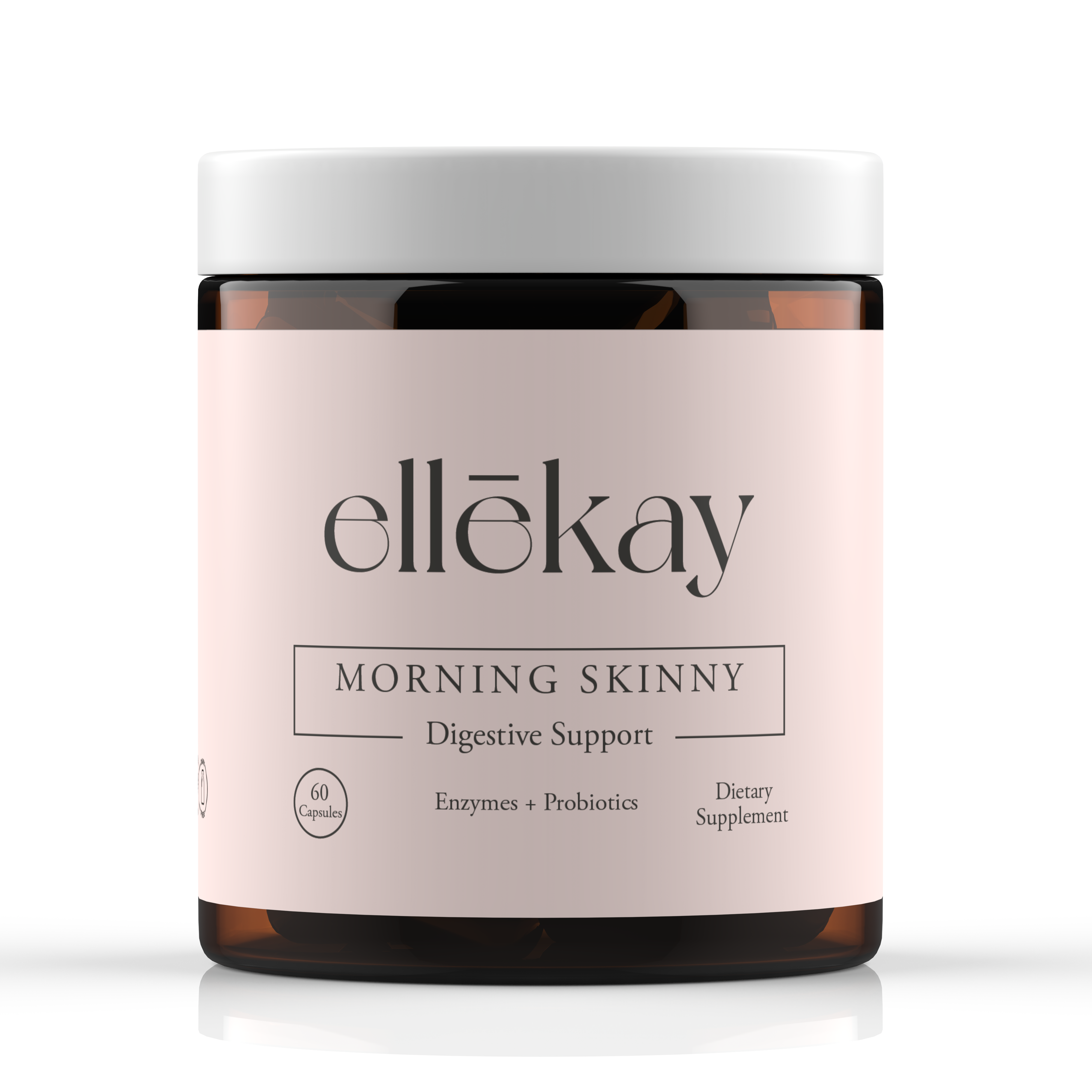
Intermittent fasting and gut health are more closely linked than most people realize. Cycling eating and fasting windows reshapes the gut microbiome, can support weight loss, and helps reduce bloating. Understanding your fasting gut response is key, and the Morning Skinny gut-debloat blend was built to work alongside that process.
By Ellekay Team, Women's Wellness Experts
Why Intermittent Fasting and Gut Health Are Connected
When you stop eating, your digestive system does not simply go quiet. A biological process called the migrating motor complex (MMC) activates roughly every 90 minutes during fasting windows. The MMC sweeps undigested material through the small intestine, reducing bacterial overgrowth and giving the gut lining time to repair. This cleansing effect is one of the core reasons fasting gut research has gained traction among gastroenterologists and metabolic health researchers alike.
Short-term fasting also shifts the gut environment toward a lower-sugar state. Many harmful bacteria thrive on simple sugars. When their food supply drops during a fast, beneficial communities of gut microbiota gain ground and improve in diversity, creating a healthier overall microbiome composition.
How Intermittent Fasting Reshapes the Gut Microbiome
A 2019 review by Thaiss and colleagues published in Cell Research found that time-restricted feeding induced rhythmic oscillations in gut microbial communities, with measurable effects on host metabolism. The fasting gut environment encourages the proliferation of bacteria associated with improved barrier function and reduced systemic inflammation.
Intermittent fasting also increases the relative abundance of Akkermansia muciniphila, a species linked to a stronger intestinal mucus layer and better blood sugar regulation. This bacterium also plays a meaningful role in immune regulation, since a large share of the body's immune activity is coordinated right at the gut lining it helps protect.
The connection between intermittent fasting and gut health also extends to metabolic outcomes. A 2020 study by Wilkinson et al. published in Cell Metabolism followed participants with metabolic syndrome through a 10-hour time-restricted feeding window for 12 weeks. They observed reductions in body weight, blood pressure, and LDL cholesterol, outcomes partially attributed to favorable changes in the gut microbiome. When the gut microbiota composition improves, short-chain fatty acid (SCFA) production typically rises. SCFAs signal satiety hormones, reduce gut permeability, and support weight loss over time, creating a feedback loop that benefits metabolic health broadly.
This feedback loop has become a serious public health consideration. As rates of metabolic syndrome rise globally, public health researchers increasingly point to dietary timing as a scalable, low-cost intervention worth studying at a population level.
The Different Types of Intermittent Fasting
Understanding the different types of intermittent fasting helps you match the right protocol to your gut health goals.
16:8 (Time-Restricted Feeding)
The most studied approach. You eat within an 8-hour window and fast for 16 hours. Time-restricted feeding preserves lean mass, improves glucose tolerance, and gives the gut a meaningful daily rest period.
5:2 Protocol
You eat normally five days a week and restrict calories to 500 to 600 on two non-consecutive days. This approach produces gut microbiome shifts similar to full fasting days and may be easier to sustain over time.
Alternate-Day Fasting
More aggressive and less commonly maintained long-term. Studies show it can reduce inflammatory markers and alter gut microbiota diversity, though adherence tends to drop after 8 to 12 weeks.
24-Hour Fasts
Periodic one-day fasts promote a full MMC cycle and are used in functional medicine for gut reset purposes. These work best when introduced gradually and with guidance from a healthcare provider.
Each approach creates a different fasting gut environment, so microbial outcomes vary by protocol. What you eat during the feeding window shapes those outcomes just as much as the fasting schedule itself, whole foods rich in fiber and naturally fermented ingredients tend to feed a wider range of beneficial bacteria than relying on any single product alone.

Potential Risks and Smart Precautions
Intermittent fasting is not universally beneficial for gut health. A few cautions are worth naming clearly.
Gut motility can slow if fasting windows stretch too long without adequate hydration and fiber during the eating window. This may worsen constipation in people who are already prone to it.
Refeeding quality matters. The gut repair that happens during a fast can be quickly undone if the eating window is dominated by high-sugar, ultra-processed foods. The gut microbiota shifts you build during fasting need nutritional support to stick.
Women's hormonal cycles play a role. Some research suggests that very long fasting windows can elevate cortisol in women, disrupting the gut-brain axis and potentially worsening dysbiosis. Shorter windows of 12 to 14 hours tend to be better tolerated in women who notice mood or energy disruption.
If you have a history of disordered eating, IBS, or SIBO, consult a practitioner before starting any fasting protocol. For individualized questions about how a supplement routine fits alongside fasting, you can contact the Ellekay team directly.
Dietary support for the mucus layer matters just as much as fasting itself. Bacteria like Akkermansia muciniphila thrive on prebiotic fiber and fermented foods, and a well-fed mucus layer is what keeps the gut barrier resilient and limits the low-grade inflammation that comes with a permeable gut.
Supporting Your Gut While Fasting
Fasting works best when the eating window is used strategically. A few evidence-based practices make a real difference.
Prioritize fermented foods and prebiotic fiber during the eating window. These directly feed beneficial gut microbiota and accelerate the compositional shifts that fasting initiates.
Break your fast gently. Large, high-fat meals immediately after a long fasting window can cause digestive distress and blunt microbial gains. Start with something easier to digest, then build to a full meal.
Hydrate consistently during the fasting window. Water, herbal teas, and electrolytes support gut motility and help the MMC cycle function properly.
Consider a targeted gut supplement. The gut microbiome benefits of intermittent fasting compound when paired with ingredients that directly support microbial diversity and reduce bloating. The bacterial byproducts your gut produces during and after fasting, known as postbiotic compounds, carry signals that support health well beyond the digestive tract.
Frequently Asked Questions
Does intermittent fasting improve gut health?
The connection between intermittent fasting and gut health is supported by multiple studies showing that time-restricted feeding increases microbial diversity and raises levels of beneficial bacteria like Akkermansia muciniphila. Improvements are most consistent when fasting is paired with a nutrient-dense eating window. Results vary based on protocol, starting microbiome composition, and individual factors like stress and sleep quality.
What is the best type of intermittent fasting for gut health?
The 16:8 time-restricted feeding protocol has the most research supporting gut microbiome benefits. It aligns with natural circadian rhythms, gives the gut a daily repair window, and is sustainable enough for most people to maintain consistently, which matters because microbiome shifts require weeks to stabilize.
Can intermittent fasting cause gut problems?
It can in some cases. Fasting windows that are too long, inadequate fiber intake, and poor meal quality during the eating window can slow motility, worsen constipation, or increase gut permeability. Women with hormonal imbalances or stress-related gut issues should start with shorter windows and monitor their response carefully.
How long does it take to see gut health changes from fasting?
Most human studies observe measurable gut microbiota changes within 4 to 8 weeks of consistent intermittent fasting. Some participants notice reduced bloating and improved digestion within 1 to 2 weeks, though this may reflect motility changes rather than deeper microbial shifts.
Does gut health affect weight loss results from fasting?
Yes. A diverse, well-functioning gut microbiome improves short-chain fatty acid production and hormone signaling, both of which influence appetite and fat metabolism. People with compromised gut microbiota at baseline may see slower weight loss results from fasting until the microbial environment improves.
Give Your Gut the Support It Deserves
Intermittent fasting and gut health work best as partners, and what you bring to your eating window determines how far those benefits carry. If you want a supplement built to complement this approach, explore the Morning Skinny formula and see how it fits your morning routine.