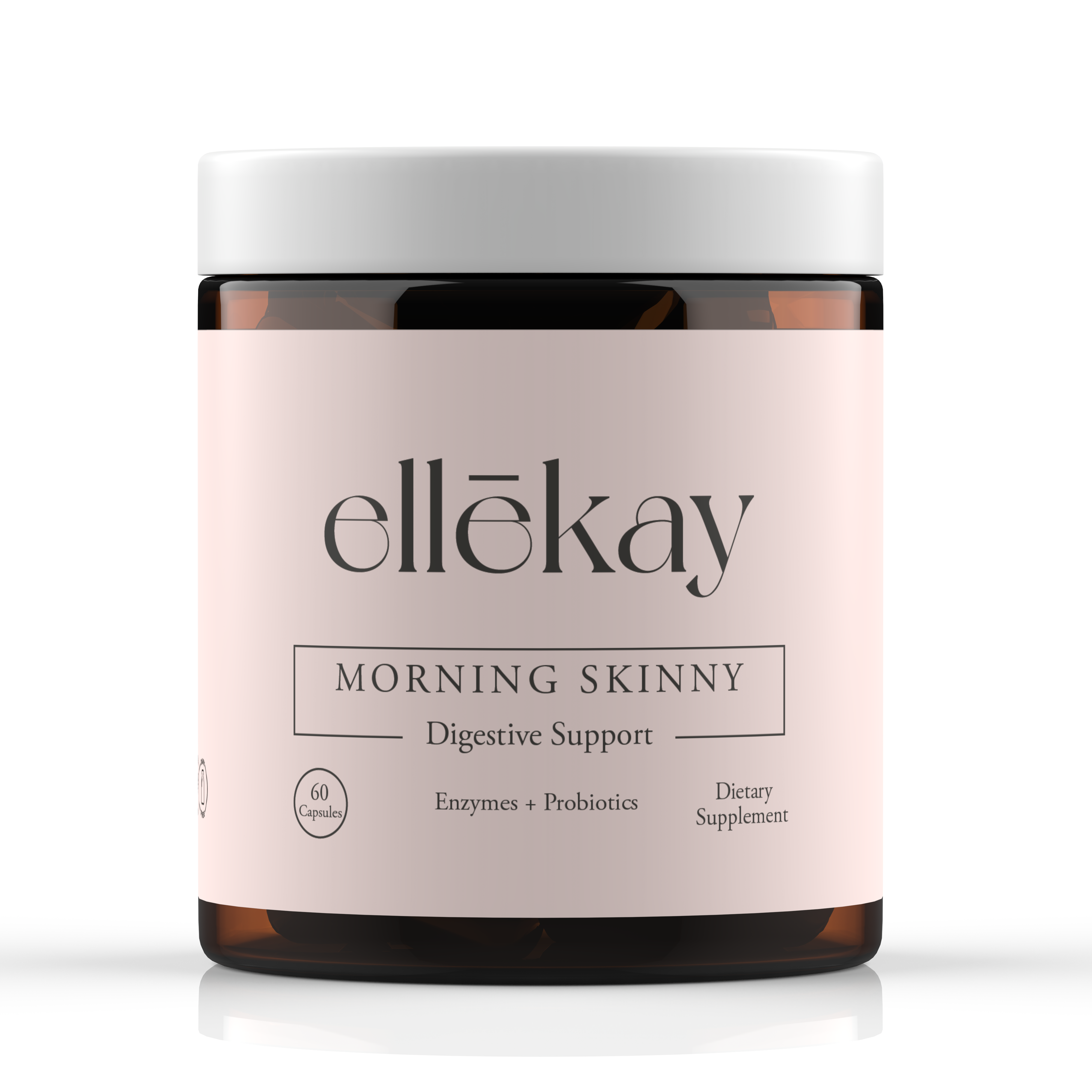
If you've hit a weight loss plateau despite consistent diet exercise and physical activity, your gut may be the missing piece. Gut health and weight plateau struggles are closely linked: the gut microbiome shapes fat storage, metabolism, and inflammation in ways that make losing weight harder than calorie counting alone can solve. Ellekay's Morning Skinny was formulated with this connection in mind.
By Ellekay Team, Women's Wellness Experts
Why Gut Health and Weight Plateau Are Linked More Than You Think
You've been eating well, moving your body, and doing everything right, yet the scale hasn't budged in weeks. Weight loss plateaus like this are more common than most people realize, and emerging research points to an unexpected contributor: the gut microbiome.
The gut is home to trillions of bacteria, fungi, and microorganisms that do far more than aid digestion. They regulate hormones, produce short-chain fatty acids, influence appetite signals, and determine how efficiently your body extracts energy from food. When this microbial community falls out of balance, it becomes significantly harder to lose weight regardless of how clean your diet is or how consistently you show up for physical activity.
A landmark 2013 study by Ridaura et al., published in Science, found that transplanting gut bacteria from obese mice into lean mice caused the lean mice to gain fat mass without any changes in diet. This was one of the first demonstrations that gut bacteria alone can meaningfully influence body composition.
What Your Gut Bacteria Are Actually Doing to Your Metabolism
Research has identified two dominant bacterial phyla in the gut: Firmicutes and Bacteroidetes. People who struggle with weight management tend to have a higher ratio of Firmicutes to Bacteroidetes, meaning their gut bacteria are more efficient at extracting calories from food and converting them to fat.
A 2006 study by Turnbaugh et al. in Nature found that the gut microbiome of people with obesity was enriched with Firmicutes and showed an increased capacity for energy harvest from food. This microbial imbalance, called dysbiosis, can cause a person to absorb meaningfully more calories from the same meal compared to someone with a balanced microbiome.
Microbial diversity also plays a major role. A low-diversity gut microbiome, meaning fewer distinct species of bacteria, is associated with obesity, insulin resistance, and slower metabolic function. High diversity in the gut microbiome supports better glucose regulation, reduced fat storage, and improved energy balance throughout the day.

How Gut Inflammation Stalls Fat Loss
One of the most overlooked drivers of weight loss plateaus is chronic low-grade inflammation, and the gut is often where it starts. When the gut lining becomes compromised, bacterial compounds called lipopolysaccharides (LPS) can pass into the bloodstream and trigger a systemic immune response.
A 2007 study by Cani et al., published in Diabetes, showed that elevated LPS levels triggered inflammation, insulin resistance, and fat accumulation in animal models. In humans, this inflammatory state shifts the body into a protective mode where fat loss slows and fat storage increases, even during periods of caloric restriction.
For women dealing with persistent bloating, irregular digestion, and weight loss plateaus that refuse to budge despite real effort, this low-grade gut inflammation may be a central driver. Reducing it through probiotic support, fermented foods, and an anti-inflammatory diet can help the body shift out of that stuck state.
That same inflammatory response rarely stays contained to the digestive tract. Because a large share of immune activity is coordinated in the gut, ongoing gut inflammation can echo through the rest of the body in the form of skin flare ups, joint discomfort, and a general sense of feeling reactive to foods that used to sit fine, on top of the metabolic effects already at play.
Physical Activity, Strength Training, and Your Gut
Here is something most wellness content overlooks: physical activity directly changes your gut microbiome. Exercise increases microbial diversity, boosts populations of beneficial bacteria like Lactobacillus and Bifidobacterium, and supports the production of butyrate, a short-chain fatty acid that reduces gut inflammation and improves metabolic health.
Strength training specifically has been shown to improve gut microbiome composition. A 2019 study by Allen et al. in Medicine and Science in Sports and Exercise found that resistance exercise increased microbial diversity in participants independently of diet changes. More muscle mass also raises resting metabolic rate, which helps the body push through stubborn weight loss plateaus over time.
If you have been focused only on cardio, adding strength training two to three times per week can create a meaningful shift in both gut health and body composition. For women who also train for performance, this same gut-exercise relationship extends to recovery and energy levels, a topic our athletic gut performance guide covers in more depth.
Foods and Habits That Build a Weight-Loss-Friendly Microbiome
What you eat is the most direct lever you have over your gut bacteria. Certain foods actively reduce inflammation, increase microbial diversity, and support the kind of metabolic environment where it becomes easier to lose weight and maintain results.
Fermented foods like yogurt, kefir, kimchi, and sauerkraut introduce live probiotic cultures into the gut. A 2021 clinical trial by Wastyk et al. in Cell found that a high-fermented-food diet increased microbiome diversity and reduced inflammatory markers compared to a high-fiber diet alone.
Prebiotic fiber from garlic, onions, leeks, asparagus, and oats feeds beneficial gut bacteria and supports a healthy gut lining. Without adequate prebiotic fiber, even beneficial bacteria struggle to establish themselves and maintain balance.
Water intake is also underappreciated in gut health conversations. Staying well-hydrated supports healthy digestion, helps reduce bloating, and assists the gut in moving waste efficiently, all of which contribute to a more favorable metabolic state for fat loss.
The Morning Skinny gut-debloat blend supports this kind of gut reset through a combination of digestive enzymes, probiotics, and bloat-reducing botanicals that work alongside a gut-focused diet and lifestyle.
For women navigating hormonal shifts like perimenopause and menopause, changing estrogen levels interact with gut bacteria in ways that shape digestion and weight management, a connection our menopause gut health guide explores in more depth.
Stress and mood play a role here too, since the gut and brain stay in constant communication and stress hormones can influence which bacteria thrive. A stretch of high anxiety or poor sleep often lines up with a stubborn plateau, and supporting the gut through diet and lifestyle can be one part of easing that response.
Frequently Asked Questions
Can fixing gut health break a weight loss plateau?
Improving gut health alone will not guarantee weight loss, but it can remove a significant barrier. A dysbiotic gut impairs metabolism, increases calorie absorption from food, and drives inflammation that resists fat loss. Addressing microbial balance through diet, probiotics, and strength training creates a more favorable internal environment where the body can genuinely respond to weight loss efforts.
How long does the gut microbiome take to change?
Research shows measurable changes can begin within days of shifting your diet. A 2014 study by David et al. in Nature found changes in gut bacteria composition within 24 hours of dietary intervention. Sustained improvements in microbial diversity generally take four to eight weeks of consistent diet and lifestyle changes, with the greatest shifts tied to foods that actively feed beneficial bacteria.
Do probiotics help with losing weight?
Probiotics can support weight management indirectly by reducing inflammation, strengthening gut barrier function, and competing with bacteria that favor fat storage over energy use. They are not a substitute for diet exercise and physical activity, but well-chosen strains like Lactobacillus gasseri or Bifidobacterium animalis have shown promise in metabolic research. Consistency matters more than any single strain.
What are signs my gut health might be behind my weight loss plateau?
Common signs include persistent bloating even when eating clean, irregular bowel movements, low energy after meals, and difficulty losing weight despite consistent physical activity and strength training. These patterns often point to microbial imbalance or gut inflammation that is quietly interfering with metabolism and fat storage regulation.
Is the gut-weight connection the same for women as for men?
Women's gut microbiomes interact with sex hormones in ways that differ from men's. Estrogen influences microbial composition, and the gut in turn influences estrogen metabolism. This relationship means hormonal changes during the menstrual cycle, perimenopause, and menopause can all affect how easily a woman can lose weight or push through weight loss plateaus, making gut support especially relevant for women in these life stages.
Start Supporting Your Gut for Real Weight Loss Results
Understanding the gut health and weight plateau connection is the first step toward getting unstuck. If you have questions about where to begin or which approach fits your body best, contact the Ellekay team for personalized guidance.