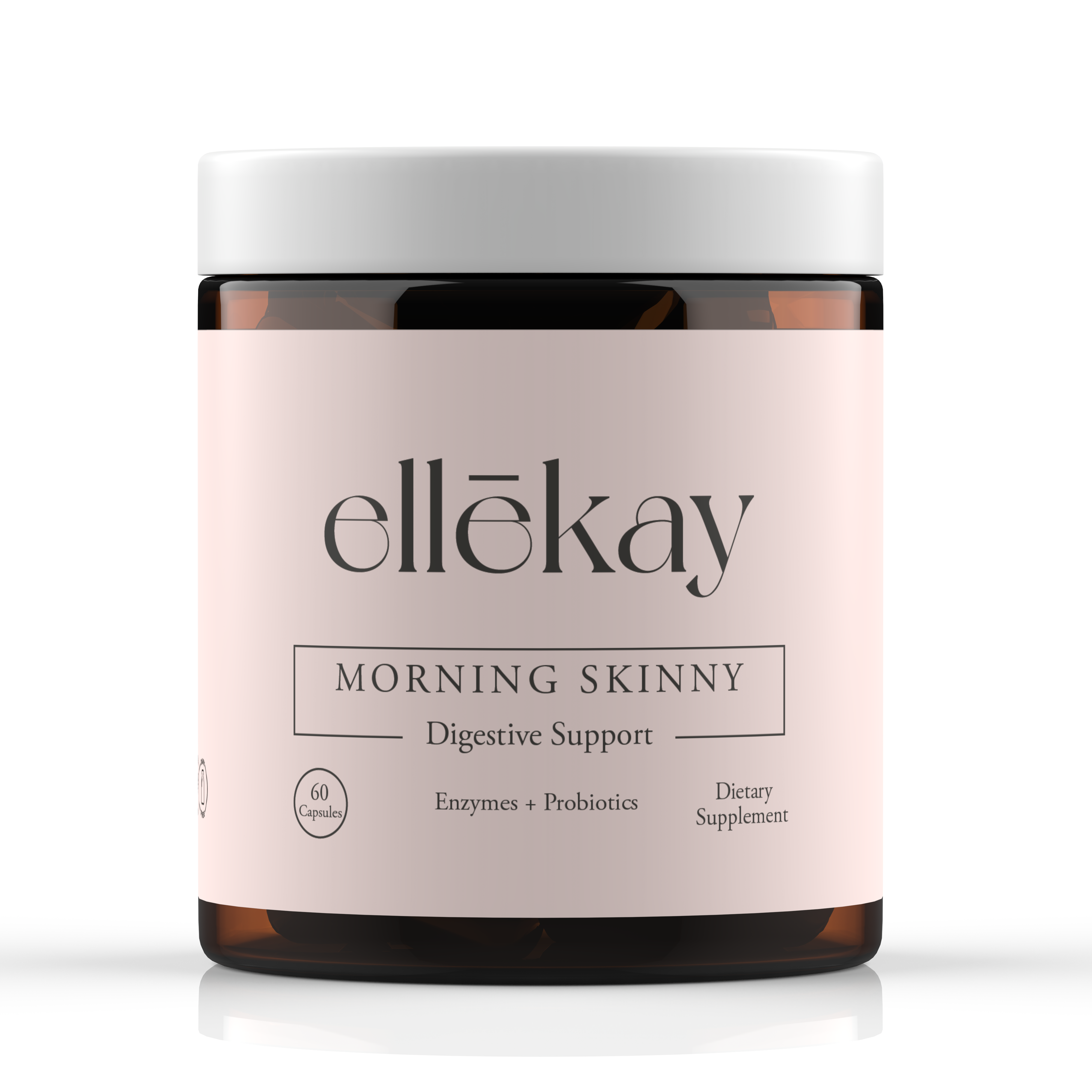
When bloating, heartburn, or sluggish digestion strikes, choosing between digestive enzymes vs antacids can feel confusing. Digestive enzymes support your body's natural breakdown of food, while antacids temporarily neutralize stomach acid. For women who want lasting gut relief, understanding the difference is the first step. Explore Ellekay's Morning Skinny to see how enzyme support fits into a daily wellness routine.
By Ellekay Team, Women's Wellness Experts
How Digestive Enzymes Work in Your Body
Your digestive system relies on a network of biological catalysts to turn the food you eat into usable nutrients. A digestive enzyme is a protein produced primarily in the pancreas, small intestine, and salivary glands that breaks down macronutrients like proteins, fats, and carbohydrates into smaller, absorbable building blocks.
When your body does not produce enough of these proteins, foods pass through your gut only partially processed. This leads to bloating, gas, diarrhea, and abdominal pain, all signs the digestive cascade has broken down. Supplemental digestive enzymes step in to fill that gap.
Key enzyme types include:
-
Protease: Breaks down protein into amino acids
-
Lipase: Processes dietary fats
-
Amylase: Converts starches into simple sugars
-
Lactase: Helps your body process the lactose in dairy, so low levels often show up as gas, bloating, or diarrhea after eating dairy foods
Research published by Roxas in Alternative Medicine Review (2008) confirmed that enzyme supplementation can improve digestion of macronutrients in people with functional digestive symptoms. For women looking to incorporate this kind of support into their daily routine, the Morning Skinny gut-debloat blend brings together targeted digestive enzymes alongside gut-supporting ingredients.
What Antacids Actually Do (And What They Miss)
Antacids work on a completely different mechanism. Rather than helping your body process food, they chemically neutralize stomach acid that is already present. Common active ingredients include calcium carbonate, magnesium hydroxide, and aluminum hydroxide, all of which raise stomach pH to reduce the burning sensation of heartburn and acid indigestion.
The relief is real, but antacids do not address the root cause. When heartburn is caused by poor motility, slow gastric emptying, or insufficient enzyme activity rather than excess acid, antacids provide only temporary cover. The underlying conditions driving your symptoms remain untouched.
There is another concern: stomach acid plays a critical role in activating digestive enzymes and absorbing key minerals. Consistent acid suppression can impair absorption of calcium, magnesium, and vitamin B12. Research by Yang et al. published in JAMA (2006) found a significant association between long-term acid-suppressing medication use and hip fracture risk, a finding connected to reduced calcium absorption over time.
Antacids are best used as occasional, short-term relief tools, not as a substitute for addressing the root cause of your digestive symptoms.
Digestive Enzymes vs Antacids: Comparing Common Symptoms
Understanding how digestive enzymes vs antacids each perform against specific symptoms makes it easier to choose the right support.
Bloating and Gas
Bloating and gas most often come from undigested food fermenting in the colon. A digestive enzyme supplement addresses this directly by breaking down carbohydrates, proteins, and fibers before they reach the large intestine. Antacids do nothing for these symptoms because acid neutralization has no effect on fermentation.
Heartburn and Acid Reflux
Antacids reduce the burning sensation of acid reflux by neutralizing stomach acid in the esophagus. However, when reflux is caused by slow gastric emptying rather than excess acid production, enzyme support may reduce events by helping food move through the stomach more efficiently. Identifying the root cause matters when choosing your approach.
Diarrhea After Eating
Post-meal diarrhea often points to food intolerances or insufficient enzyme activity. A lactase enzyme is directly effective for dairy-related diarrhea. Lipase support helps with fat malabsorption. Antacids offer no benefit here and can worsen diarrhea when they contain magnesium.
Nutrient Absorption Over Time
Digestive enzymes support nutrient absorption by breaking food into bioavailable forms your body can use. Chronic antacid use can suppress the stomach acid levels needed to absorb calcium, magnesium, iron, and B12.

When Your Symptoms Point to an Enzyme Problem
Not every stomach complaint comes from excess acid. These signs suggest your body may need digestive enzyme support rather than acid suppression:
- Feeling full and heavy after even small meals
- Bloating within 30 to 60 minutes of eating
- Greasy or floating stools, which indicate fat malabsorption
- Gas and cramping after high-fiber foods like beans, broccoli, or lentils
- Diarrhea or loose stools after dairy
If several of these apply to you, the issue likely is not excess acid. It is incomplete food breakdown that digestive enzymes are specifically designed to address.
For people managing IBS alongside these symptoms, enzyme supplementation is a useful piece of an IBS symptom management plan, since incompletely digested food is a common trigger for flare-ups in IBS as well as in general bloating and gas.
If you suspect a broader enzyme shortage, common causes include age-related decline in enzyme production, chronic pancreatic conditions, and gut inflammation that disrupts normal digestion. Pinpointing which applies to you shapes what to try next, from dietary changes to targeted enzyme deficiency support.
Can You Take Digestive Enzymes and Antacids Together?
In most cases, yes. Digestive enzymes are most effective when taken with or just before a meal, when digestion is actively starting. A high-dose antacid taken at the same time may reduce enzyme effectiveness by altering the stomach pH needed for early food breakdown.
If you need short-term acid relief while also building better long-term digestion, spacing the two apart is a sensible approach. Use an antacid when acute symptoms appear, and take your enzyme supplement consistently with meals.
The longer-term goal is building a gut that does not require ongoing acid suppression. There are many available digestive enzyme formulas, and finding one matched to your specific symptoms matters. Look for a formula with broad enzyme coverage across proteins, fats, and carbohydrates rather than a single isolated enzyme, and check that potency and ingredient quality are clearly listed rather than hidden behind a proprietary blend.
If plant foods are a consistent trigger in your diet, cellulase and hemicellulase are the enzymes responsible for breaking down the tough fiber in vegetables, legumes, and whole grains that your body cannot fully process on its own. A formula that includes these alongside protease, lipase, and amylase offers broader coverage for plant-heavy meals.
Frequently Asked Questions
Are digestive enzymes better than antacids for long-term gut health?
For most women, digestive enzymes are a more targeted long-term approach. They support your body's natural digestive process rather than suppressing acid. Chronic antacid use can reduce absorption of calcium, magnesium, and B12, while enzyme supplementation works with your body rather than against it.
Can digestive enzymes help with acid reflux?
Yes, in some cases. When acid reflux is caused by slow gastric emptying or incomplete digestion rather than true excess acid production, enzyme support can reduce reflux frequency. If reflux has a structural cause, like a hiatal hernia, consult a healthcare provider for a full evaluation.
Do digestive enzymes have side effects?
Digestive enzymes are generally well tolerated. Some people notice mild nausea or looser stools when starting, particularly at higher doses. Beginning with a standard dose taken with a meal and adjusting gradually works well for most people. Those with Crohn's disease, pancreatitis, or other chronic conditions should speak with a doctor first.
What is the difference between OTC enzyme supplements and prescription enzyme therapy?
Prescription enzyme replacement, such as pancrelipase, is prescribed for diagnosed conditions including exocrine pancreatic insufficiency and cystic fibrosis. Over-the-counter digestive enzyme supplements are designed for everyday digestive support in otherwise healthy individuals. They differ in potency, formulation, and the conditions they target.
Can I take digestive enzymes alongside a probiotic?
Yes. Digestive enzymes and probiotics are complementary. Enzymes break down food into nutrients that support a healthy gut microbiome, while probiotics maintain beneficial bacterial balance. Many women find that pairing both produces the most noticeable improvement in gut comfort and regularity over time.
Choose the Right Support for Your Gut Health
If you have been relying on antacids for ongoing bloating, discomfort, or post-meal symptoms, digestive enzymes address the root cause by helping your body fully break down what you eat. For questions about finding the right formula for your needs, contact the Ellekay team.