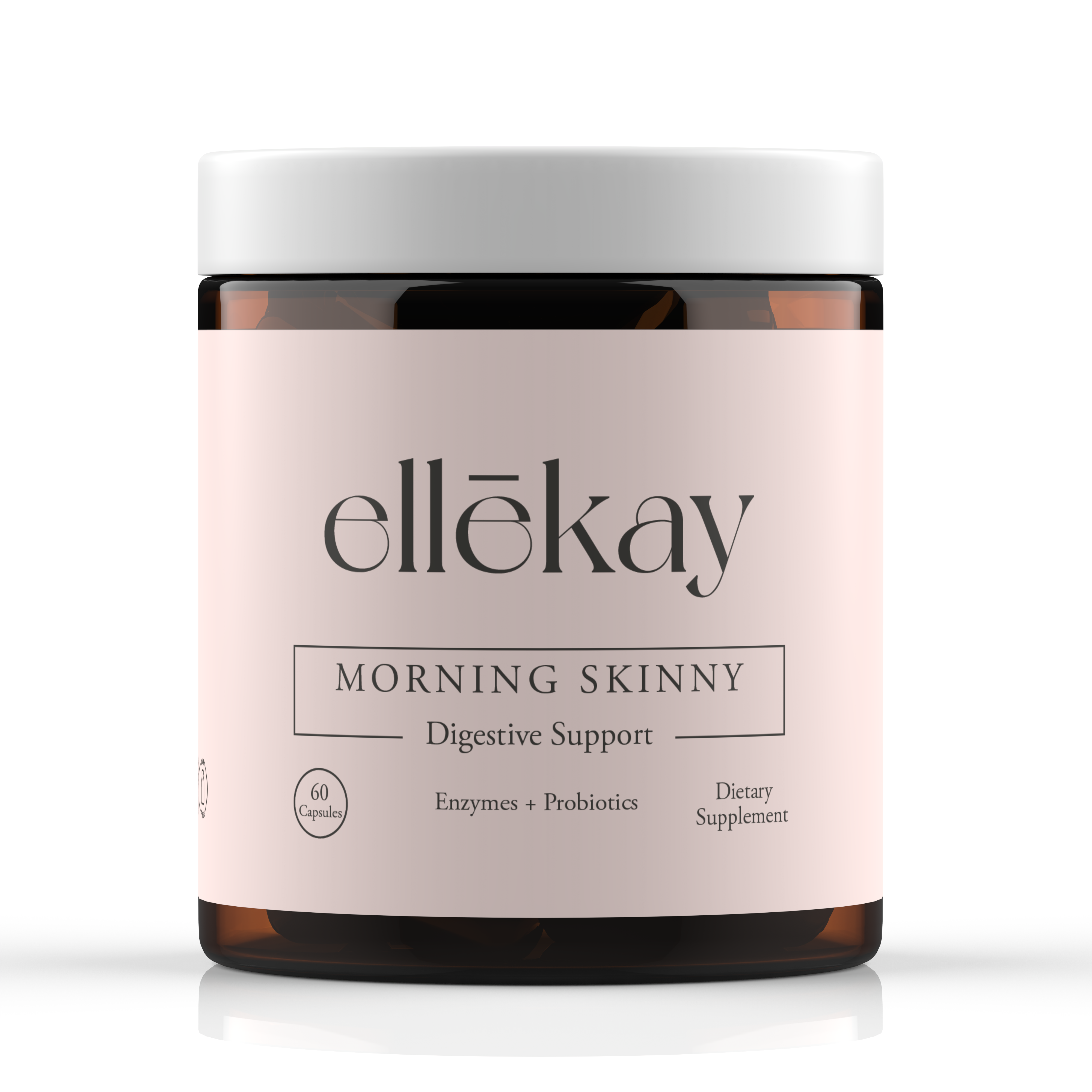

Apple cider vinegar for bloating is a popular home remedy, but the evidence is thin and it can irritate your teeth and throat. A digestive enzyme capsule such as Ellekay's Morning Skinny works on the meal itself. Here is how the two compare, and which fits which kind of bloat.
By Ellekay Team, Women's Wellness Experts
| Feature | Apple cider vinegar (ACV) | Digestive enzyme capsule (Morning Skinny) |
|---|---|---|
| What it is | Fermented apple juice, usually about 5 percent acetic acid | Capsule with nine enzymes, four herb extracts and a prebiotic and probiotic blend |
| How it may help | Adds acid to a meal; evidence for bloating is thin | Enzymes break down food before gut bacteria ferment it |
| Best for | Occasional heaviness after a rich meal | Bloating that follows bread, dairy, fiber or large meals |
| Main cautions | Tooth enamel, throat, reflux, some medications | Pregnancy, nursing or medications: ask your doctor first |
| How you take it | One to two tablespoons, diluted in water | Two capsules with water after the largest meal |
| Cost | Inexpensive pantry item | $29.99 per jar, 30 servings |
Does Apple Cider Vinegar for Bloating Actually Work?
Possibly a little, for some people. Apple cider vinegar for bloating has no strong research behind it. The vinegar's main active compound is acetic acid, the sour acid found in every vinegar. Most claims rest on small studies about blood sugar and fullness, not bloating itself. Lists online that call vinegar one of the quick cures for bloating run ahead of the research, and no home remedy cures bloating on its own.
What Are the Apple Cider Vinegar Benefits for Stomach Health?
The apple cider vinegar benefits for stomach comfort are claimed more often than proven. The theory is that acetic acid adds a little acidity at the table, so the meal feels lighter. Bottles labeled raw also hold a cloudy "mother" made of yeast and bacteria. It is not a reliable source of beneficial bacteria, and it does not replace probiotics. Some small studies suggest vinegar may soften blood sugar spikes after meals. Those are separate health benefits, not proof that ACV flattens a bloated belly. Belly fat is a different story too: bloating is trapped gas and fluid, not fat, and neither ACV nor a capsule burns it.
Does Apple Cider Vinegar Help Digestion After Meals?
Does apple cider vinegar help digestion after meals? It may support digestion for some people, but the proof is limited. Vinegar adds no enzymes, so it cannot break down starch, protein or fat. Your stomach already makes its own stomach acid, and one or two diluted tablespoons add little to it. Vinegar can also backfire. A small pilot study in people with type 1 diabetes and gastroparesis (slow stomach emptying) found that vinegar slowed emptying further. If you have gastroparesis, IBS (irritable bowel syndrome), constipation or reflux, talk with your doctor before trying it.
Does Apple Cider Vinegar Make You Pass Gas?
Not directly. Vinegar is not a fermentable carbohydrate like beans or onions. Still, some people report more burping, nausea or looser stools after taking it, and those can feel like extra gases. Passing gas is normal, so the goal is less discomfort, not zero gas. If your symptom gets worse after you start ACV, stop.
What Enzymes Break Down the Foods That Cause Bloating?
Bloating often starts when fibers and sugars you did not fully digest reach the colon. Gut bacteria ferment them and release gases. Digestive enzymes are proteins that split food into pieces your body can absorb, and they work earlier in that chain:
- Amylase breaks down starch in bread, rice and pasta.
- Cellulase, xylanase and hemicellulase break down plant fibers.
- Lactase breaks down lactose, one of the sugars in dairy.
- Protease, bromelain and papain break down protein.
- Lipase breaks down fat.
Enzymes only help bloating that comes from food they can digest. They are unlikely to touch constipation, hormone-related swings or IBS-related gut sensitivity.
Morning Skinny is a daily supplement in capsules, never a powder or drink. Its label lists a 136 mg Digestive Enzyme Blend of nine enzymes: bromelain, papain, alpha-amylase, cellulase, lipase, lactase, neutral protease, xylanase and hemicellulase. It also carries lemon balm, dandelion, ginger and peppermint extracts, plus a prebiotic and probiotic blend of inulin, acacia fiber and Akkermansia muciniphila, a gut bacterium. It contains inulin and is not low FODMAP certified, which matters if you track FODMAPs. It is a digestion and de-bloat support stack, not a weight-loss pill. Enzyme labels can list weight in milligrams or activity units, so read each one closely when you compare digestive enzyme blends.
How Long Does a Digestive Enzyme Capsule Take to Work for Bloating?
Enzymes act on the food they arrive with, so timing follows your meal. Take two Morning Skinny capsules with water after the largest meal of the day. Some women notice relief, often within the hour, though it varies. Take the capsules with water after the largest meal of the day, as the directions say, so the enzymes are on hand while that meal is being digested. The prebiotic and Akkermansia half is not timing sensitive that way and builds with daily use. That is why our line is "Take it daily. By day 30, your gut finds its rhythm."