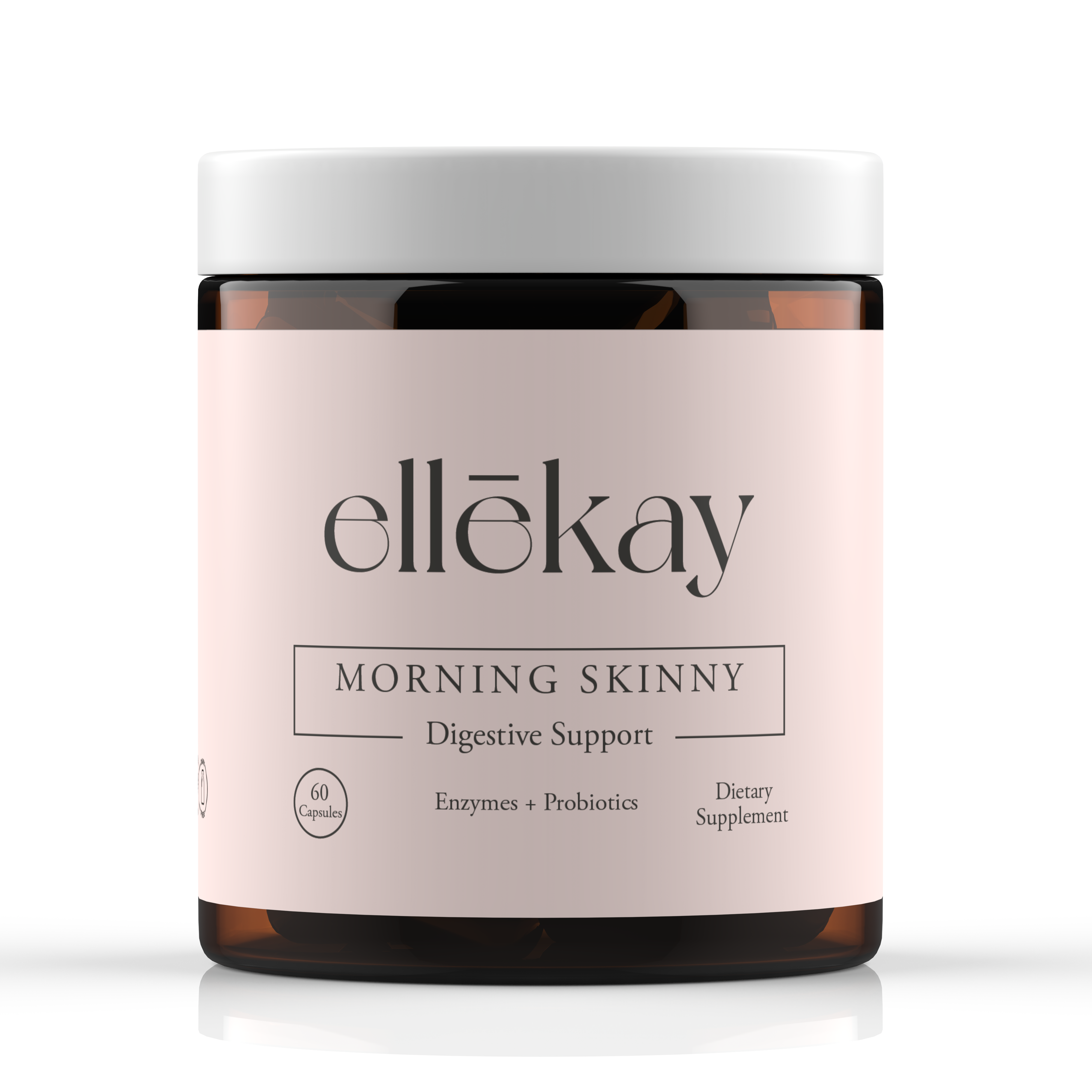
Natural digestive aids include digestive enzymes, probiotics, herbal bitters, and fiber supplements, each targeting a different step in how your body processes food. If persistent bloating, sluggish digestion, or food-specific discomfort is affecting your daily life, Ellekay's Morning Skinny and the breakdown below can help you match the right option to your specific gut health needs.
By Ellekay Team, Women's Wellness Experts
How Natural Digestive Aids Work in the Body
Your digestive system is responsible for breaking down everything you eat, absorbing nutrients, and eliminating waste. It involves dozens of organs, muscles, and chemical processes working in coordination. When the system runs smoothly, you feel energized and comfortable after meals. When it struggles, the result is bloating gas, cramping, fatigue, or irregular bowel movements.
Natural digestive aids support this process from multiple angles. Enzyme supplements add the chemical catalysts your body needs to break down specific foods. Probiotics restore or maintain the bacterial balance that supports intestinal health. Herbal bitters stimulate your own digestive secretions. Fiber feeds beneficial bacteria and keeps waste moving efficiently. Knowing which category fits your symptoms is the starting point for choosing the right natural digestive aid.
Digestive Enzymes: Breaking Down What Your Body Cannot
Digestive enzymes are proteins produced in the mouth, stomach, pancreas, and small intestine that chemically break down food into absorbable components. Every major macronutrient has its own enzyme class. Enzymes that process proteins fats and carbohydrates form the core of any broad-spectrum enzyme supplement and are the most commonly deficient in adults who experience chronic digestive complaints.
Proteases break proteins into amino acids. Lipases convert fats into fatty acids and glycerol. Amylases break starches into simple sugars. When any of these enzymes is in short supply, food arrives in the large intestine only partially digested, where gut bacteria ferment the unprocessed material and produce gas, bloating, and discomfort.
Lactase is one of the most studied digestive enzymes. It is responsible for breaking down lactose, the sugar found in dairy products. People with lactose intolerance do not produce enough lactase, which is why dairy consumption causes immediate digestive distress for them. Research by Savaiano and Levitt, published in the American Journal of Clinical Nutrition in 1987, confirmed that supplemental lactase significantly reduces lactose intolerance symptoms including bloating, gas, and diarrhea. Dairy sensitivity affects enough women that lactase deserves a closer look on its own, and our lactase enzyme breakdown goes further into how it works.
Broad-spectrum enzyme supplements include multiple enzymes in a single formula, making them practical for women whose discomfort is not limited to one specific food group.
Probiotics and Gut Health: Supporting the Microbiome
Probiotics are live microorganisms that, when taken in sufficient quantities, benefit the digestive system by supporting a healthy balance of intestinal bacteria. Unlike enzyme supplements that break down food directly, probiotics work by competing with harmful bacteria, strengthening the gut lining, and producing compounds like short-chain fatty acids that nourish the cells of the large intestine.
Research by Ouwehand, Salminen, and Isolauri, published in the International Dairy Journal in 1999, found that specific probiotic strains reduced bloating and improved intestinal transit time in clinical trials, confirming their role in managing physical symptoms alongside microbiome health.
Probiotics are naturally present in fermented foods including yogurt, kefir, kimchi, sauerkraut, and miso. Supplemental probiotics come in capsule or powder form and are measured in colony-forming units. For effective results, prioritize strains with published clinical data, such as Lactobacillus acidophilus and Bifidobacterium longum, and choose a formula with an enteric coating if you have a sensitive stomach.
If you suspect both enzyme insufficiency and microbiome imbalance are driving your symptoms, the two often overlap more than they compete. Food that is not fully broken down by enzymes reaches the large intestine still partially intact, where it can feed an imbalance in gut bacteria rather than nourish the beneficial strains you want to support. Addressing enzyme insufficiency first, then adding a probiotic if symptoms persist, is a reasonable way to work through both without guessing at the root cause.

Herbal Digestive Aids: Bitters, Ginger, and Fiber
Herbal digestive aids work by stimulating your body's own digestive secretions rather than supplying external enzymes or bacteria. Bitter botanicals like dandelion root, gentian, and artichoke leaf activate receptors in the mouth and stomach that signal the body to increase production of stomach acid, bile, and pancreatic enzymes. This makes them especially useful for people who feel heavy, foggy, or overly full after meals rather than experiencing acute gas or cramping.
Ginger is one of the most researched herbal options for digestive health. A meta-analysis by Haniadka et al., published in Food and Function in 2013, found that ginger accelerates gastric emptying and reduces nausea. For women who experience discomfort in the early stages of digestion or who struggle with morning nausea, ginger-based supplements provide measurable relief without the complexity of a multi-enzyme formula.
Fiber plays a foundational role in digestive health that is easy to overlook. Soluble fiber, found in oats, chia seeds, and legumes, slows digestion and feeds beneficial bacteria. Insoluble fiber, found in leafy greens and whole grains, adds bulk and accelerates transit time. According to the Dietary Guidelines for Americans, women need 21 to 25 grams of fiber daily, and most fall short of this target consistently.
Choosing the Right Natural Digestive Aid for Your Needs
Food-Specific Symptoms Point to Enzyme Supplements
If certain foods reliably trigger bloating gas, cramping, or loose stools within an hour of eating, an enzyme supplement is often the most targeted solution. Lactase supplements resolve dairy-related lactose intolerance directly. Protease and lipase supplements help with high-protein or high-fat meals. For women who eat a lot of vegetables and whole grains, adding cellulase and hemicellulase can help the small intestine extract nutrients from fibrous plant foods that standard human enzymes cannot process on their own.
Chronic or Non-Food-Specific Symptoms Point to Probiotics or Fiber
If your digestive concerns are chronic, irregular, and do not link clearly to specific foods, microbiome imbalance or insufficient fiber is more likely the contributing factor. Probiotics address the bacterial environment. Fiber provides the substrate those bacteria need to thrive and keeps waste moving through the colon efficiently.
Overlapping Symptoms Call for a Multi-Ingredient Formula
Many women experience both food-triggered discomfort and chronic irregularity. In these cases, a formula that combines digestive enzymes with complementary ingredients covers more ground than either category alone. The Morning Skinny gut-debloat blend is designed with this overlap in mind, combining multiple digestive support ingredients to address more than one mechanism at once.
If you are uncertain whether enzyme insufficiency is a contributing factor, paying attention to when discomfort shows up relative to meals is the clearest place to start. Our breakdown of enzyme deficiency signs and causes can help you spot patterns worth discussing with your healthcare provider.
Frequently Asked Questions
Can I take digestive enzymes and probiotics at the same time?
Yes. Digestive enzymes and probiotics act on different parts of the digestive process and do not interfere with each other. Enzymes work in the upper gastrointestinal tract during active digestion. Probiotics primarily colonize the large intestine and support the microbiome environment. Taking both together allows you to address multiple contributing factors simultaneously, which is useful when your symptoms span more than one category.
How quickly do digestive enzymes work?
Digestive enzymes begin working within minutes of a meal. They act directly on food as it enters the digestive system, reducing the amount of partially digested material that reaches the large intestine. Most women notice a reduction in bloating gas and post-meal heaviness within the first few days of use. Sustained improvements in nutrient absorption typically develop over several weeks of consistent supplementation.
Are enzyme supplements safe for long-term daily use?
Most enzyme supplements are considered safe for daily use in healthy adults when taken as directed. Individuals with chronic conditions including pancreatitis or inflammatory bowel disease, or those taking blood-thinning medications, should consult a healthcare provider before adding a new digestive supplement to their routine.
Do herbal bitters work the same way as enzyme supplements?
No. Herbal bitters prompt your body to produce more of its own digestive secretions. Enzyme supplements add enzymes externally to the digestive process. Bitters work best for people with generally sluggish digestion. Enzyme supplements are better suited to people with specific food triggers or a documented enzyme insufficiency affecting the digestive system.
What is the difference between a probiotic and a prebiotic?
Probiotics are live bacteria that support gut health when consumed in sufficient amounts. Prebiotics are the non-digestible fibers those bacteria feed on. Many high-fiber foods function as natural prebiotics. Supplement formulas that include both are called synbiotics and provide both the beneficial bacteria and the food source to sustain them within the digestive system.
Start Your Natural Digestive Aid Routine Today
The best natural digestive aids are the ones that fit your specific symptoms, eating habits, and lifestyle. For a formula designed to support multiple digestive mechanisms in one daily step, explore Morning Skinny ingredients overview and see how it fits your morning wellness routine.