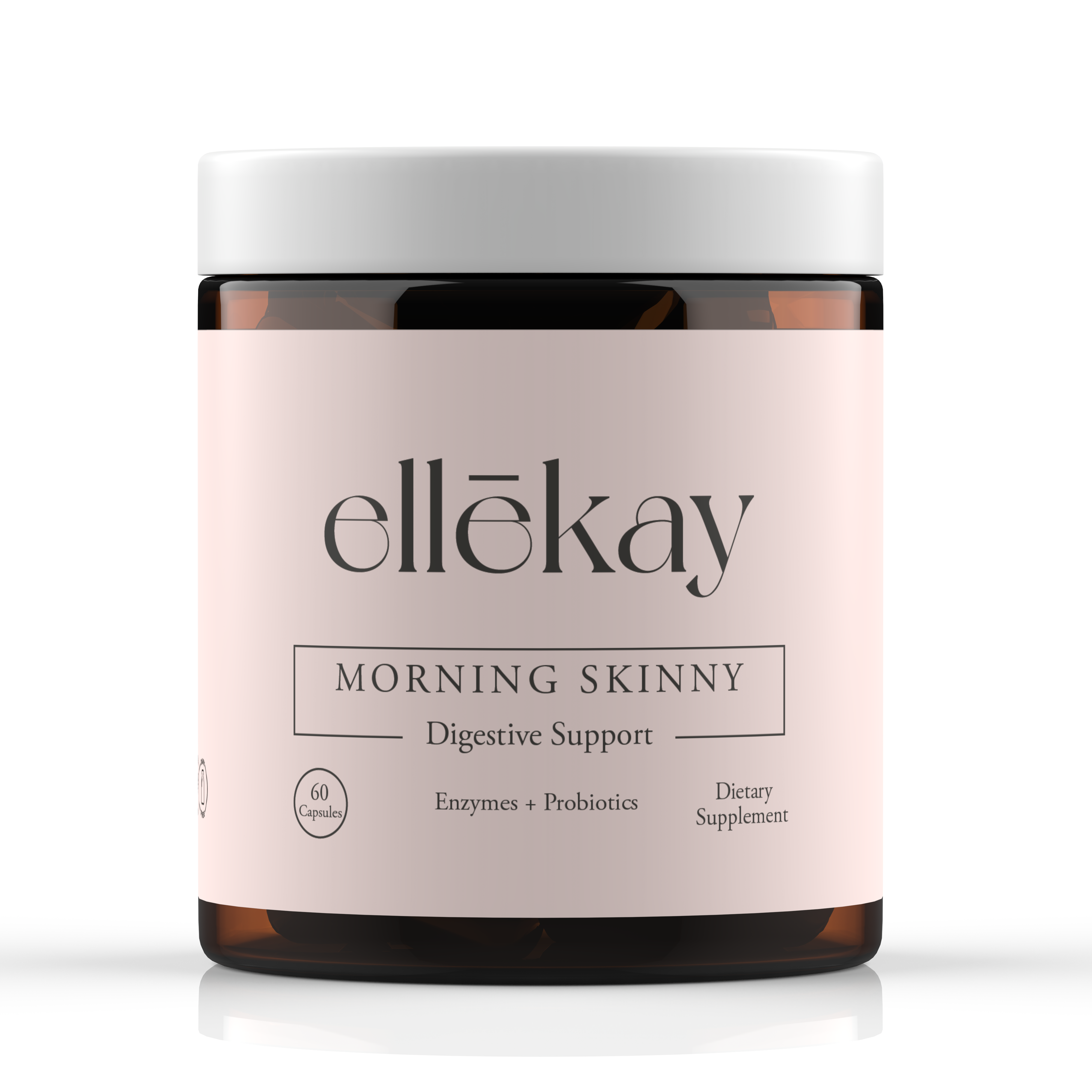
Holiday eating and digestion don't have to collide. With the right habits in place, you can enjoy holidays fully, without the bloating and discomfort that follow rich celebration meals. Understanding how your digestive system handles festive foods, and supporting it with targeted ingredients like Ellekay's Morning Skinny, can make every gathering more comfortable.
By Ellekay Team, Women's Wellness Experts
During the holiday season, eating patterns shift dramatically. Larger meals, richer foods, disrupted routines, and added stress all put pressure on the digestive system in ways that don't happen during an ordinary Tuesday dinner.
When you eat more than usual in one sitting, your stomach expands to accommodate the extra volume. Digestive enzymes and stomach acid have to work harder to break down everything on your plate. If the demand outpaces your body's capacity, food sits longer in the stomach, ferments in the gut, and produces gas. The result is bloating, heaviness, and that uncomfortable stuffed feeling that can linger for hours.
Stress also plays a role. Research by Mayer et al., published in Gut (2015), showed that psychological stress directly alters gut motility and microbiome composition, making digestion less efficient even before you take a single bite. Holiday anxiety, travel, and family dynamics can quietly make bloating worse.
Common Holiday Foods That Trigger Bloating
Not all holiday foods are equal when it comes to digestive strain. Some are genuinely harder to process, and knowing which ones helps you make smarter choices at the table.
High-fat foods like gravy, butter-heavy dishes, and creamy casseroles slow gastric emptying. Your stomach needs more time to process fats, which delays the entire digestion process and increases the chance of feeling overly full.
Carbonated drinks, including sparkling wine and soda, introduce extra gas directly into the stomach. Pair those with high-fiber vegetables like Brussels sprouts and onions, which produce gas during fermentation in the colon, and you have a recipe for significant bloating and discomfort.
Dairy-heavy dishes are another common trigger, since many adults have reduced lactase activity, the enzyme needed to digest lactose, and end up feeling it most after cheese boards or creamy holiday desserts. Our lactase enzyme guide has more practical solutions for managing dairy at holiday gatherings.
Smart Eating Habits for Better Digestion at Every Meal
Good habits at the table make a real difference for better digestion during the holidays. Read your hunger cues by pausing between servings instead of loading your plate all at once. These practical tips help:
Eat slowly and chew thoroughly. Digestion begins in the mouth. Saliva contains amylase, an enzyme that starts breaking down carbohydrates before food reaches the stomach. Rushing through meals skips this step and forces the rest of your digestive system to compensate.
Start with a moderate portion. Filling your plate conservatively first, then reassessing your hunger, gives your stomach time to signal fullness to your brain. It takes roughly 20 minutes for satiety hormones to register. Eating fast means consistently overeating before that signal arrives.
Spread fiber and fat intake across the day instead of concentrating them on one holiday plate. Combining very high-fiber foods like legumes and raw vegetables with fatty meats and sauces in large quantities is particularly hard on digestion.
Try digestive enzyme support. Enzyme-based supplements help when your gut's natural output can't keep up with a big meal. If certain foods consistently cause discomfort, low enzyme production may be at the root of it. Our digestive enzyme deficiency guide can help you identify the signs.
Stay Hydrated Throughout the Holiday Season
One of the simplest tips that makes the biggest difference: stay hydrated. Water plays a critical role in breaking down food and moving it through the digestive tract. Dehydration slows digestion, hardens stool, and makes bloating and constipation significantly more likely.
During holiday gatherings, alcohol and caffeinated drinks are common, and both are dehydrating. Aim to drink a glass of water between alcoholic drinks and keep water nearby during long family meals.
Warm water with lemon before a big meal gently stimulates digestive juices. Herbal teas, especially after eating, can ease cramping and reduce gas. Peppermint tea has antispasmodic properties, and chamomile tea helps relax the muscles of the intestinal wall, reducing cramping after rich holiday meals.

Ginger, Tea, and Natural Allies for Your Digestive System
Ginger is one of the most well-researched natural remedies for digestive discomfort. A meta-analysis by Haniadka et al., published in Food and Function (2012), confirmed that ginger accelerates gastric emptying, meaning food moves from the stomach into the small intestine faster. That means less of the heavy, sluggish feeling after a large holiday meal.
You can try ginger in several forms: ginger tea steeped from fresh root, ginger chews, or ginger as an ingredient in a gut-support supplement. Even adding fresh ginger to holiday cooking, in dressings, marinades, or warming drinks, delivers measurable benefit.
Fennel seeds are another underrated option. Chewing a small amount of fennel after eating has long been used in traditional Ayurvedic practice to relieve gas and bloating, and modern research supports its antispasmodic properties.
Probiotic-rich foods like plain yogurt, kefir, or fermented vegetables eaten in small amounts support the gut microbiome during a period of dietary stress. They are not a quick fix for one heavy meal, but consistent inclusion in the days around a holiday helps maintain healthy gut function.
Enzyme activity plays a direct role in how well you tolerate different foods. When your body doesn't produce enough of a specific enzyme, whether that's lactase for dairy or others for proteins and fats, undigested particles linger in the gut and ferment, which is what drives the gas and bloating many people notice after certain dishes. Paying attention to which foods trigger symptoms most consistently can point you toward where your own digestion may be falling short.
Movement, Rest, and Recovering After Big Holiday Meals
After a big holiday meal, gentle movement genuinely helps digestion. A 10 to 15 minute walk activates gut motility, the rhythmic muscular contractions that push food through the digestive tract. You will feel better and have more energy in the hours following a meal compared to sitting completely still.
Lying down immediately after eating slows gastric emptying and can worsen acid reflux. If you want to rest, sitting upright or reclining slightly is better than lying flat.
Sleep quality also matters. Poor sleep disrupts gut hormone levels, including ghrelin and leptin, which regulate hunger and satiety. A holiday season marked by late nights and disrupted routines can compound digestive issues even on days you eat normally.
The Morning Skinny gut-debloat blend includes a combination of ingredients formulated to support morning digestive function, making it a useful daily anchor during a period when your eating habits are anything but routine.
For anyone dealing with more persistent symptoms that go beyond a single holiday meal, it is worth raising with a healthcare provider, since ongoing bloating and discomfort can sometimes point to something beyond festive overeating. Enzyme support is one option that may come up in that conversation, but the right approach depends on what is actually driving the symptoms.
Frequently Asked Questions
Why do I always feel bloated after holiday meals?
Holiday meals tend to combine large portions, high-fat foods, carbonated drinks, and high-fiber vegetables all at once. Each is manageable alone, but together they overwhelm normal digestive capacity. Add stress and eating quickly to the mix, and the digestive system struggles to keep up, leading to gas buildup, bloating, and discomfort that can last several hours.
Does drinking water during meals help or hurt digestion?
Moderate water intake during meals supports healthy digestion. It helps break down food and move it through the digestive tract. Large amounts of cold water in a single gulp can temporarily dilute digestive enzymes, but regular sips throughout a meal are beneficial and do not impair the digestion process meaningfully. Staying hydrated before and after eating matters just as much.
Can digestive enzymes help with holiday bloating?
Yes. Digestive enzyme supplements can support the body's natural enzyme output when meal volume or fat and protein content is higher than usual. For anyone prone to gas, bloating, or discomfort after rich meals, enzyme support is one of the more evidence-backed options available.
Is ginger tea actually effective for bloating?
Yes, based on published research. Ginger contains gingerols and shogaols, bioactive compounds that accelerate gastric emptying and reduce intestinal spasms. Drinking ginger tea after a large meal can meaningfully reduce the duration and intensity of bloating for many people. Aim for one to two cups brewed from fresh root or quality dried ginger.
How long should I wait after eating before exercising?
A light walk is fine immediately after eating and actively helps digestion. More intense exercise, like running or heavy lifting, should wait at least 90 minutes to 2 hours after a large meal to avoid cramping, nausea, and discomfort during the workout.
Support Your Gut Through Every Holiday Celebration
Understanding how holiday eating and digestion interact gives you real, practical tools to feel better at every gathering this season. Small adjustments, from how fast you eat to what you sip between bites, add up to a noticeably more comfortable experience. If you have questions about which gut-support products fit your routine, reach Ellekay support any time.