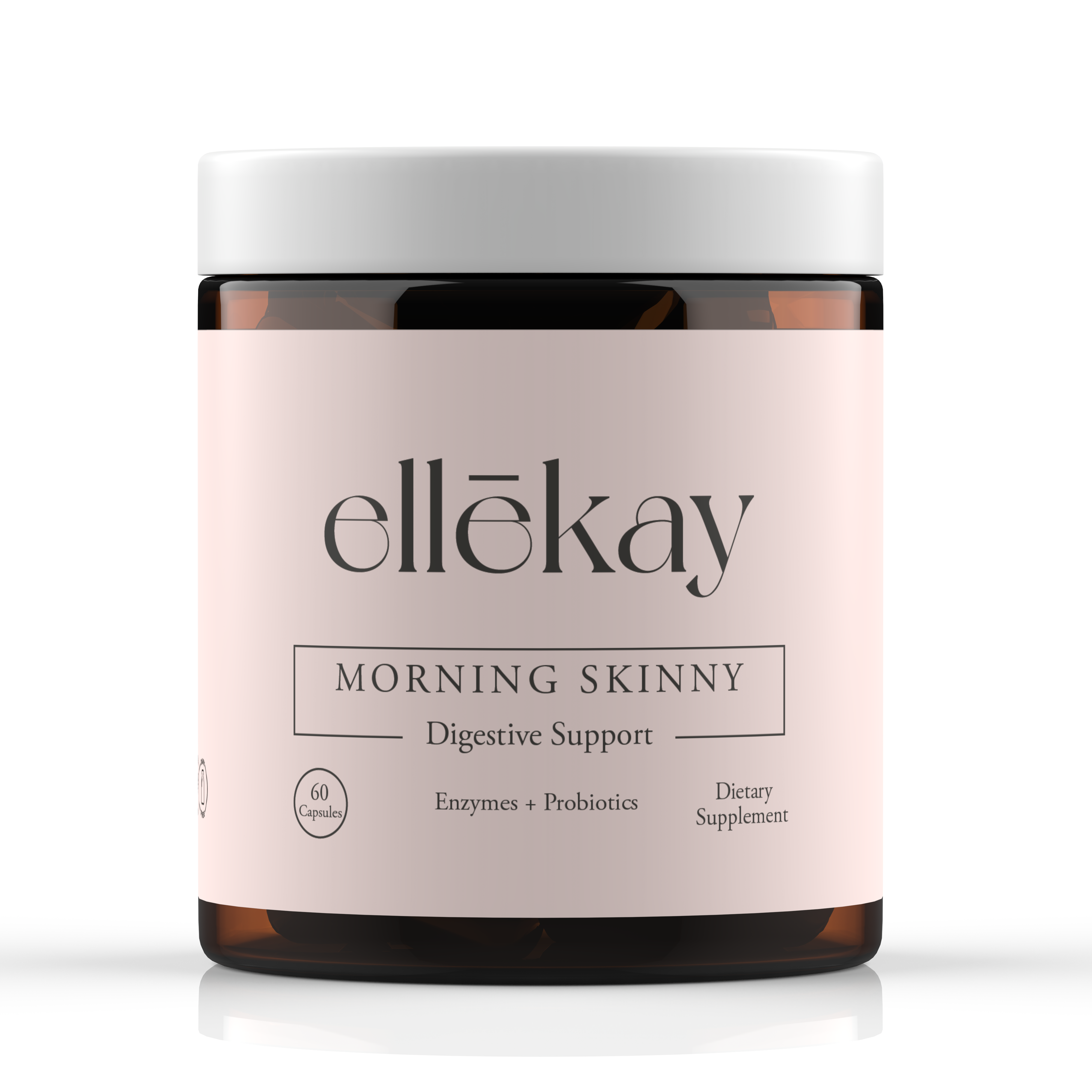
As you age, your body naturally produces fewer digestive enzymes, making it harder to break down food and absorb the nutrients you need. This decline, which often starts in your 30s, leads to bloating, heaviness, and fatigue after meals. Learning how digestive enzymes for aging work, and how the Morning Skinny formula addresses this, can change how you feel daily.
By Ellekay Team, Women's Wellness Experts
What Happens to Enzyme Production as You Get Older
Your digestive system relies on enzymes made by the pancreas, stomach lining, and small intestine to break down every meal you eat. In your 20s, that system runs smoothly. By your 30s and 40s, output starts to slow. Research published by Laugier et al. in Gut (1991) confirmed that pancreatic enzyme secretion declines measurably with age, with the most significant reductions seen in adults over 60 compared to younger adults.
At the same time, your stomach produces less hydrochloric acid. That matters because pepsin, the enzyme that starts protein digestion, only activates in an acidic environment. Less acid means less pepsin activity, which means proteins sit longer in your gut before being processed. That delay is often the source of the uncomfortable heaviness you feel after protein-heavy meals as you get older.
The small intestine also sees a reduction in brush border enzymes, which handle the final stages of carbohydrate and fat digestion. This layered slowdown across multiple digestive organs means your body is working with fewer resources to handle the same job it managed easily before.
Signals That Your Gut Needs Enzyme Backup
When enzyme output drops, your body responds with signals that are easy to dismiss as simply getting older. Bloating after meals is one of the most common, especially after eating beans, cruciferous vegetables, or dairy. Many women in their 40s and 50s notice food intolerances appearing for the first time, particularly to lactose or high-fiber foods, even when those same foods caused no trouble before.
Other signals include feeling uncomfortably full long after eating, frequent gas in the hours following a meal, loose stools or constipation that tracks with specific foods, and a pronounced fatigue after meals that worsens with age. These signals often overlap, and understanding enzyme deficiency causes in more depth can help you figure out which combination applies to you.
The Enzymes That Matter Most for Women Over 40
Not all digestive enzymes decline at the same rate, and knowing which ones to prioritize helps you target support where it matters.
Lipase breaks down dietary fats. Fat digestion is particularly vulnerable to age-related enzyme decline, which is one reason many women notice that rich meals feel heavier than they used to in their 20s.
Protease handles protein breakdown. As stomach acid falls and pepsin activity decreases, supplemental protease becomes relevant for anyone focused on maintaining adequate protein intake, which is critical for muscle preservation after 40.
Amylase processes carbohydrates and starches. A drop in salivary and pancreatic amylase allows starches to reach the large intestine partially undigested, where bacteria ferment them and produce gas.
Lactase deserves special attention. Lactase production naturally decreases after childhood, and the rate of lactose-related discomfort increases with age. If dairy has started causing issues you never had before, this enzyme is often the reason. The connection between age and dairy tolerance runs deeper than most people expect, and a closer look at lactase and lactose digestion explains why the timing varies so much from person to person.
Women who eat a high-fiber, plant-forward diet may also benefit from cellulase and hemicellulase, which help break down plant cell walls that human enzymes cannot process on their own. These enzymes occur naturally in raw fruits and vegetables but are largely broken down by cooking, so a diet built around cooked produce often gets less benefit from them than one with more raw plant foods. A supplement that includes both can help ease the bloating that comes with a high-fiber intake.

Digestive Enzymes for Aging: How Supplementation Closes the Gap
Supplemental digestive enzymes work by reinforcing what your body no longer produces at optimal levels. Taken at the start of a meal, they are present in the digestive tract alongside the food being broken down, reducing the workload on your pancreas and small intestine.
Clinical research supports their practical value. A study by Domínguez-Muñoz et al. published in Pancreas (2005) showed that enzyme supplementation significantly improved fat absorption in adults with reduced pancreatic output. While most women do not have clinical insufficiency, the same principle applies at a lower level: supplementing reduces the gap between what your body produces and what a full meal requires.
The Morning Skinny gut-debloat blend is formulated with digestive enzyme support alongside other gut-health ingredients, designed to work with your body's natural digestive rhythm. If you are also managing IBS-related symptoms alongside enzyme decline, the two conditions often compound each other, since sluggish enzyme output adds extra bloating and irregularity to a gut that is already sensitive. Supporting digestion with enzymes will not replace an IBS management plan, but it can lighten the overall load, and any persistent symptoms are worth discussing with your healthcare provider.
Foods and Habits That Keep Enzyme Activity Strong
Supplementation works best alongside supportive daily habits. The choices you make around eating also affect how well your remaining enzyme capacity functions.
Chew thoroughly. Saliva contains amylase, and thorough chewing breaks food into smaller particles that enzymes can process more efficiently. Eating quickly bypasses the first stage of digestion entirely.
Eat enzyme-rich foods. Papaya contains papain, a natural protease. Pineapple contains bromelain, another protease with documented digestive benefits (Akhtar et al., Pakistan Journal of Pharmaceutical Sciences, 2008). Fermented foods like kimchi, sauerkraut, and miso also carry naturally occurring enzymes that remain active when eaten without heavy heat.
Manage stress. The vagus nerve links your brain and gut, and chronic stress suppresses digestive secretions, including enzyme output. Slowing down before and during meals supports your body's parasympathetic digestive response.
Reconsider meal size. Large meals overwhelm your available enzyme pool faster than smaller, spaced meals. Eating in a way that gives your pancreas time to replenish between digestive events helps maintain efficiency throughout the day.
Frequently Asked Questions
Can digestive enzyme production be reversed or restored naturally?
Enzyme output cannot be fully reversed, but habits like thorough chewing, stress reduction, and including enzyme-rich whole foods support what your body still produces. Supplementation fills the remaining gap. The decline is gradual, and starting support early, before symptoms become disruptive, tends to produce the most noticeable results over time.
At what age should women start thinking about digestive enzyme support?
Most women notice the early effects of enzyme decline in their late 30s to mid-40s, often as new bloating after meals or sensitivities to foods that were fine before. Starting support during this window, rather than waiting for symptoms to worsen, tends to yield the clearest and most consistent benefit.
Are digestive enzyme supplements safe to take daily?
Digestive enzyme supplements are generally regarded as safe for daily use in healthy adults. They work in the digestive tract rather than being absorbed into the bloodstream, and they are broken down alongside the food they process. If you have pancreatic conditions or take prescription medications, talk with your healthcare provider before starting any enzyme supplement.
Do digestive enzymes for aging help with weight management?
Digestive enzymes for aging are not a weight-loss treatment on their own, but better digestion and reduced bloating can support healthier appetite signals and more consistent energy levels. When absorption improves and post-meal discomfort decreases, many women find it easier to maintain balanced eating patterns over time.
How long before I notice a difference from digestive enzyme support?
Reduced bloating after meals is often one of the first changes women notice, sometimes within the first few days of consistent use with meals. Improvements in energy and nutrient status take longer, typically several weeks, since those benefits depend on cumulative gains in absorption over time.
Give Your Gut the Support It Deserves
The relationship between digestive enzymes for aging and daily wellbeing is one of the most addressable aspects of getting older, and it responds well to the right support. Whether you are just starting to notice changes or have been managing symptoms for years, the right combination of habits and targeted supplementation makes a real difference. To find out which approach fits your needs, contact the Ellekay team and we will help you get started.