Digestive enzymes before or after meals when to take timing hero">
Knowing when to take digestive enzymes makes the difference between a supplement that works and one that passes through doing almost nothing. The best time to take digestive enzymes is right before eating or at the very start of a meal. Taking them 10 to 15 minutes before meals gives enzymes time to reach your stomach and mix with gastric juices before food arrives. Taking them after a meal is generally less effective, though a dose taken shortly after eating can still help, and taking them on an empty stomach is a waste.
Why Timing Matters for Digestive Enzyme Effectiveness
Digestive enzymes are catalysts. They only work when they are in contact with their substrate, which is the specific type of food molecule they are designed to break down. Digestive enzyme timing to coincide with food entering your digestive system maximizes the overlap between enzyme activity and food breakdown.
When you eat, your stomach begins churning food with gastric acid and enzymes. Your pancreas receives hormonal signals (from cholecystokinin, or CCK) to release digestive enzymes into the small intestine through the pancreatic duct. This process takes 20 to 30 minutes from the start of eating. Taking your supplement right before meals means the supplemental enzymes are in position and ready before pancreatic enzymes arrive, supporting earlier and more complete digestion.
When to Take Digestive Enzymes: The Optimal Timing Windows
10 to 15 minutes before meals (optimal). This is the most commonly recommended window. The enzymes have time to reach your stomach and begin mixing with initial stomach contents. When the main meal arrives, the enzymes are already distributed and working.
At the start of the meal (acceptable). If you forget to take enzymes before eating, taking them at the first bite is still beneficial. Enzymes mix with food as the stomach churns and will be active throughout the meal's digestion in the small intestine.
Midway through a large meal (better than nothing). For large or particularly rich meals, some practitioners recommend splitting the enzyme dose: take some before the meal and some partway through. This ensures enzyme support is present throughout the gastric emptying process, which can take 2 to 4 hours for a large, fat-rich meal.
After meals (less ideal). Once food has already been digesting for 30 to 60 minutes, the bulk of enzyme mixing is complete. Adding enzymes at this point means they have limited opportunity to interact with partially digested food before it moves further down the digestive tract. Several enzyme brands note that a dose taken during or shortly after the meal can still help, but earlier timing gives enzymes the most overlap with digestion.
Empty stomach (not recommended). Without food, digestive enzymes have no substrate. They pass through the system without doing their intended job. For protease enzymes specifically, taking them away from food is sometimes done intentionally for systemic anti-inflammatory effects (a separate use case from digestive support), but for digestion purposes, always take with meals.
The bottom line on timing: Enzymes need food to work. Take your digestive enzyme supplement right before or at the start of any meal you want support for. The closer to food, the better the overlap between enzyme activity and digestion. If you forget, a dose taken during or shortly after the meal is still better than skipping it.
Should You Take Enzymes With Every Meal or Only Certain Meals?
This depends on why you are taking digestive enzyme supplements:
With every meal. Best for people with documented enzyme deficiency (exocrine pancreatic insufficiency, for example), general digestive discomfort that occurs with most meals, or age-related enzyme decline affecting daily digestion.
With specific problem meals. Best for people who only experience bloating or discomfort with particular foods. Lactase (for dairy) and alpha-galactosidase (for beans and vegetables) are classic examples of enzymes used situationally before specific foods that cause predictable digestive discomfort. For these targeted applications, the best time to take enzymes is always just before the specific food is consumed.
Before high-fat meals. Lipase supplementation before a high-fat meal has been shown in clinical research to reduce perceived fullness and post-meal bloating compared to placebo, particularly for people who already experience discomfort after fatty meals.
Before high-protein meals. Protease support before high-protein meals (large portions of meat, legumes, or high-protein fitness foods) can improve amino acid absorption and reduce the digestive load on the stomach and small intestine.
 morning skinny digestive timing wellness supporting">
Digestive Enzyme Timing and Bloating
Bloating after eating is one of the most common reasons people start taking digestive enzyme supplements. Getting the enzyme timing right is essential for this goal specifically.
If you take enzymes to reduce bloating, they must be present before the bloating-causing food is digested. The reason certain foods cause bloating is that they contain components (lactose, raffinose, resistant starch, fructose) that pass incompletely digested into the large intestine, where gut bacteria ferment them and produce gas.
Enzymes taken after bloating begins cannot retroactively improve digestion of food that has already passed the small intestine. The enzymes must be there during primary digestion in the stomach and small intestine to reduce how much undigested material reaches the colon. Digestive enzyme timing this way is as important as choosing the right enzyme type.
Practical rule for bloating: If dinner at 7pm regularly causes bloating by 9pm, take your enzyme supplement before the first bite of dinner. Do not wait until you feel the bloating starting. Digestive enzymes before or after eating in this scenario is not a close call: before or with the first bite works best, though several enzyme brands note a dose taken during or shortly after the meal can still help.
Do Digestive Enzymes Interact With Other Supplements or Medications?
Digestive enzyme supplements are generally well-tolerated alongside other supplements and most medications. However, a few interactions are worth knowing:
- High-dose protease supplements may theoretically increase the absorption of some oral medications by improving gut permeability
- Pancreatin (animal-derived pancreatic enzymes) may interact with folate absorption at very high doses
- People taking blood thinners should be cautious with high-dose bromelain, which has mild anti-platelet properties
For most healthy adults taking standard doses of a broad spectrum digestive enzyme supplement, no significant interactions with common medications have been documented. In all cases, the best time to take enzymes remains before or at the start of your meal for digestive support purposes.
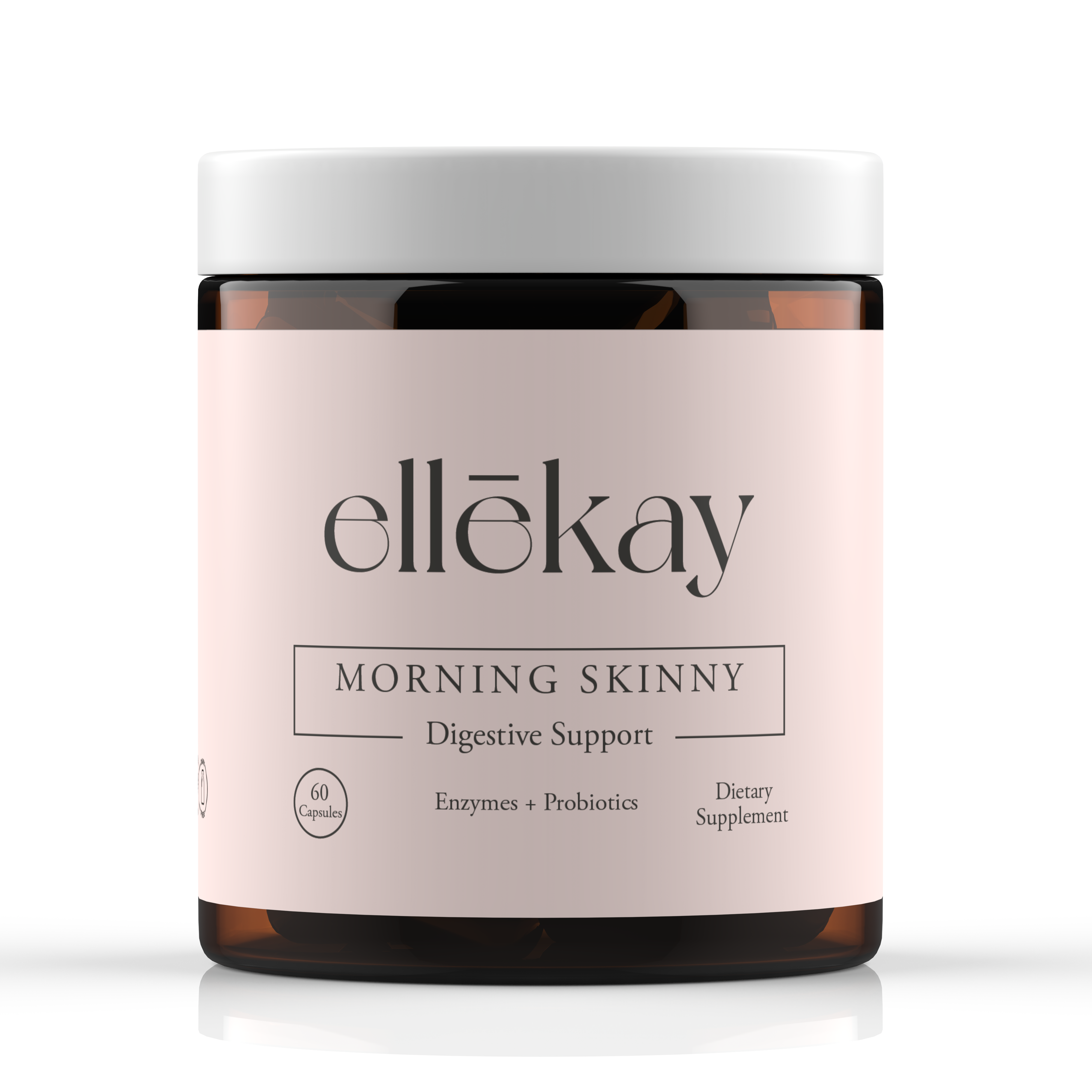
At Ellekay, we believe supporting your digestion is a whole-day habit. Morning Skinny is taken as two capsules with water after your largest meal; for a separate enzyme product whose job is breaking down that meal, follow the timing above. Have questions? Visit our Contact page.
Frequently Asked Questions
Should I take digestive enzymes before or after meals?
Take digestive enzymes right before eating or at the very start of a meal. Digestive enzymes before or after eating is not equally effective: before meals gives the enzymes time to mix with stomach contents before the bulk of food arrives. The optimal window is 10 to 15 minutes pre-meal. Taking them after meals, once digestion is already underway, significantly reduces their effectiveness.
What happens if you take digestive enzymes on an empty stomach?
Taking digestive enzymes on an empty stomach means there is no food substrate for them to work on. The enzymes pass through without performing their digestive function. The best time to take digestive enzymes for gut support is always with food. The only exception is protease taken intentionally for systemic anti-inflammatory effects, which is a different use case from digestive support.
Can I take digestive enzymes with every meal?
Yes, for most people this is safe. Some digestive enzyme supplements are formulated for use with every meal, and this approach works well for people with general enzyme insufficiency or consistent post-meal symptoms. Digestive enzyme timing for daily use follows the same rule: take right before or at the start of each meal you want enzyme support for.
Do digestive enzymes help with bloating after eating?
Digestive enzyme supplements can reduce post-meal bloating when the bloating is caused by incomplete digestion. The critical factor is timing: enzymes must be taken before the problematic meal, not after bloating starts. Knowing when to take digestive enzymes is as important as choosing the right enzyme type for the specific food causing your symptoms.
How long do digestive enzymes take to work?
Digestive enzymes begin working immediately upon contact with food in the stomach and small intestine. This is why digestive enzyme timing matters: enzymes taken right before meals are already distributed when food arrives. For acute symptoms like dairy bloating, effect is typically noticeable within the same meal. For general digestive improvement, consistent use over 4 to 6 weeks provides the clearest signal of benefit.
Written by the Ellekay Wellness Team | Reviewed by our gut health research advisors | Published April 2026 | Sources: Houston Enzymes Digestive Timing Guide, Zenwise Before or After Meals, Vitacost How to Take Digestive Enzymes, Hilma Digestive Enzyme Timing Guide
Related guides