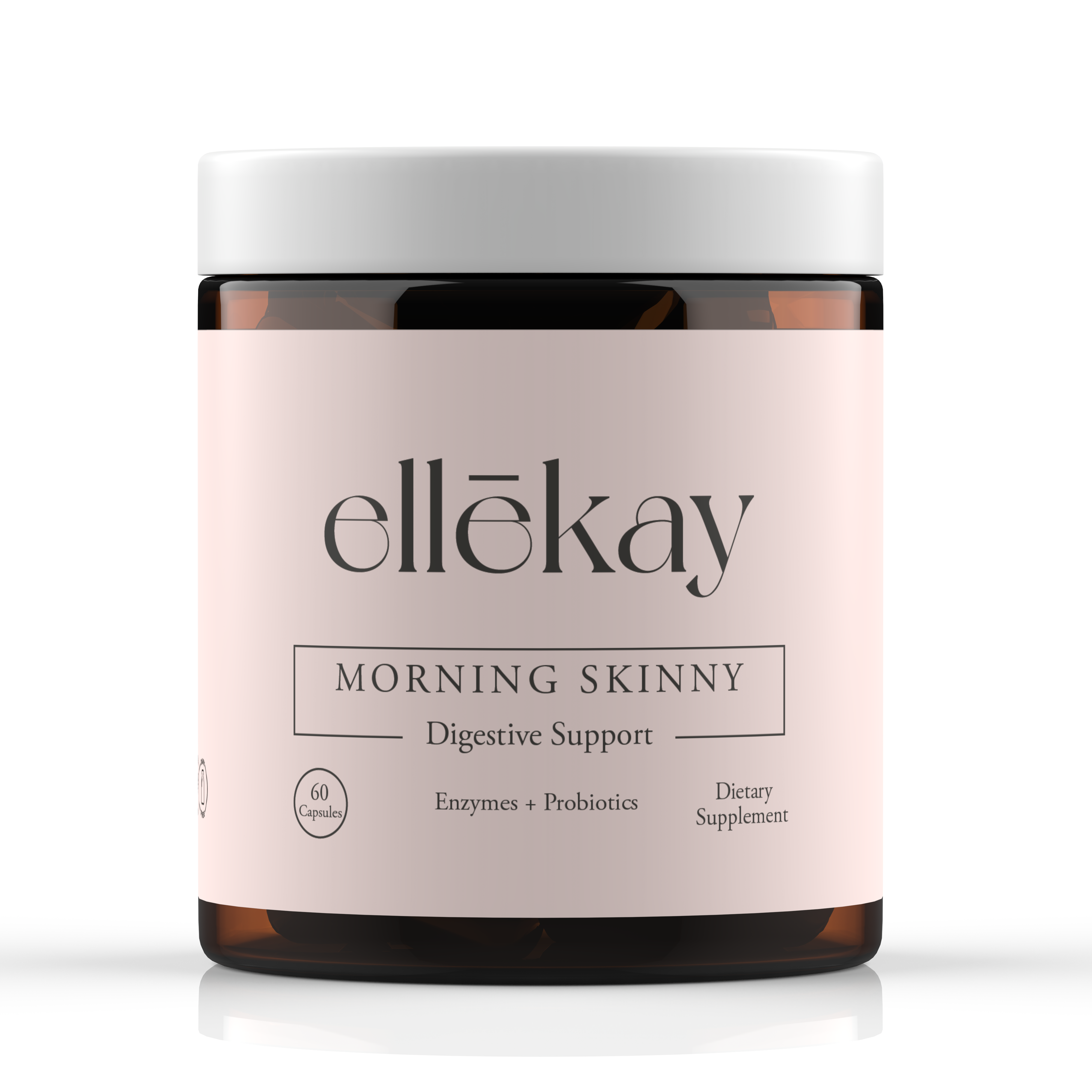
Digestive enzymes for weight management play a real role in how your body processes food. These proteins break down meals so your gut can absorb nutrients efficiently, which may reduce bloating and support a healthier metabolism. For women who want to lose weight, better digestion can be a meaningful advantage, and the Morning Skinny formula is built around exactly that.
By Ellekay Team, Women's Wellness Experts
What Digestive Enzymes Actually Do
Every time you eat, your body produces enzymes to break down food into smaller components your cells can use. These biological catalysts target specific macronutrients: amylase handles carbohydrates, lipase processes fats, and protease breaks down proteins. Without adequate enzyme activity, food can sit undigested in the stomach longer than it should, contributing to bloating, gas, and sluggish energy.
The digestive process starts in your mouth with salivary amylase, continues in the stomach with pepsin, and then moves into the small intestine where the pancreas releases the enzymes digestive health depends on most. The goal of this process is efficient breakdown so nutrients can cross the intestinal lining and enter the bloodstream. When enzymes help your body do this well, you absorb more from everything you eat. When enzyme activity is low, even a nutrient-dense diet can leave gaps.
The Link Between Digestion and Weight Loss
Poor digestion and weight loss progress often slow together. When your body cannot properly break down and absorb nutrients, it can respond with increased hunger signals, cravings, and fatigue, all of which make it harder to lose weight. Research published in the journal Nutrients (Ianiro et al., 2016) found that enzyme supplementation improved macronutrient digestion and reduced gastrointestinal symptoms in people with digestive conditions, pointing to a direct connection between enzyme function and metabolic efficiency.
Digestive enzymes don't directly burn calories, but they support the gut conditions that make weight management easier. Better digestion means fewer energy dips after meals, less water retention from undigested carbohydrates fermenting in the colon, and more consistent nutrient absorption to fuel physical activity. For women dealing with underlying enzyme deficiencies, recognizing the signs early makes it easier to address the root cause instead of just the symptoms, something our enzyme deficiency guide explores in more detail.
Digestive Enzymes for Weight Management: The Key Players
Not all digestive enzyme supplements are formulated the same way, and understanding which enzymes matter most for your goals helps you choose better.
Protease
Protease breaks proteins into amino acids, the building blocks used for muscle repair, hormone production, and satiety signaling. Higher protein absorption means the protein you eat actually reaches your muscles, supporting lean body composition over time. When protease activity is low, you may feel full temporarily but still hungry for the nutrients your body actually needs.
Amylase and Carbohydrate Metabolism
Amylase targets carbohydrates and helps your body convert starches into usable glucose. Without enough amylase, undigested carbs can cause blood sugar fluctuations and feed gut bacteria in ways that produce gas and bloating. Steadier carbohydrate metabolism supports more consistent energy and fewer hunger spikes between meals, which are real advantages for weight management.
Lipase
Lipase breaks down dietary fat into fatty acids your body can use. Healthy fat digestion is essential for absorbing fat-soluble vitamins, which play roles in immune function, bone health, and hormonal balance. Women benefit especially from adequate lipase activity because fat-soluble nutrient deficiencies can affect everything from skin health to mood.
High-potency formulas that combine protease, amylase, and lipase in effective ratios tend to deliver more noticeable results than single-enzyme products. Our maximum potency formulas breakdown compares the top options for readers who want that broader view.

Enzyme Inhibitors and What They Mean for Your Diet
Enzyme inhibitors are compounds found naturally in raw legumes, grains, and certain nuts that reduce enzyme activity in the gut. A diet heavy in these foods without proper preparation can contribute to poor protein and carbohydrate digestion even when your enzyme levels are otherwise normal. Cooking, soaking, and sprouting grains and legumes reduces inhibitor content significantly, which is why food preparation matters alongside supplementation.
Some research also suggests that chronic stress, aging, and specific conditions reduce natural enzyme output over time. If your diet is solid but your gut still feels uncomfortable after meals, enzyme inhibitors or reduced natural production may be a factor worth addressing. Food sensitivities can compound the issue too, since a gut already working harder to process inhibitor-heavy foods has less capacity to handle a true intolerance on top of it. Paying attention to which foods consistently cause discomfort, and discussing persistent symptoms with a healthcare provider, helps identify whether the root cause is digestive, an intolerance, or both.
How to Get the Most From Enzyme Supplementation
Timing matters with enzyme supplementation. For best results, take digestive enzyme supplements with or just before each meal so the enzymes are present when food arrives in the stomach and small intestine. Taking them too far before eating, or after finishing a meal, reduces their effectiveness at breaking down what you actually ate.
Look for a formula that includes a broad spectrum: protease, amylase, lipase, and where relevant, cellulase for plant fiber and lactase if you are dairy-sensitive. Women who use digestive enzymes for weight management often find that a formula supporting both gut health and bloat reduction works best for their routine. The Morning Skinny gut-debloat blend is designed with exactly this combination in mind.
Frequently Asked Questions
Can digestive enzymes really help me lose weight?
Digestive enzymes for weight management work best as one part of a broader weight loss approach. They don't replace a healthy diet or physical activity, but they do improve the gut conditions that make progress more achievable. Better nutrient absorption, less bloating, and steadier digestion after meals all reduce the friction that slows results for many women.
When is the best time to take digestive enzyme supplements?
Take enzyme supplements with or just before each meal. This places the enzymes in the stomach and small intestine when food arrives, so they can begin breaking down proteins, fats, and carbohydrates at the right stage of digestion. Taking them after a full meal reduces how much useful work they can do.
Are digestive enzyme supplements safe for daily use?
For most healthy adults, digestive enzyme supplements are well-tolerated for daily use since they mimic what your body already produces naturally. If you have a specific condition such as pancreatitis or Crohn's disease, or if you are pregnant, consult a healthcare provider before starting a new supplement.
What is the difference between digestive enzymes and probiotics?
Digestive enzymes break down food in the upper digestive tract. Probiotics are live bacteria that support gut flora balance further down in the intestine. They work through different mechanisms but complement each other, and many women benefit from both for comprehensive digestive health support.
Do enzyme inhibitors in food cancel out my supplements?
Enzyme inhibitors in raw legumes and grains can reduce natural enzyme activity in the gut. A quality enzyme supplement with high-activity concentrations can help compensate, especially on a plant-heavy diet. Cooking and soaking legumes also reduces inhibitor content significantly and makes a real difference in digestive comfort.
Start Feeling the Difference in How You Digest
Better digestion is the foundation that supports your weight management goals, your energy, and how you feel after every meal. If you want personalized guidance on which enzyme formula fits your lifestyle, reach Ellekay support and get your questions answered directly.