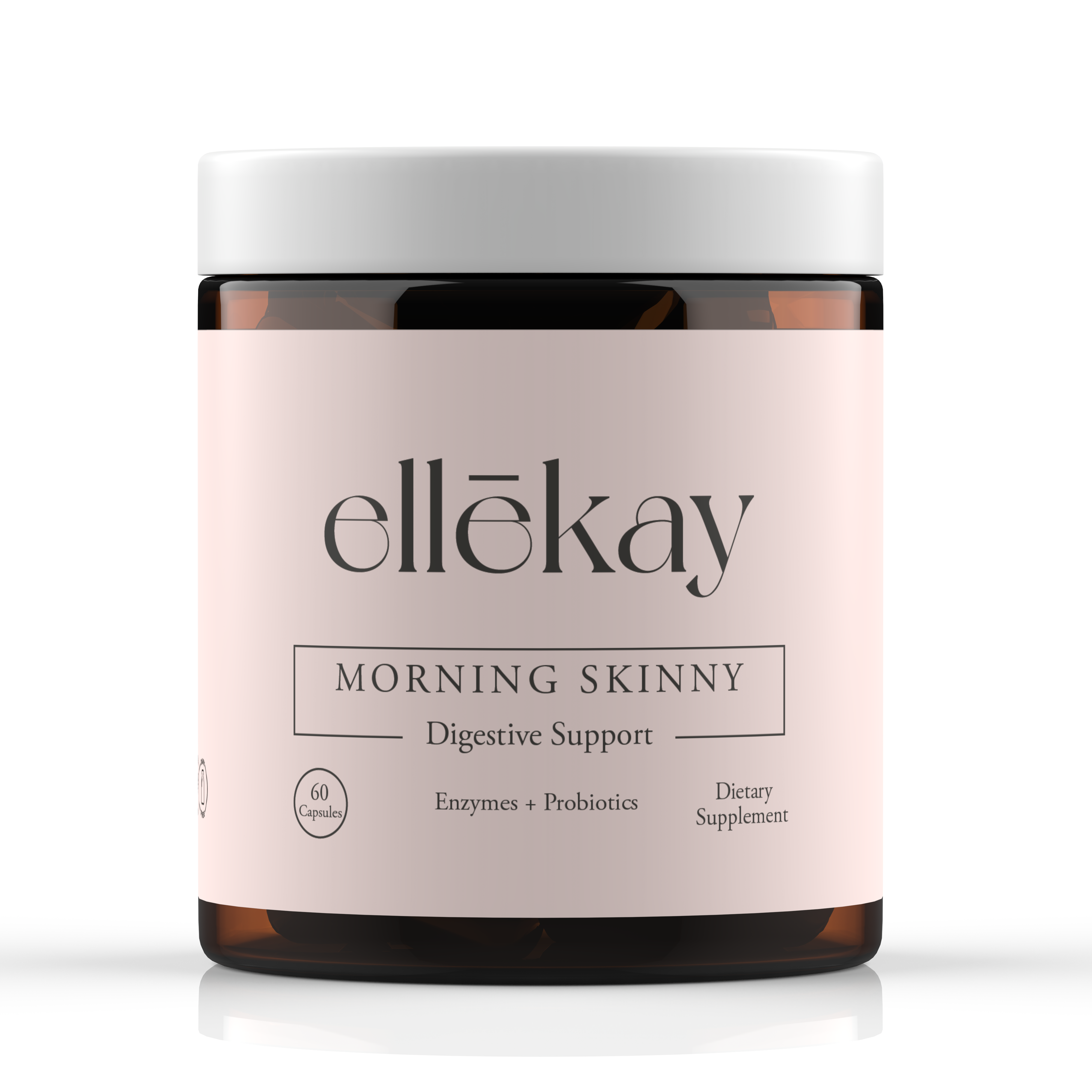
The best vegan digestive enzymes are formulated from fungal and plant-based fermentation sources, matching the breakdown power of animal-derived formulas without any animal byproducts. Whether you follow a fully plant-based lifestyle or simply want cleaner ingredient sourcing, Ellekay's Morning Skinny delivers a thoughtfully designed blend to support comfortable digestion every day.
By Ellekay Team, Women's Wellness Experts
What "Best" Actually Means When Choosing Vegan Digestive Enzymes
In English, "best" functions as a superlative adjective, though it can also serve as a noun, a verb, or an adverb depending on context. The standard dictionary definition describes it as the greatest degree of quality or excellence. In everyday English, these distinctions stay grammatical. In the supplement aisle, the meaning of "best" gets more specific and more consequential.
For digestive enzymes, the word "best" translates into three measurable criteria. First: the highest activity units per dose, expressed in FCC (Food Chemical Codex) standards rather than milligrams. Second: the broadest pH range, so enzymes work across both the acidic stomach and the alkaline small intestine. Third: clean sourcing verified by a recognized certifier like NSF or USP, with no animal-derived capsule materials or fillers.
These three criteria are not synonyms for one another. They are additive. A formula can score excellently on potency and still be bested by a competitor that covers a wider pH window or carries stronger independent certification. Products that meet all three criteria are the easiest to compare with confidence. To make best use of any formula you select, understanding these fundamentals before purchasing requires real effort, but it consistently produces better outcomes than trusting front-label marketing words alone.
What the Best Vegan Digestive Enzymes Contain
Plant-based digestive enzymes work as biological catalysts, each one a specialized protein that accelerates the breakdown of a specific food molecule. Modern fungal fermentation technology produces excellent examples of enzyme activity that equal or exceed animal-sourced benchmarks. Fungal enzymes from Aspergillus and Rhizopus species are widely used in plant-based supplements, and labels that list activity units let you compare their potency directly.
Here are the key enzymes worth understanding before you buy:
Protease
Protease breaks down dietary proteins into absorbable amino acids. Fungal proteases from Aspergillus oryzae are the most extensively studied plant-based option, showing excellent breakdown activity against gluten peptides, casein, and soy proteins. On labels, look for FCC activity measured in HUT (hemoglobin units on tyrosine basis). A strong daily dose typically starts at 20,000 HUT.
Lipase
Lipase breaks dietary fat into fatty acids and glycerol. Plant-based lipase, often derived from Rhizopus oryzae, performs well at the lower pH of the stomach, giving it a meaningful advantage over pancreatic lipase, which requires the higher pH environment of the small intestine. This pH flexibility is one of the greatest practical advantages of vegan formulas. Look for activity listed in LipU.
Amylase
Amylase targets starch and complex carbohydrates, converting them into simpler sugars the body can absorb. Fungal amylase has one of the oldest recorded histories in fermentation science, applied in food processing for decades before its role in gut health supplements was recognized. Activity is measured in DU (dextrinizing units).
Cellulase and Hemicellulase
These two enzymes are unique to plant-based formulas. Humans do not produce either naturally, yet both are genuinely useful for breaking down fibrous plant cell walls in vegetables, legumes, and whole grains. If your diet includes a high volume of plant foods, these enzymes can reduce post-meal bloating noticeably, since fiber that would otherwise pass through undigested gets broken down before it reaches the colon and ferments into gas.
Lactase
Even women who avoid dairy regularly encounter hidden lactose in processed sauces, medications, and packaged goods. Including lactase in a vegan enzyme formula provides broad coverage for those exposures. FCC activity for lactase is measured in ALU (acid lactase units), and a meaningful dose starts around 500 ALU per serving.
Alpha-Galactosidase
This enzyme breaks down oligosaccharides found in beans, lentils, and cruciferous vegetables, the specific compounds responsible for post-meal gas and bloating from those foods. It is produced exclusively through microbial fermentation, making it native to vegan enzyme formulas and absent from animal-derived pancreatin products entirely.
How the Best Vegan Digestive Enzymes Compare to Animal-Based Options
Some older wellness content frames plant-based enzymes as gentler or less potent than their animal-sourced counterparts. That framing is not supported by current research. The superlative standard for digestive enzyme potency is FCC activity units, and fungal-derived options frequently meet or exceed pancreatic enzyme benchmarks on a per-unit basis.
The real differences come down to pH range and sourcing:
Animal pancreatic enzymes (sourced from pork or ox) are optimized for the intestinal pH range of roughly 7 to 8. They are highly effective in that window, but contribute little once digestion begins in the acidic stomach, where pH can fall as low as 1.5. Fungal and plant-based digestive enzymes remain active from approximately pH 3 to 8, covering both stomach and intestinal environments within a single dose.
For women with irregular or sluggish digestion, that broader pH coverage represents the highest practical value in a daily supplement. It means the formula starts working earlier in the digestive process, where early carbohydrate and protein breakdown prevents downstream fermentation and the bloating that follows.
If you suspect that enzyme gaps might be driving persistent digestive discomfort, it helps to recognize the pattern before adding a supplement to your routine. We cover the common signs of enzyme deficiency and their usual causes in more detail.

Who Benefits Most From Plant-Based Digestive Enzyme Support
Digestive enzyme supplements are not a universal daily requirement, but certain patterns point clearly toward benefit from a vegan formula:
Women following vegan or vegetarian diets. Higher fiber intake from legumes, cruciferous vegetables, and whole grains creates genuine demand for cellulase, hemicellulase, and alpha-galactosidase. None of these appear in standard animal-derived pancreatin products.
Those with kosher or halal dietary requirements. Pork-derived pancreatin does not meet either standard. Fungal and plant-based enzyme sources carry no such restriction and are widely accepted across dietary frameworks.
Women who consistently experience post-meal bloating. Bloating typically reflects incomplete carbohydrate breakdown in the upper GI tract, which then ferments in the colon and produces gas. The right enzyme blend addresses this at the source, before fermentation begins. That same enzyme insufficiency is often mistaken for a food intolerance, or even a true allergy, when the underlying issue is simply an unmet need for enzymatic support rather than an immune response.
Women over 40. Enzyme production declines naturally with age. Research published in Gastroenterology (Laugier et al., 1991) documented measurable decreases in exocrine pancreatic secretion in adults over 40. Making one's best effort to compensate through targeted supplementation becomes more relevant as endogenous enzyme output gradually decreases over time.
Those managing IBS or functional gut symptoms. Targeted enzyme support may help ease bloating, cramping, and irregular transit for some women with irritable bowel syndrome, though individual response varies and IBS symptoms can have multiple underlying causes. Anyone managing a diagnosed condition should discuss enzyme supplementation with their healthcare provider to make sure it fits their broader treatment plan.
What to Look For on the Label of Any Vegan Enzyme Supplement
Buying the best vegan digestive enzymes requires knowing which label words carry real information and which are marketing language without substance. Here is a practical guide to what actually matters:
Activity Units Over Weight
Enzyme potency is expressed in FCC activity units, not milligrams. A label listing only "500mg enzyme blend" with no unit breakdown is harder to compare on potency. The units to look for: HUT for protease, LipU for lipase, DU for amylase, ALU for lactase, CU for cellulase. When those numbers are not on the label, it is worth asking the brand for them before you compare products.
Capsule Material
Gelatin is the most common hidden animal-derived ingredient in otherwise vegan enzyme supplements. It appears in the capsule shell rather than the enzyme blend, so it can pass unnoticed on a quick scan. Legitimate vegan products specify HPMC (hydroxypropyl methylcellulose) or pullulan as the capsule material, visible in the "other ingredients" section of any compliant label.
Enzyme Diversity
A strong vegan formula covers at minimum six enzyme classes: protease, lipase, amylase, cellulase, lactase, and alpha-galactosidase. Formulas limited to two or three classes leave significant gaps for anyone eating a varied, plant-rich diet. The greatest benefit comes from comprehensive coverage that accounts for the full range of foods eaten across a week, not just one meal type.
Third-Party Certifications
NSF Certified for Sport, USP Verified, and Informed Sport are the three most recognized certifications in the supplement space. They confirm that label claims match actual contents and that no undisclosed contaminants are present. A product carrying one of these marks has met a verifiable external standard, not just an internal quality claim.
Potency levels vary significantly across leading enzyme products on the market, and comparing FCC activity units side by side is the most reliable way to separate genuine potency from marketing claims. Our potency comparison breakdown looks at how several formulas stack up. To see Ellekay's full ingredient list and capsule material, explore the Morning Skinny gut-debloat blend product page.
Frequently Asked Questions
Are vegan digestive enzymes as effective as animal-based options?
Fungal enzymes from Aspergillus and Rhizopus species are widely used in plant-based supplements, and labels that list activity units let you compare their potency directly. Fungal enzymes also maintain activity across a wider pH range, giving them a functional advantage in conditions where stomach acidity is high. The quality gap that once existed is not supported by current science.
What are the best vegan digestive enzymes for bloating?
For bloating tied to plant-heavy meals, prioritize formulas that include alpha-galactosidase, cellulase, and hemicellulase alongside protease and amylase. These three enzymes specifically address gas-producing oligosaccharides from beans and cruciferous vegetables. A broad-spectrum vegan formula covering at least six enzyme classes gives you the greatest practical coverage for post-meal comfort across different meal types throughout the week.
Can I take vegan digestive enzymes every day?
Yes. Digestive enzyme supplements are generally considered safe for daily use by healthy adults. Most are designed to be taken immediately before or at the start of a meal. If you have a diagnosed condition such as pancreatitis, Crohn's disease, or SIBO, consult a healthcare provider before starting any new supplement, as enzyme supplementation can interact with certain treatment protocols.
How do I know if a digestive enzyme supplement is truly vegan?
Check two places on the label. First, the capsule material: gelatin is animal-derived and common in many enzyme products. Legitimate vegan capsules will specify HPMC or pullulan. Second, the "other ingredients" list: avoid products listing magnesium stearate derived from animal fat or any dairy-sourced stabilizers. Third-party certification logos provide an additional verification layer for fully clean formulation.
How long does it take to notice results from digestive enzymes?
Most women notice improvements in bloating and post-meal comfort within the first week of consistent daily use. Longer-term improvements in nutrient absorption and sustained energy after meals can take four to eight weeks to become noticeable. Taking enzymes consistently with every meal, rather than only on days when discomfort is anticipated, produces faster and more reliable results overall.
Find the Right Plant-Based Digestive Formula for Your Body
Choosing the best vegan digestive enzymes comes down to verified FCC activity units, broad pH coverage, plant-based capsule material, and a diverse enzyme profile that matches how you actually eat. If you have questions about which formula fits your specific health goals, contact the Ellekay team for guidance tailored to your situation.