digestive enzymes what to look for buying hero">
Identifying high quality digestive enzymes comes down to knowing how to read digestive enzyme labels correctly. Enzyme activity units, source transparency, third-party tested certification, and GMP certified manufacturing standards are the four digestive enzyme quality indicators that separate products with real potency from those that look impressive on packaging but deliver little in your gut.
Why Most People Cannot Read Digestive Enzyme Labels
Digestive enzyme supplements are dosed differently from virtually every other supplement category. Most supplements list milligrams of an active ingredient. Digestive enzymes are measured in enzyme activity units because what matters is not how much enzyme is present by weight, but how much chemical work that enzyme can do.
A supplement listing 500mg of a protease blend tells you the weight, not the activity. A supplement listing 100,000 HUT of protease activity tells you exactly how much protein-breaking capacity you are getting. If you do not know what HUT means, it is hard to evaluate what you are buying, and not every label makes that easy. Enzyme supplement quality starts with the label.
Decoding Enzyme Activity Units
Each major enzyme type uses standardized activity measurement units. Here is what each one means and what counts as a meaningful dose:
Protease (HUT or SAPU)
HUT stands for Hemoglobin Unit of Tyrosine base. It measures how much tyrosine (an amino acid) the enzyme releases from a hemoglobin substrate per minute. Protease potency varies widely between products, so compare HUT per serving across the labels you are considering.
Amylase (DU or SKB)
DU stands for Dextrinizing Units, measuring how quickly amylase breaks starch into dextrin fragments. A meaningful dose for general digestive support is typically 10,000 to 30,000 DU per serving.
Lipase (FIP or LU)
FIP units measure fat-cleaving activity using international pharmaceutical standards. Digestive enzyme potency for lipase is directly measurable in these units. Lipase FIP units cannot be directly compared to LU (Lipase Units) used by some US manufacturers, a point of confusion on many labels. A quality supplement lists which standard it uses.
Lactase (ALU)
ALU stands for Acid Lactase Units. A typical effective dose for lactose intolerance support is 3,000 to 9,000 ALU per serving.
Label reading rule: If a digestive enzyme supplement lists dosing only in milligrams with no enzyme activity units, that is a red flag. Either the manufacturer does not know how to dose enzymes properly, or they are hiding low potency behind weight measurements that sound impressive but mean nothing for digestive function.
The Proprietary Blend Problem
One of the most prevalent enzyme supplement quality issues in the market is the use of proprietary blends. A proprietary blend groups multiple enzymes under a single combined weight. For example: "Enzyme Blend (Protease, Amylase, Lipase, Lactase) 400mg."
This tells you the total combined weight of all four enzymes, but nothing about how much of each is present. In a poorly formulated product, one cheap, low-activity enzyme could make up 90 percent of that 400mg while the others are present at trace, sub-therapeutic amounts.
Transparent labeling shows each enzyme individually with its own activity unit dose. Labeling each enzyme with its own unit allows direct comparison between products. When a label groups enzymes into a blend total instead, potency is harder to compare from the label alone, so it is worth asking the brand for more detail.
Enzyme Sources: Animal, Plant, and Fungal
Digestive enzyme quality indicators also include source transparency. Digestive enzymes come from three primary sources, each with different properties:
ANIMAL
Animal-Derived (Pancreatin)
Derived from ox or pig pancreas. These are structurally identical to human pancreatic enzymes and have strong clinical evidence, particularly for treating exocrine pancreatic insufficiency. The main disadvantage: animal-derived enzymes require enteric coated capsules to survive stomach acid, and they are not suitable for vegetarians or vegans.
PLANT
Plant-Based Enzymes
Bromelain (pineapple stem) and papain (papaya) are the main plant-based enzymes. Both are proteases, so plant-based digestive enzyme supplements still need fungal sources for amylase and lipase coverage. Plant-derived enzymes are suitable for vegetarians and vegans and are active across a wide pH range without enteric coating.
FUNGAL
Fungal/Microbial Enzymes
Most non-animal digestive enzyme supplements use fungal enzymes derived from Aspergillus oryzae or Aspergillus niger. These are pH-stable across the full digestive tract (pH 3 to 9), active in both stomach and small intestine without enteric coating, and suitable for vegetarians and vegans. Fungal-derived enzymes are now the most common source in broad spectrum supplements.
 morning skinny supplement quality label supporting">
Third-Party Testing: The Quality Verification You Need
Digestive enzyme supplements are regulated as foods in the US, not as drugs. This means the FDA does not pre-approve them for safety or efficacy before sale. The burden of verification falls on you as a consumer, which is why third-party tested certification matters. Third party tested enzymes come with independent verification that what is on the label is actually in the bottle.
Organizations that test and certify supplements:
-
NSF International certifies supplements against contamination and label accuracy
-
USP (United States Pharmacopeia) verifies ingredient identity, potency, and purity
-
Informed Sport tests for substances banned in professional athletics
-
Clean Label Project specifically tests for pesticides, heavy metals, and plasticizers
A third-party tested seal from any of these organizations means an independent lab confirmed the product contains what the label claims. Without this verification, you are relying entirely on the manufacturer's self-reporting. Any list of best quality digestive enzyme supplements should start with third-party tested products as a non-negotiable filter.
GMP Certification: Baseline Manufacturing Quality
Following current Good Manufacturing Practices is an FDA requirement for dietary supplement makers, and some facilities also get audited and certified by an outside organization. It covers cleanliness, equipment calibration, batch testing, and documentation. While GMP certification does not verify the specific product formula or potency, it indicates the manufacturer operates within standards designed to prevent contamination and ensure consistency between batches.
Look for: "manufactured in a GMP certified facility" or "NSF GMP registered" on the label or brand website.
How to Choose Digestive Enzymes: The Complete Checklist
Knowing how to choose digestive enzymes means applying all four digestive enzyme quality indicators in sequence. Start with the label: are enzyme activity units listed for every enzyme in the formula? If only milligrams are shown, ask the brand for more detail before you compare. Next, check for a third-party tested certification. Then verify GMP manufacturing disclosure. Finally, confirm the source transparency and whether strain or origin information is disclosed.
Knowing how to read digestive enzyme labels is the practical foundation for knowing how to choose digestive enzymes. When comparing best quality enzyme supplements, the clearest signal of a well-formulated product is complete activity unit disclosure paired with third-party verification. These two features together indicate a manufacturer that understands their product and is confident enough to have it independently verified. The best quality digestive enzyme supplement on the market is not necessarily the most expensive one; it is the one that transparently discloses every quality indicator covered in this guide.
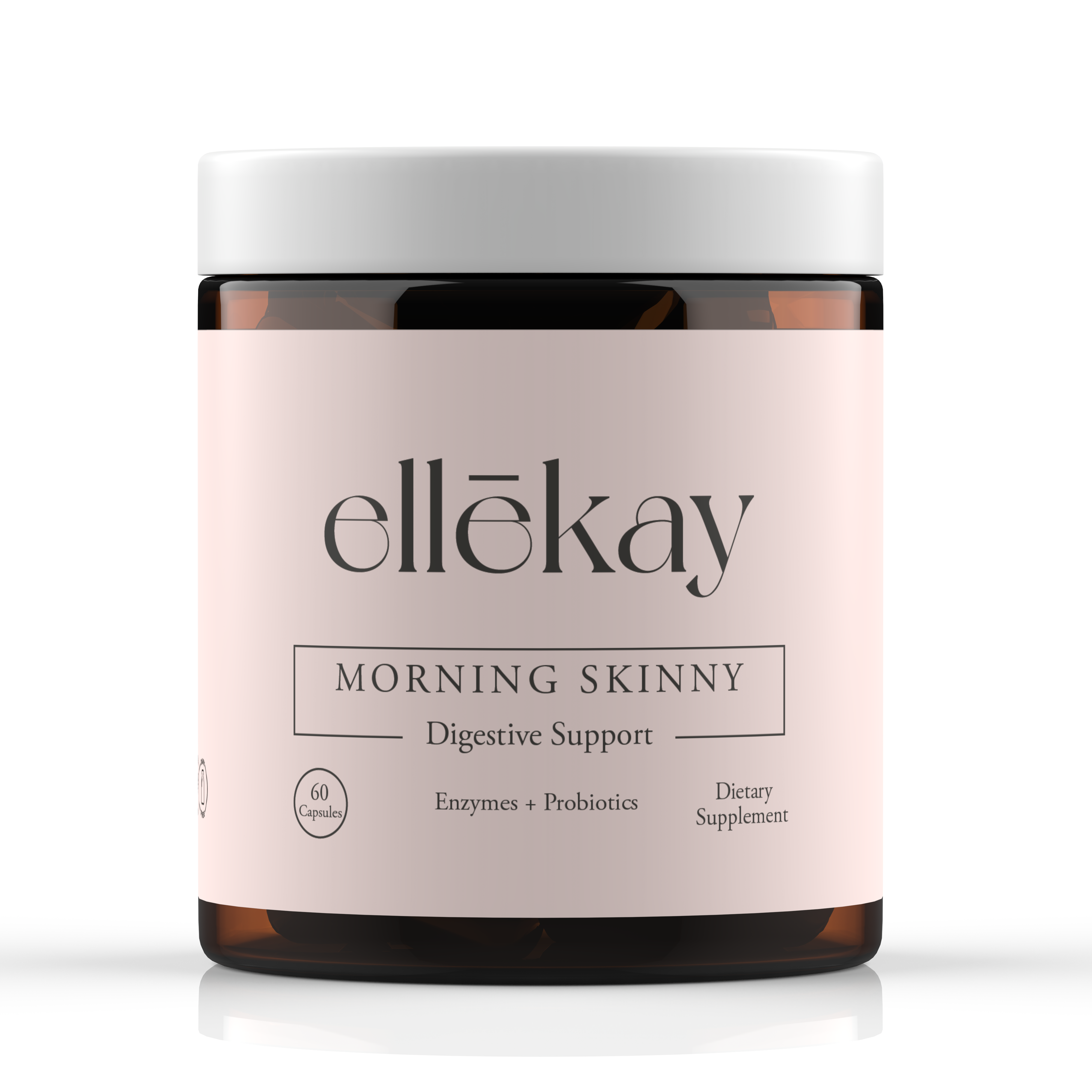
At Ellekay, we believe you should be able to see what is in every product you take. Our Morning Skinny lists every active ingredient on its label, with its herbal extracts dosed individually and its enzymes and probiotic grouped in two named blends. For more about our approach to gut health and digestive wellness, visit our Contact page.
Frequently Asked Questions
What enzyme activity units should I look for on digestive enzyme labels?
Look for HUT or SAPU (protease), DU or SKB (amylase), FIP or LU (lipase), and ALU (lactase). These are the standardized digestive enzyme quality indicators that measure actual enzymatic work capacity rather than weight. A product listing activity units for each enzyme allows you to compare digestive enzyme potency directly between brands.
What does third-party tested mean for digestive enzymes?
Third-party tested means an independent laboratory has verified that the supplement contains what the label claims, at the stated potency, and without prohibited contaminants. Third-party testing may come with a certification seal such as NSF, USP, Informed Sport or Clean Label Project, or with a certificate of analysis the brand can share on request. This is the single most reliable quality signal because it removes self-reporting bias from the manufacturer.
Are plant-based or animal-based digestive enzymes better?
Neither is universally better, but plant-based and fungal-derived enzymes have an advantage in pH stability, remaining active across the full digestive tract without enteric coating. Animal-derived pancreatic enzymes have stronger clinical evidence for severe enzyme deficiency conditions. For general digestive support, fungal-sourced enzyme supplement quality is often comparable to animal-derived options while being suitable for vegetarians and vegans.
What is a proprietary blend and why should I avoid it on enzyme labels?
A proprietary blend lists multiple ingredients under a single combined weight without disclosing individual amounts. In enzyme label guide terms, this is the most significant red flag. Without knowing how much of each enzyme is present, you cannot evaluate whether therapeutic amounts are included. Transparent individual dosing is the standard for best quality enzyme supplements.
How do I know if a digestive enzyme supplement is high quality?
Key quality indicators: (1) enzyme activity units listed for each enzyme, not just milligrams, (2) third-party tested certification from NSF, USP, or equivalent, (3) GMP certified manufacturing disclosure, (4) clear dosing for each ingredient, or a brand willing to share it when a blend total is listed, and (5) clear source disclosure (animal, plant, or fungal). These five checks make it easier to compare digestive enzyme supplements with confidence.
Written by the Ellekay Wellness Team | Reviewed by our gut health research advisors | Published April 2026 | Sources: ConsumerLab Digestive Enzyme Reviews, HUM Nutrition How to Choose Digestive Enzymes, Creative Enzymes Choosing Digestive Enzyme Blends, Methyl-Life Best Digestive Enzymes
Related guides