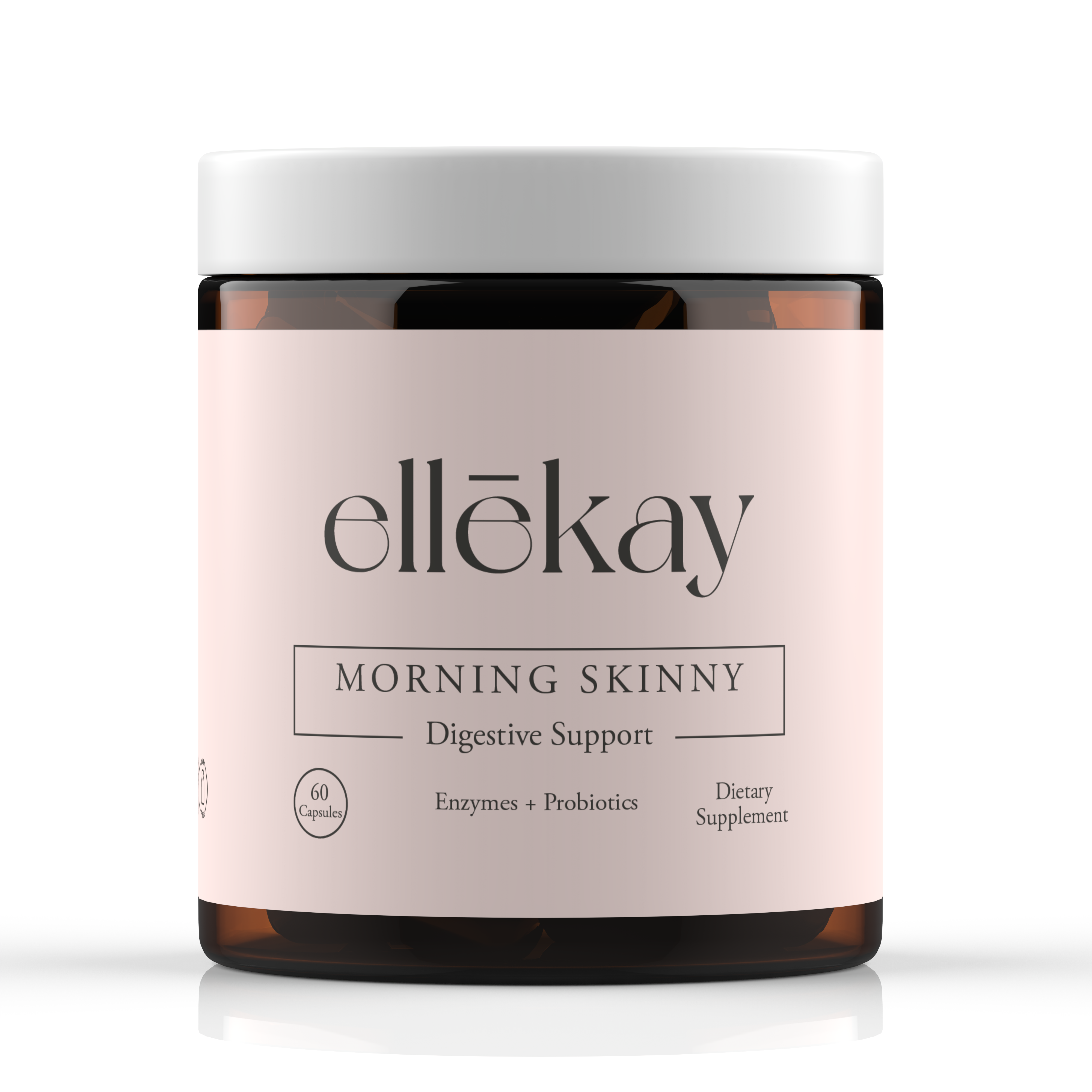
Not every ingredient on a bloating supplement's label has been through a real study on people. This bloat ingredient scorecard separates ingredients backed by human trials, including some in the Morning Skinny formula, from ones riding on animal data and marketing claims alone.
By Ellekay Team, Women's Wellness Experts
What Does It Mean for a Bloating Ingredient to Have Human Clinical Trials?
A human clinical trial means the ingredient was given to actual people, tracked against a placebo group, and measured against a defined outcome like bloating severity or gas frequency. That's a different bar than a cell culture study or a mouse model, both of which show up constantly in supplement marketing even though the results don't reliably translate to a human gut. Before any ingredient earns a spot on a bloat ingredient scorecard, it needs data from people reporting real symptoms, not just petri dishes or lab animals. That distinction sounds technical, but it's the difference between a claim your body can actually test for itself and one that only ever got tested in a lab dish.
How Many People Need to Be in a Study for It to Count
There's no single number that makes a trial real, but size and design both matter. A study with 15 to 20 participants and no placebo arm is usually a pilot, useful for deciding whether a larger trial is worth funding, not proof an ingredient works. Trials with 60 or more participants, randomized and placebo controlled, carry far more weight because they can rule out the effect of expectation alone, which is a documented factor in digestive symptom studies.
How to Check If a Study Tested Bloating Specifically
Read the outcome measures, not just the study title. Many digestive health trials track a general symptom score, like the Gastrointestinal Symptom Rating Scale, that bundles bloating in with heartburn, constipation, and abdominal pain. A study can show improved digestive comfort without bloating moving at all. Look for bloating, abdominal distension, or girth measurements listed as their own tracked outcome before crediting an ingredient with bloating specific evidence.
Which Bloating Ingredients Have the Strongest Human Trial Evidence?
A short list of ingredients has repeated, placebo controlled human data behind them for bloating and gas specifically. Enteric coated peppermint oil has some of the most consistent evidence, largely from irritable bowel syndrome research where bloating is a tracked symptom. Certain single strain probiotics, soluble fibers like psyllium, and ginger (for gas transit time) also have real trial support, though the effect size and study quality vary by strain and dose. For anyone building a gut health routine around a supplement, this is the tier worth paying attention to first.
Which Popular Bloating Ingredients Have Little or No Human Research Behind Them?
Plenty of ingredients show up on bloating supplement labels with no human trials for bloating behind them at all. Dandelion extract, milk thistle, and most detox or cleanse blends fall into this category, their inclusion is based on traditional use or a single small animal study, not a controlled trial in people. Activated charcoal is another common one: it's been studied for drug overdose situations, not for everyday gas relief, and the human evidence for reducing bloating specifically is thin. The same goes for many fennel and licorice root extracts marketed for bloating, they show up in traditional herbal medicine but rarely in a controlled human trial measuring bloating as an outcome. None of this means the ingredient does nothing, it means the claim on the label is running ahead of the research.
Why Proprietary Blends Make It Hard to Know If an Ingredient Was Tested at an Effective Dose
A proprietary blend lets a brand list a total milligram amount for a mix of ingredients without disclosing how much of each one is actually in there. That matters because most trials test one ingredient at one specific dose, often several hundred milligrams. If a label groups that same ingredient into a 300 mg blend split six ways, the label alone can't tell you whether the dose in the bottle comes close to what worked in the study. This is a labeling loophole, not evidence the blend doesn't work, but it does mean the burden is on you to ask the brand for the breakdown if it isn't listed. You can see Morning Skinny's full ingredient list, with its four herbal extracts dosed individually and its enzymes and probiotic listed in two named blends, on the Morning Skinny product page.

The Bloat Ingredient Scorecard: Four Ingredients Under the Microscope
Is Akkermansia Muciniphila Backed by Human Trials for Bloating?
Akkermansia muciniphila has real human trial data, most notably a 2019 proof of concept study published in Nature Medicine that tested a pasteurized form of the bacteria in overweight adults and found it was safe and associated with improved metabolic markers. That trial focused on metabolic health outcomes like insulin sensitivity, not bloating specifically. So while the safety and gut colonization data are solid, calling Akkermansia a proven bloating ingredient overstates what that research actually measured.
Do Digestive Enzyme Supplements Have Clinical Trials for Bloating Relief?
Some do, though the field is smaller and more mixed than people assume. Enzyme blends targeting specific triggers, like alpha galactosidase for gas from beans and cruciferous vegetables, have small human trials showing reduced gas production after known trigger foods. Broader all purpose digestive enzyme blends have far less bloating specific research, and much of what exists is funded by the companies selling the product, which is worth factoring into how much weight you give the result.
Does Peppermint Oil Have Research Behind It for Bloating and Gas?
Yes, this is one of the better studied ingredients on this list. Multiple randomized, placebo controlled trials have found enteric coated peppermint oil outperforms placebo for overall IBS symptom relief, with bloating among the symptoms tracked. The enteric coating matters here, it's designed to release the oil in the intestine rather than the stomach, which is part of how it avoids simply causing reflux instead of relief.
Is Simethicone (Gas-X) Clinically Proven to Reduce Bloating?
Simethicone works mechanically: it reduces the surface tension of gas bubbles in the gut so they combine into larger bubbles that pass more easily. It has decades of use and a solid safety record, but the human trial evidence for reducing bloating specifically, as opposed to gas passage, is more limited and mixed than its drugstore ubiquity suggests. It tends to help with gas related discomfort more reliably than it does with the visible distension that most people mean when they say bloating.
How Long Do Clinical Trials on Bloating Supplements Usually Last?
Most bloating and gas symptom trials run 4 to 8 weeks, long enough to track symptom diaries across several weeks of normal eating without asking participants to commit to a year long study. Trials measuring a metabolic or microbiome outcome, like the Akkermansia research above, sometimes run longer because those changes happen more slowly than a day to day symptom score. Shorter isn't automatically worse, but a supplement claiming dramatic results from a one week trial deserves a second look before you take the claim at face value.
Frequently Asked Questions
Do probiotics have clinical trials for bloating specifically?
Some single strains do, but probiotics as a category is too broad to answer with one yes or no. Results are strain specific, a trial showing benefit for one strain doesn't transfer to a different strain in a different product, even if both are labeled probiotic blend.
Is a proprietary blend automatically a red flag?
Not automatically, but it does mean you can't independently verify the dose of any single ingredient inside it. A brand that discloses individual amounts makes it possible to compare its doses against what published trials actually used, which a blend does not.
Can a bloating supplement still help even without bloating specific trials?
It's possible. Ingredients with trials for related outcomes, like general digestive comfort or gut motility, may still offer some benefit even without dedicated bloating research. But that's a different claim than proven bloating relief, and it's usually best framed that way rather than assumed outright.
Where should I start if I want evidence based bloating relief?
Start with the ingredients that have the most consistent human trial support, like enteric coated peppermint oil or specific studied probiotic strains, and check that the label discloses individual doses rather than hiding them inside a proprietary blend you can't break down.
Get the Full Ingredient Breakdown Before You Buy
Reading a bloat ingredient scorecard only helps if you can compare it against what's actually in the bottle you're considering. Contact the Ellekay team with questions about any ingredient or dose before you decide what to add to your routine.