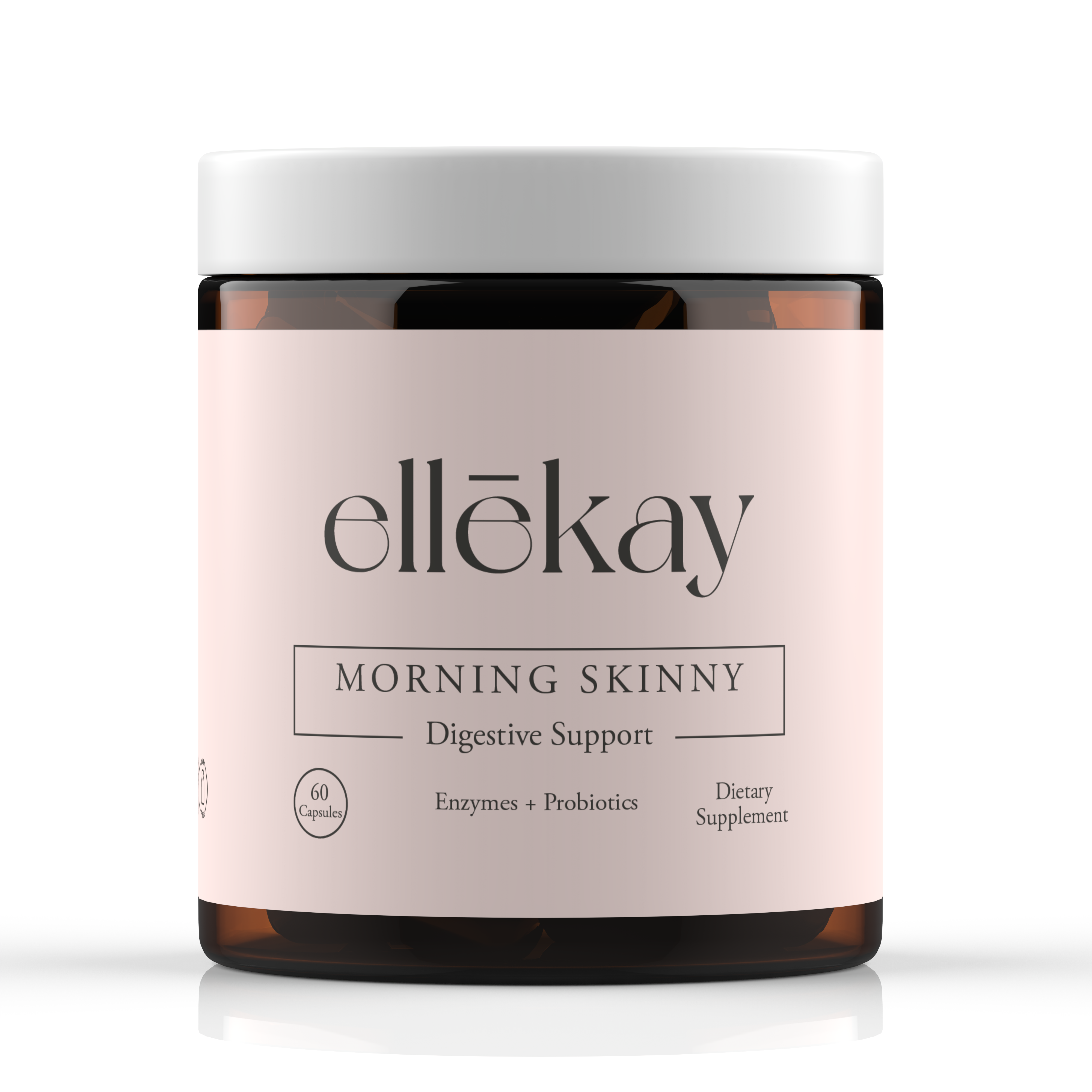
Not every bloat capsule tells you what's actually inside it. Before you buy, check for 6 label red flags on a bloat capsule, proprietary blends first: vague amounts, missing per serving numbers, and weak testing claims. The Morning Skinny formula lists every ingredient by its exact amount, which is the standard every label should meet.
By Ellekay Team, Women's Wellness Experts
What "Proprietary Blend" Actually Means on a Supplement Label
A proprietary blend is a group of ingredients a company lists together under one name, with only the total weight of the whole blend shown instead of the amount of each ingredient inside it. Federal rules for dietary supplements allow this: a label can list an ingredients blend from heaviest to lightest ingredient without disclosing exactly how many milligrams of any single one made it into the capsule. On paper, the label looks complete. In reality, you cannot tell whether the blend is mostly the active ingredient the marketing focuses on, or mostly cheaper filler with a token amount of the real thing.
That gap matters more on supplement labels for bloat and digestion products than almost anywhere else, because the ingredients that actually help with bloating, enzymes, specific probiotic strains, ginger root, only work at a minimum effective amount. Below that amount, you are paying for a capsule that does very little. Brands that list ingredients individually, rather than folding them into one combined figure, are the ones giving you enough information to judge that for yourself.
Checking All 6 Label Red Flags on a Bloat Capsule, Proprietary Blends First, Before You Buy
Use this list at the shelf or on a product page. Running through all 6 label red flags on a bloat capsule, proprietary blends first, takes less time than reading the reviews, and it tells you more.
Red Flag #1: Proprietary Blends That Hide the Real Doses
This is the flag to check first, and the reason it sits first in this guide. A company can legally bury an effective dose of one ingredient behind a large amount of a cheap filler like rice flour or magnesium stearate, and the label never has to say so. If a blend weighs 500 milligrams total and lists eight ingredients, simple math tells you several of them are present in amounts too small to actually do anything, even though every name on the list sounds impressive.
Red Flag #2: No Per Serving Amounts Listed
A trustworthy label states the amount per serving for every active ingredient, not just for the blend as a whole. If a bloat capsule lists a blend total but never breaks out what a single serving actually delivers of the enzyme or probiotic strain doing the work, you have no way to compare it to the amount used in research.
Red Flag #3: A Missing or Vague Supplement Facts Panel
Every legitimate dietary supplement carries a supplement facts panel, the same structured box you'd find on a bottle of multivitamins, listing serving size, servings per container, and each ingredient with its amount or its place in the blend. If that panel is thin, blurry in product photos, or leaves out ingredient order entirely, treat it as a warning sign rather than a formatting choice.
Red Flag #4: No Third Party Testing or Verification
Look for a seal or a statement that a lab outside the company verified what's actually in the capsule, such as NSF or USP certification. A brand that skips third party testing is asking you to trust its own claims about its own product with no outside check, which is a bigger ask on a proprietary blend where the exact amounts are already hidden.
Red Flag #5: Structure Function Claims With No Evidence Behind Them
Claims like "supports healthy digestion" are structure function claims, a category the FDA allows without pre-approval as long as the company isn't claiming to treat or cure a disease. A red flag shows up when every claim on the label is a broad structure function statement and none of it points back to the research behind the specific ingredient amount used.
Red Flag #6: Total Weight Listed Instead of Individual Amounts
Some labels lean on total weight so heavily that a shopper never sees a single milligram figure for an actual ingredient, just one combined number for the whole capsule. It's a pattern common enough across the supplement industry that a total-weight-only label should prompt you to ask exactly how much of the ingredient you actually want is real in there before you order.

How to Read a Supplement Label for Exact Ingredient Amounts
Reading a supplement label for exact amounts takes about thirty seconds once you know what to look for. Start at the supplement facts panel and check whether each ingredient has its own line with a milligram or gram amount next to it, not just a spot inside a bracketed blend. A label that lists every active ingredient this way, outside of any proprietary blend, is using full disclosure, the legal alternative that gives you the same information a company would otherwise bury.
If you truly cannot tell how much of a single ingredient you're getting, that's the label telling you something on its own. Current dietary supplement labeling rules require a serving size and the blend's total weight, but they do not require an amount for each ingredient hidden inside that blend. That's the loophole this whole guide is about, and it's also the reason reading the panel yourself, rather than trusting the front-of-bottle marketing, is the only way to actually compare two dietary supplements side by side.
What a Trustworthy Bloat Capsule Label Looks Like Instead
A trustworthy label reads less like marketing copy and more like a spec sheet. Every active ingredient gets its own line, its own amount per serving, and no ingredient sits hidden inside a blend with only a combined weight next to it. Ellekay's Morning Skinny is built this way on purpose: the full ingredient list and exact per-serving amounts are printed on the bottle before you buy, so you can compare it, dose by dose, against any bloat capsule you're considering.
Transparency also shows up in how a brand talks about its competitors. A company confident in its own numbers will let you compare its per serving amounts directly against a rival's, ingredient by ingredient, because a transparent comparison favors whichever formula is actually effective at the dose used. That's a different conversation than digestive enzyme blend comparisons that stack up total costs across brands without ever naming a single milligram amount, which tells you about price, not real effectiveness.
If a label's numbers still don't add up after you've checked all 6 flags above, the reason is usually one of two things: a genuinely proprietary formula the company is protecting, or a blend built to look bigger on the ingredient list than it performs in your body. You're allowed to ask a company for the exact per serving breakdown of any ingredient before you buy, and any bloat capsule brand worth comparing should give you a straight answer.
Frequently Asked Questions
Is a proprietary blend always a bad sign on a supplement label?
Not always. Companies that use proprietary blends sometimes do it to protect a genuinely unique formula from being copied by competitors, and a reputable brand can still dose effectively without full disclosure. The bigger concern is a proprietary blend paired with other red flags, like no per serving amounts, no third party testing, and vague structure function claims with nothing backing them.
Are proprietary blend supplements safe to take?
Usually, yes, from a safety standpoint, since dietary supplements still have to list every ingredient by name even inside a blend, and a supplement facts panel is still required. Safety and effectiveness are separate questions, though: a proprietary blend supplement can be safe to take and still underdose the active ingredient enough that it does little for your health or your bloating.
How do I check if a bloat relief supplement is third party tested?
Look on the label or the brand's product page for a certification mark from an independent lab, such as NSF International or USP, or a statement naming the lab that verified the batch. If a company can't point to a specific third party that checked its supplement facts panel against what's actually in the capsule, treat a front-of-bottle "tested" claim as marketing rather than verification.
What does "per serving" mean on a supplement facts panel?
"Per serving" is the amount of an ingredient in one serving, as defined by the brand, not the amount in the entire bottle. Always check the serving size line first: a formula dosed per serving of two capsules looks twice as strong as the same formula listed per single capsule, so comparing two brands only works when the serving size matches.
Why do so many bloat capsules use proprietary blends instead of listing exact amounts?
Mostly costs and competition. Listing exact amounts lets competitors reverse-engineer a formula and copy it, and some companies use proprietary blends so a cheaper, filler-heavy version can look identical to a properly dosed one on the ingredient list. Either reason is legal, which is exactly why reading past the blend name matters more than the blend name itself.
See Every Ingredient Amount Before You Buy
No blend names, no total-weight guessing games: check the Morning Skinny product page to see every ingredient and its exact per serving amount before it's in your cart.